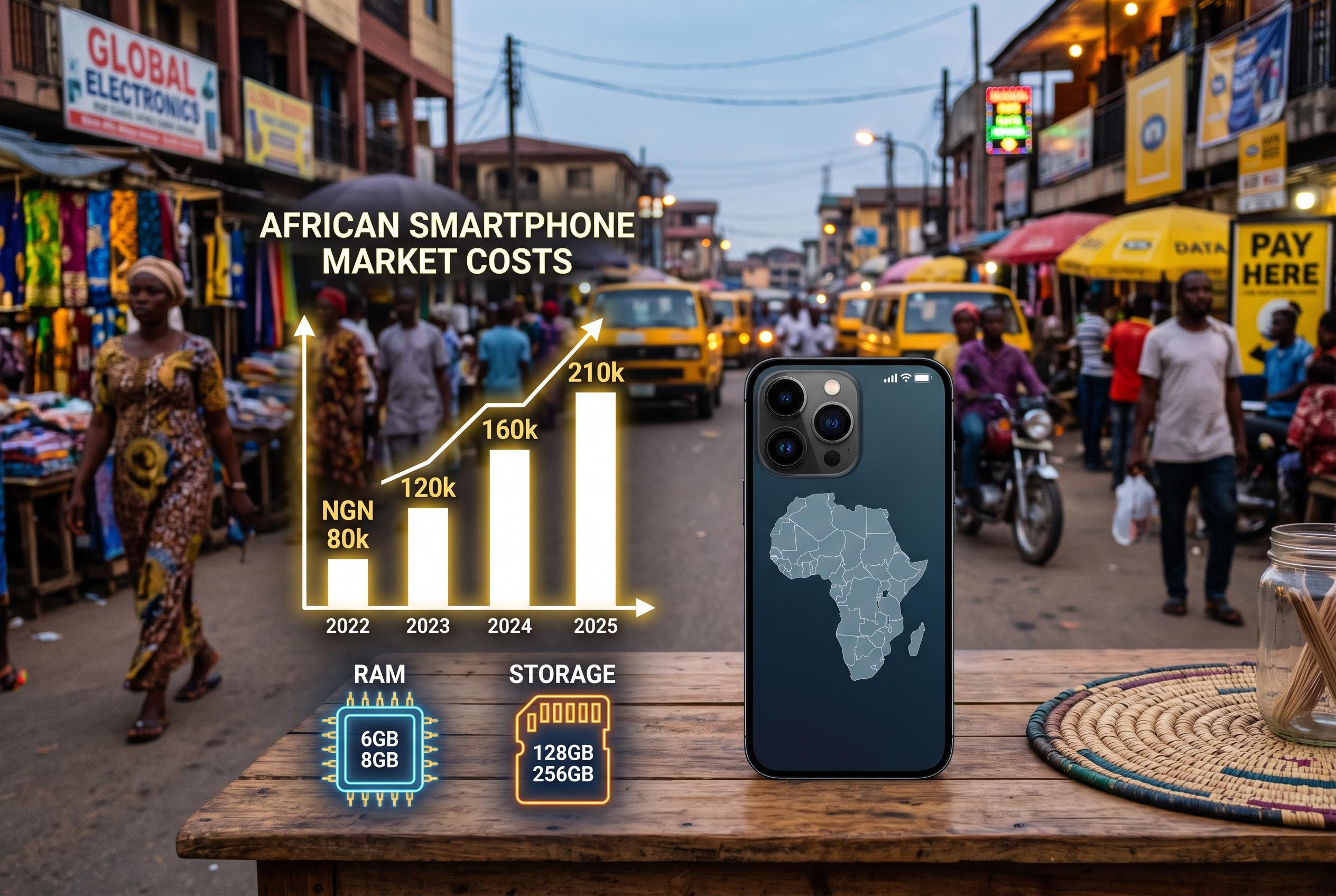

Chinese tech giant Transsion Benefits from Price Hikes in Africa as Memory Shortages Inflate Smartphone Costs, Leading to Revenue Growth Despite Falling Shipments.
Transsion Holdings, the Chinese company behind TECNO, Infinix and itel, is benefiting from a price reset across its African handset business after memory shortages pushed up the cost of making low-end smartphones. The company told investors in a filing to the Shanghai Stock Exchange that it expects first-half 2026 profit to rise sharply, even though it sold fewer phones than a year earlier, because average selling prices increased. Omdia says Transsion’s brands accounted for 47% of smartphones shipped into Africa in the first quarter of 2026, underlining how much of the continent’s market is tied to its pricing decisions.
For the six months to June, Transsion forecast revenue of about RMB 35.657 billion, net profit attributable to shareholders of about RMB 1.756 billion and adjusted net profit of about RMB 1.532 billion. The strongest growth came in the adjusted figure, which strips out one-off items and points more clearly to core operations. That is notable because Transsion has acknowledged that unit shipments fell in the period, meaning higher prices rather than higher volumes did the heavy lifting.
The pressure on pricing has been driven largely by memory chips, which are used for both RAM and storage. Research cited by Omdia says memory now makes up a much larger share of the cost of sub-$400 smartphones, while UBS has warned that DDR memory and NAND flash prices could keep rising through the third quarter of 2026. Transsion told analysts in March that it had begun lifting prices in the second half of 2025 and would shift its mix away from the cheapest phones and towards higher-priced models.
That strategy is already visible in the company’s inventory and cash flow. Transsion bought heavily in early 2026 to secure memory before prices climbed further, lifting stock levels sharply and dragging first-quarter operating cash flow into negative territory. The temporary benefit is that it is still shipping devices built with cheaper components bought earlier, but that cushion will fade as newer, more expensive parts work through production.
The effect is being felt in Africa’s biggest markets. Omdia said Kenyan smartphone shipments fell 16% year on year in the first quarter of 2026 as higher retail prices encouraged consumers to hold on to devices for longer, reversing a 17% gain in the third quarter of 2025 that was helped by financing schemes. Across Africa, phones priced below $200 still made up 75% of shipments in the first quarter, but Omdia expects the market to shrink 28% across 2026, with the $80 to $150 band under the most pressure. Rival brands are also jockeying for position, with HONOR posting strong growth and Xiaomi losing ground.
Disclaimer: This content is intended for informational purposes only. Readers are advised to exercise their own judgement, conduct due diligence, or consult a qualified expert before acting on any information provided.