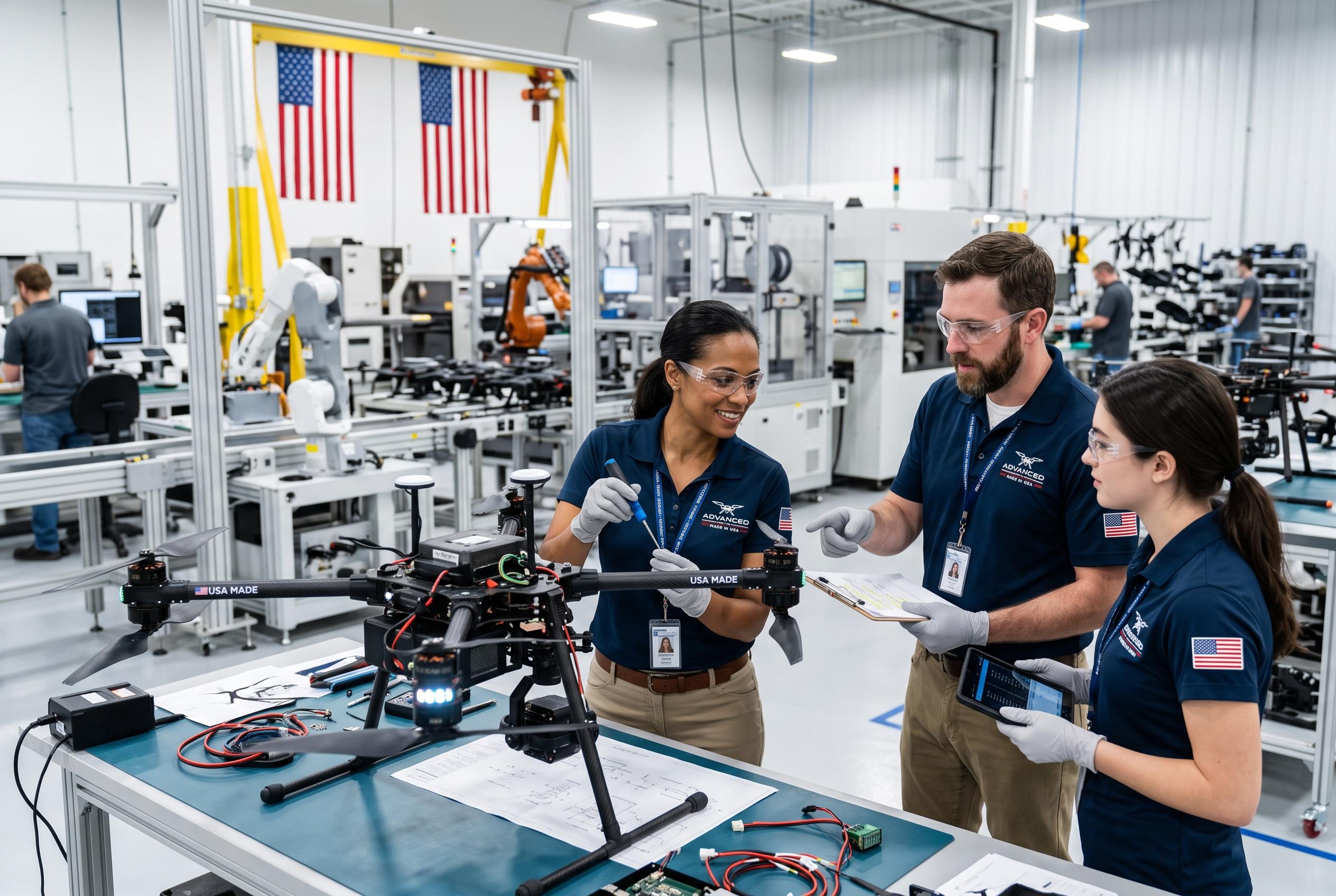

The US government has announced sweeping tariffs on imported drones and components, targeting China and other foreign suppliers in a move aimed at reducing reliance on imports and safeguarding national security, potentially transforming the US drone market.
Donald Trump has imposed sweeping US tariffs on imported drones and drone components, as the White House said the move is intended to cut reliance on foreign suppliers and strengthen domestic production. According to the administration’s order, larger drones or models with certain security-sensitive capabilities will face a 100% duty, while smaller drones without those features will be taxed at 25%.
The new measures are set to begin on 3 September for most imports and are aimed primarily at China, which remains the dominant force in the global drone market through DJI. The White House said drones and parts from the European Union, Japan, Liechtenstein, South Korea, Switzerland and Taiwan will face a 15% tariff, while goods from the UK will be charged at 10%. Less sensitive components will receive a 180-day grace period, as will products removed within 20 days from the Federal Communications Commission’s Covered List by the Defence Department.
The decision follows an investigation led by Commerce Secretary Howard Lutnick, who concluded that drones and related parts from certain foreign companies pose national security risks. The administration also said domestic producers do not currently make enough to meet security needs. That concern fits a broader pattern in Trump’s trade policy: in 2018, he imposed 25% tariffs on Chinese drones under Section 301, and former president Joe Biden kept those duties in place.
The latest action lands amid a wider US push to restrict advanced drone technology linked to China. Reporting by Al Jazeera has described FCC proposals to block imports of military-grade drones, including models with swarm functions and infrared sensors, while industry analysis from the Council on Foreign Relations says the US imports roughly half a million drones a year and still depends heavily on foreign supply chains, even where final assembly may occur outside China. The same analysis says DJI alone controls more than 70% of the US commercial drone market, underlining how sharply the tariffs could reshape an industry used in farming, construction, energy and surveying.
Disclaimer: This content is intended for informational purposes only. Readers are advised to exercise their own judgement, conduct due diligence, or consult a qualified expert before acting on any information provided.