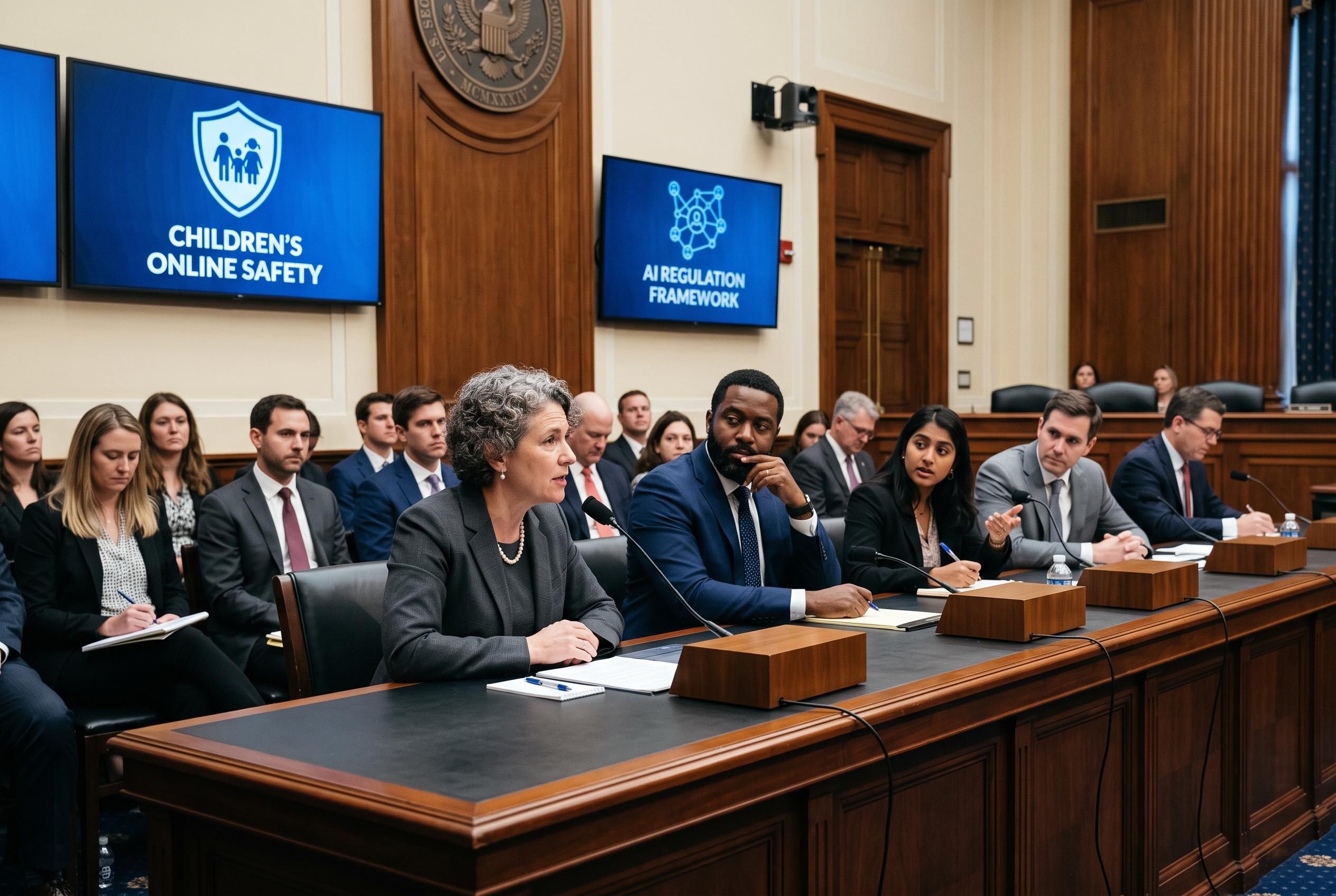

The U.S. Senate Commerce Committee has moved forward a suite of bills aimed at enhancing children’s safety online and regulating artificial intelligence in products for minors, sparking debate over privacy rights and industry responsibility.
The U.S. Senate Commerce, Science and Transportation Committee has moved a new package of children’s online safety and privacy bills forward, reviving the long-running push for federal limits on how platforms design products for minors and how they handle children’s data.
The most prominent measure is the Kids Online Safety Act, which would impose a duty of care on technology companies and require social media platforms to curb addictive design features and set safer default settings for minors. The committee has considered versions of the bill before: in the last Congress, the Senate approved it 91-3, and senators again presented it as a way to give parents more control over how children use digital services. Committee chairman Ted Cruz said the legislation was intended to help parents ensure children are not exposed to the worst parts of social media and AI chatbots, while ranking member Maria Cantwell argued that the bill would force platforms to take more responsibility when engagement is prioritised over child safety.
The committee’s action also included three artificial intelligence-focused bills: the Youth AI Privacy Act, the Children’s Health, Advancement, Trust, Boundaries, and Oversight in Technology Act, and the Children’s Artificial Intelligence Toy Safety Act. All three advanced by voice vote. The CHATBOT Act would require providers to offer family accounts and verifiable parental consent for minors. The toy safety bill would direct the National Academies of Sciences, Engineering and Medicine to study the effects of AI in children’s toys.
The markup also exposed familiar divisions over how far Congress should go. Cruz withdrew an amendment that would have folded in a separate measure on public service advertising disclosures in order to keep KOSA as a cleaner bill. He later succeeded in changing the Youth AI Privacy Act so that its 30-day limit on a chatbot’s memory and automatic deletion requirement would not be fixed in the same way initially proposed. Senator Ed Markey, the bill’s sponsor, said he opposed that change but accepted some revision in exchange for keeping the measure moving. Outside the committee room, advocacy groups split sharply: Fairplay welcomed the vote as a major step for child protection, while the Electronic Frontier Foundation and NetChoice warned that a duty-of-care standard could end up driving broader age verification and new privacy risks.
Disclaimer: This content is intended for informational purposes only. Readers are advised to exercise their own judgement, conduct due diligence, or consult a qualified expert before acting on any information provided.