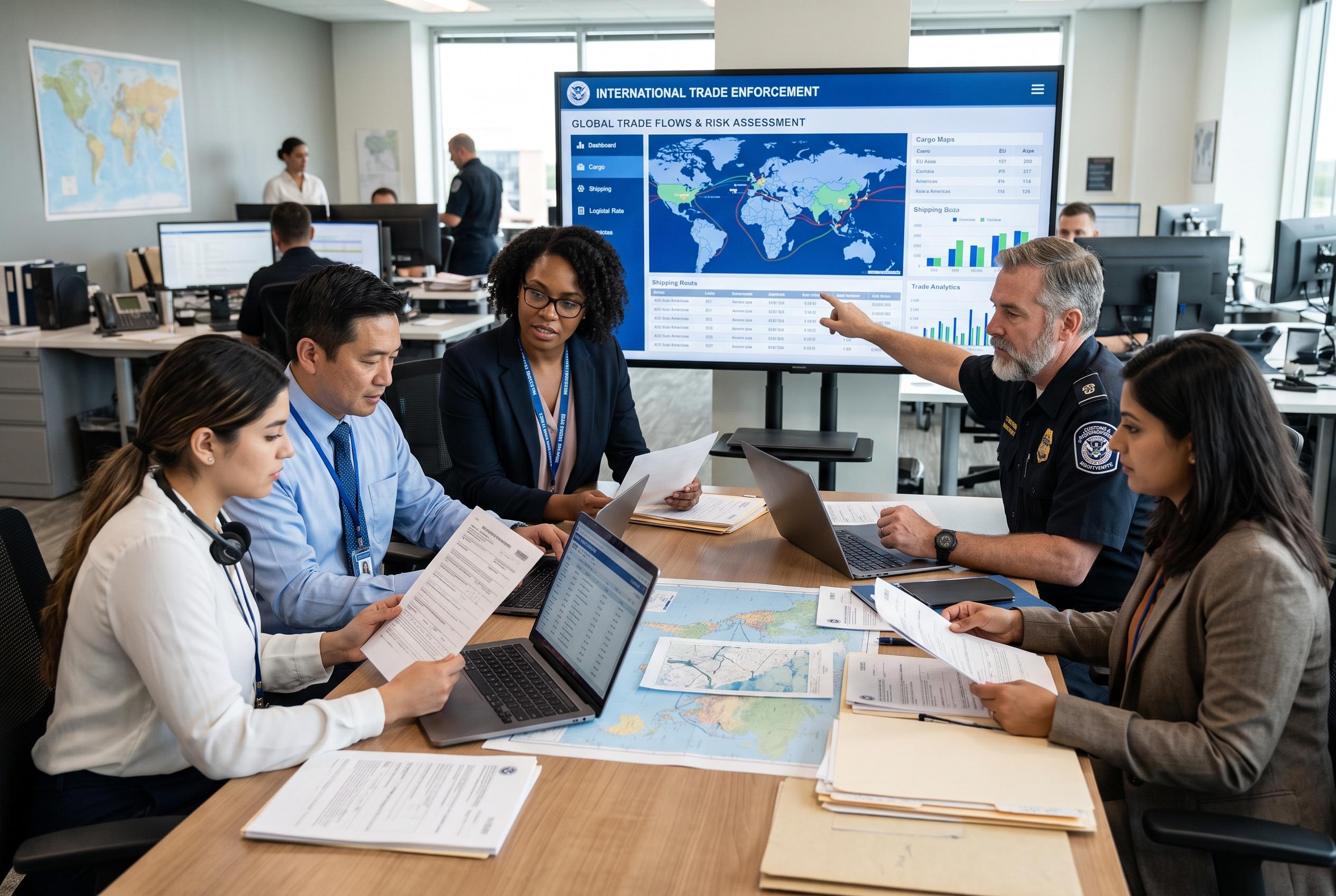

Washington alleges that India and more than 40 countries facilitate Chinese goods entering the US market via a complex transshipment web, as the US plans to intensify AI-driven enforcement against tariff evasion strategies.
Washington has accused India and more than 40 other countries of being part of a transshipment web that allows Chinese goods to enter the US market while sidestepping tariffs, while also signalling a sharper crackdown that would use artificial intelligence to flag suspect shipments. The claims were set out in a report by Peter Navarro, senior trade adviser to US President Donald Trump, who said the practice expanded after the White House imposed Section 301 duties on Chinese imports in 2018, according to PTI.
The report, titled “The Great Transshipment Scam”, estimates that between $40bn and $303bn of goods a year may be re-routed through third countries, depending on the method used. It names Mexico, Canada, the European Union, India, Japan and South Korea among the places said to sit inside what Navarro described as China’s “Shadow Transshipment Network”. The document says Chinese manufacturers and trading firms may move products through countries where they are lightly processed, relabelled, repackaged or invoiced again before export to the US.
India has been singled out in the report, with the Pune-Gujarat-Chennai industrial corridor identified as a possible node for absorbing Chinese-made pumps and compressors. The report suggests such networks could divert goods into American supply chains serving cities including Cincinnati, Dayton and Columbus. But being named in the paper does not prove that Indian companies or shipments have breached US customs rules, and legitimate production often relies on imported Chinese parts before final export.
The enforcement response is expected to centre on a system described as “Detective Border”, which would use shipment records, routing histories, product classifications, ownership links and declared production capacity to identify higher-risk consignments. It would also draw on anomaly detection and computer vision, according to the report, to separate lawful nearshoring and foreign investment from illegal transshipment. The US has already moved further in this direction: a rule announced on July 31 imposes a 40% duty and penalties on goods routed through third countries to evade tariffs, while US Customs and Border Protection has also expanded the use of AI tools from supply-chain firms such as Altana and Exiger to screen for origin fraud. Moody’s has warned that the tougher approach could create major compliance pressure for Indian and ASEAN manufacturers, especially in machinery, electrical equipment and semiconductors.
Disclaimer: This content is intended for informational purposes only. Readers are advised to exercise their own judgement, conduct due diligence, or consult a qualified expert before acting on any information provided.