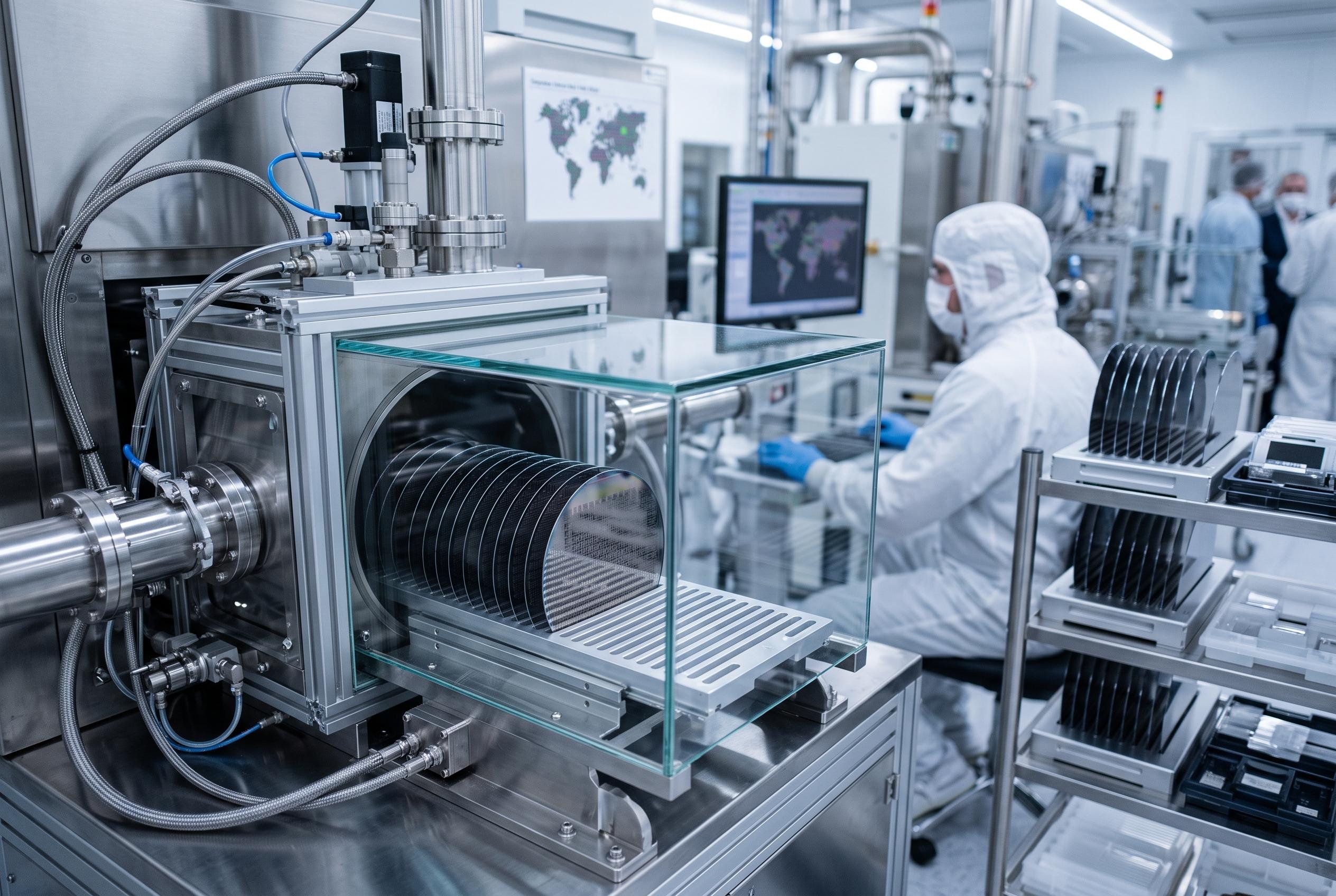

The recent summit between the US and China failed to resolve key export restrictions on advanced AI chips, allowing China to accelerate its domestic memory chip production and posing new strategic challenges for South Korean manufacturers.
The latest US-China summit left one of the most sensitive fault lines in technology trade unresolved: export controls on advanced AI chips and semiconductor equipment. For South Korea’s memory chipmakers, that brought a measure of short-term relief, but not clarity. The absence of a fresh confrontation lowered the risk of an immediate market shock, yet the wider policy environment still leaves Samsung Electronics and SK Hynix exposed to pressure in China and to the broader strategic contest over semiconductors.
According to the reporting by Edaily, Washington and Beijing agreed to open a bilateral channel on the risks and benefits of artificial intelligence, but did not move towards any separate deal on advanced chip technology. The summit did not produce a semiconductor accord, and the leaders kept to their existing positions. That matters for Korea because its memory business sits between the two powers: dependent on China for manufacturing operations and, at the same time, constrained by US rules that continue to shape what equipment and investment can move across borders.
The practical effect is a prolonged period of managed uncertainty. US authorities have already allowed annual approvals for equipment deliveries needed at Samsung’s NAND plant in Xi’an and at SK Hynix’s DRAM and NAND facilities in Wuxi and Dalian, but that arrangement is itself a reminder of how tightly these businesses are being monitored. A recent White House strategy document on science and technology also made clear that the US intends to keep refining restrictions on advanced-tech exports and limits on Chinese investment in sectors including semiconductors and AI. For Korean suppliers, the issue is no longer whether geopolitics matters, but how deeply it will continue to reach into factory operations and investment plans.
The harder problem is that the same controls designed to slow China may be helping Beijing to move faster. Chinese DRAM maker CXMT has begun mass production of its fifth-generation DRAM platform and has also unveiled 24Gb LPDDR5X products, according to several South Korean and Hong Kong reports. Industry observers say the move narrows the gap with leading memory makers and improves CXMT’s ability to compete on performance, cost and power efficiency. South Korean analysis suggests that the reason semiconductor controls were absent from the summit agenda may be that China’s domestic capability has already advanced enough to reduce its immediate dependence on imported high-end equipment. If that assessment is correct, the result is an uncomfortable one for Seoul: export limits may be containing risk in the short term while also helping to build a stronger rival in the longer run.
Disclaimer: This content is intended for informational purposes only. Readers are advised to exercise their own judgement, conduct due diligence, or consult a qualified expert before acting on any information provided.