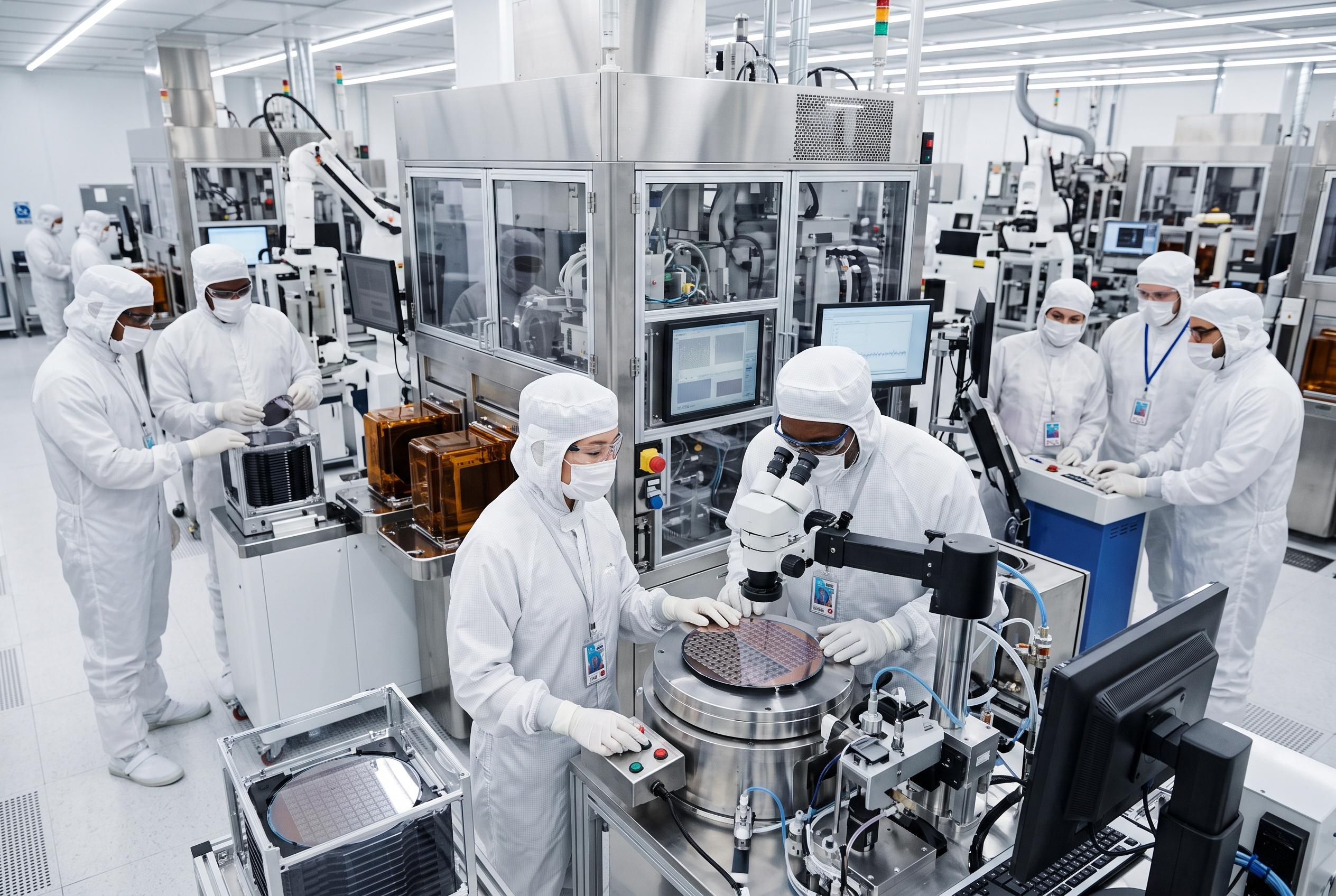

Qualcomm and Intel are expanding partnerships across China’s AI and semiconductor industries, adapting their strategies as Washington restricts access to advanced chips.
American chipmakers are deepening their ties with Chinese industry even as Washington tightens export controls on advanced semiconductors, underscoring how central China has become to global AI development and commercial deployment. According to Chinese state media cited by Ajunews, executives from Qualcomm and Intel are moving to widen cooperation with local manufacturers, model developers and supply-chain partners as firms seek access to China’s large market, engineering talent and increasingly mature industrial base.
At a meeting on AI industry development in Shenyang on 17 October, Meng Pu, president of Qualcomm’s China arm, argued that China’s advantage is not limited to scale. He pointed to its integrated supply chain, varied use cases, active innovation ecosystem and deep pool of engineers as factors that help push new technologies from development into mass commercial use. Qualcomm, he said, has worked with Chinese companies for more than 30 years and last year began an AI acceleration effort with local mobile carriers, device makers and AI model developers. The company has also supplied Snapdragon solutions to more than 300 connected-car models since 2021, while reports say it has recently been in talks with ByteDance over custom AI chip design.
That cooperation fits a longer pattern. Qualcomm said in 2014 that it would work with Semiconductor Manufacturing International Corporation to make Snapdragon processors in China on 28-nanometre process technology, an early sign of its effort to localise parts of its supply chain. In later years, the company showcased 5G devices with China Mobile and major Chinese handset makers, opened a semiconductor test facility in Shanghai, and partnered with SenseTime on on-device AI for mobile and Internet of Things products. Those initiatives suggest that, even as policy frictions have intensified, Qualcomm has continued to treat China as a place where technology is developed, tested and scaled.
Intel is also broadening its footprint. In July, it announced a strategic partnership with Chinese glass-processing company Lens Technology to develop advanced semiconductor packaging technologies, combining work on glass substrates with precision manufacturing skills for AI and data-centre chips. The move reflects a wider industry shift towards packaging and integration technologies that can improve performance and efficiency when traditional chipmaking advances become harder to achieve.
The most recent sign of this trend came in June, when Qualcomm said it planned to bring its full set of data-centre product lines to China, including custom AI accelerators designed to comply with US export restrictions on advanced AI chips. Apple has also been active on the diplomatic and commercial side: Tim Cook, the company’s chair, met China’s commerce minister last week to discuss AI development and economic ties, and signalled confidence in the country’s outlook. Taken together, the moves show that US technology groups are not withdrawing from China’s semiconductor and AI ecosystem, but instead are trying to adapt to it.
Disclaimer: This content is intended for informational purposes only. Readers are advised to exercise their own judgement, conduct due diligence, or consult a qualified expert before acting on any information provided.