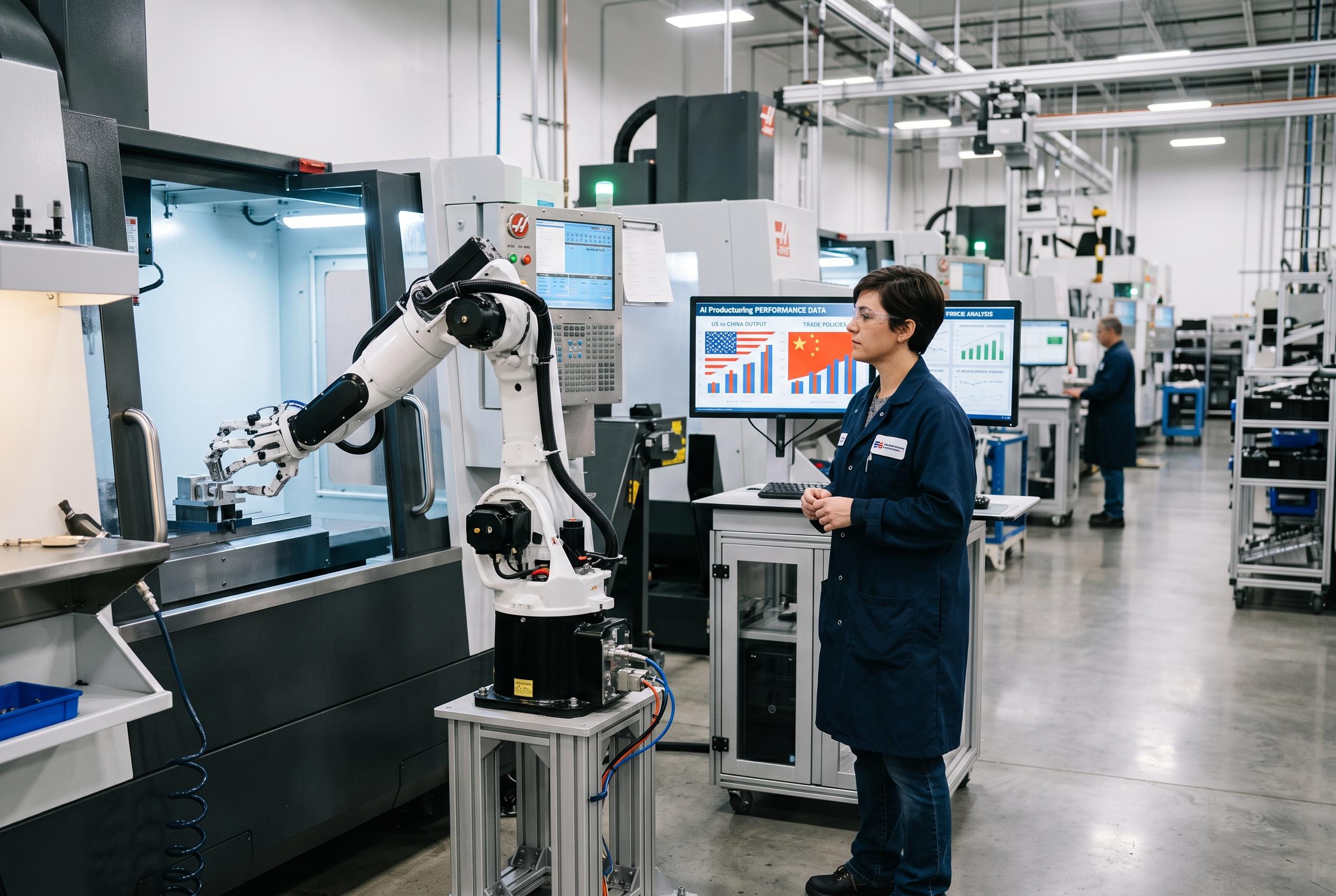

Washington’s new measures to ban foreign-made humanoid robots highlight a deeper industrial rivalry with Beijing over the future of automation, AI, and advanced manufacturing, with China poised to lead the global market.
Washington’s restrictions on foreign-made robots are sharpening a broader contest with Beijing over artificial intelligence, chips and advanced manufacturing. The latest measures are being presented in the language of national security, but they also reflect a deeper industrial rivalry over who will shape the next wave of automation.
That rivalry matters because humanoid robots are moving beyond the lab. Morgan Stanley has said the market could be worth more than $5 trillion by 2050, with more than 1 billion humanoids in use worldwide. Its research also suggests the technology will increasingly be deployed in factories, warehouses and other commercial settings rather than in consumer homes. In high-income countries, it expects prices to fall sharply over time, from about $200,000 in 2024 to roughly $50,000 by 2050.
China remains central to that race. The bank projects that China will account for 302.3 million humanoids in use by 2050, far ahead of the US on 77.7 million. Other reports have put China’s share of the current humanoid robot market at about 85%, underscoring its advantage in mass production and component supply. That scale gives Chinese manufacturers a cost edge that rivals elsewhere have struggled to match.
The policy response in Washington has widened beyond humanoids alone. According to reports from the Washington Post and UPI, the Federal Communications Commission has moved to block imports of foreign-made humanoid robots and quadruped robots, while also targeting certain power inverters used in data centres and solar systems. Tom’s Guide and Tom’s Hardware reported that the rules may also sweep in a broader class of connected ground robots, including some robot vacuums and delivery devices, depending on their technical specifications. Existing products already on the market are not the main target, but the direction of travel is clear: the US is trying to slow Chinese technological influence by closing off access to its market.
Disclaimer: This content is intended for informational purposes only. Readers are advised to exercise their own judgement, conduct due diligence, or consult a qualified expert before acting on any information provided.