
Washington’s investigation reveals Chinese firms are increasingly bypassing export restrictions by renting overseas data centre capacity with restricted Nvidia hardware, prompting concerns over the effectiveness of US restrictions and the rapid development of domestic AI alternatives.
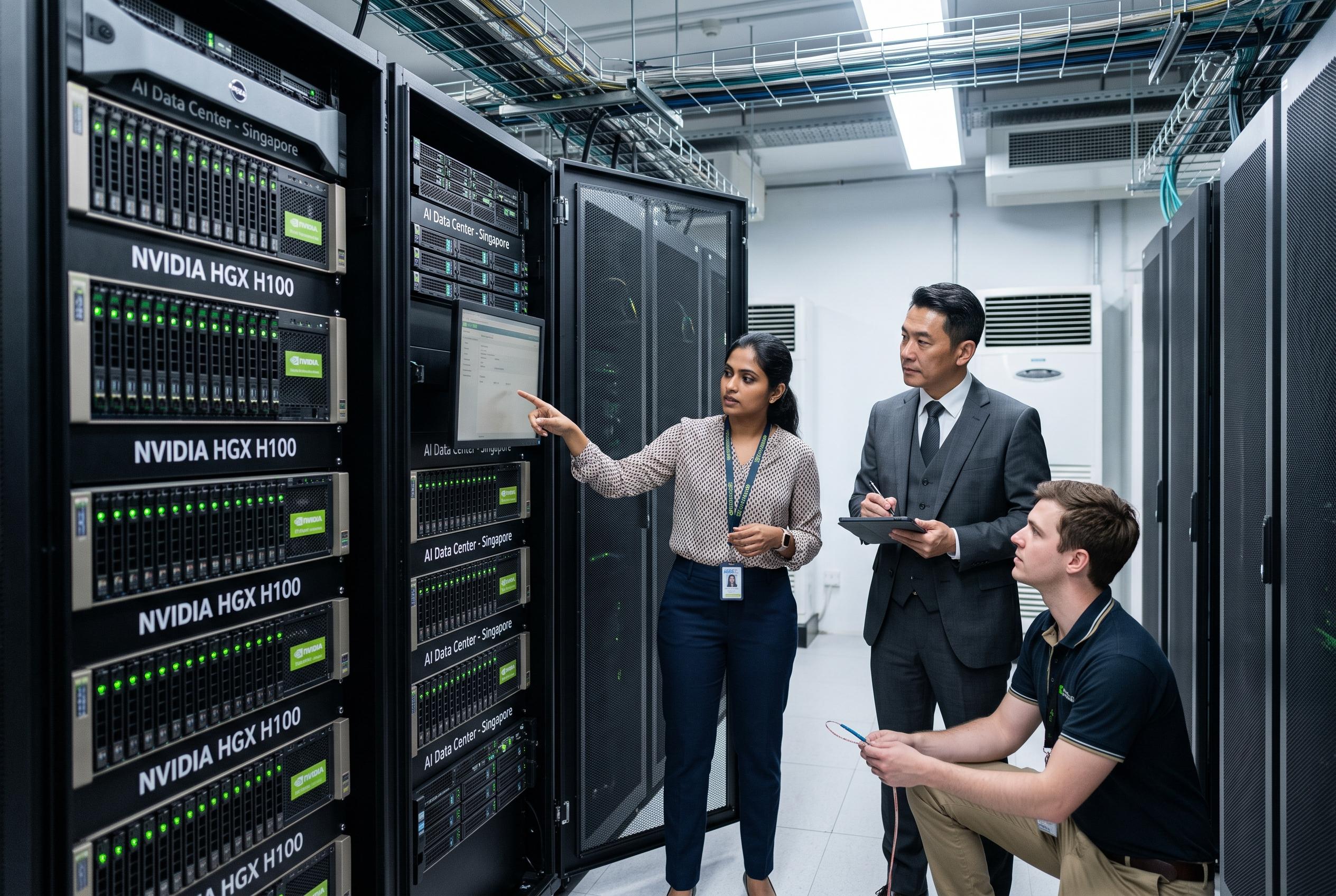
A US government review is examining how Chinese artificial intelligence companies have continued to reach Nvidia’s most advanced processors despite years of export restrictions, according to Bloomberg. The focus is on a workaround that has become increasingly important in the global AI contest: instead of importing chips directly into China, firms have been renting computing capacity from overseas data centres that already contain restricted Nvidia hardware.
Until recently, that arrangement sat in a grey area. Chinese companies could obtain access to high-end processors through facilities in places such as South-east Asia or the Middle East, avoiding a direct shipment into China itself. Industry estimates cited in recent reporting suggest that hundreds of thousands of advanced chips may have reached Chinese entities through such channels before Washington moved to tighten the rules.
The Commerce Department’s Bureau of Industry and Security tried to close one of those routes on May 31, 2026, when it issued new guidance aimed at overseas subsidiaries of Chinese companies. According to the guidance, licensing requirements now follow the parent company’s headquarters rather than the location of a subsidiary. In practice, that means a China-based owner is subject to the same controls whether the operating arm is in Shanghai, Singapore or São Paulo. The clarification applies to Nvidia’s Blackwell and Rubin product lines, which sit among the company’s most advanced AI chips.
The harder problem for regulators is cloud access. Blocking direct shipments to foreign subsidiaries is simpler than stopping a Chinese customer from renting compute time on servers already installed in another country. Restricting that model would require either tighter rules on who can buy cloud services or stronger screening systems imposed on data centre operators. That is one reason the issue has become such a policy concern: the chip itself may never cross the border, but the computing power still reaches the buyer.
The review also comes as fresh reporting has heightened concern in Washington. Reuters and the Jamestown Foundation have reported that Chinese military researchers have used output from American AI models, including systems linked to OpenAI and Anthropic, as part of a process known as model distillation. Separately, reporting from Tom’s Hardware said Moonshot AI used Nvidia’s restricted Blackwell chips to train its Kimi K3 model by working through local firms and linked server clusters. Together, those accounts suggest that export controls aimed at hardware are being tested by a wider set of technical workarounds.
For Nvidia, the stakes are commercial as well as regulatory. China was once a major market, and each new round of restrictions has narrowed that opportunity. If Washington extends controls to overseas cloud access, the effects could go beyond Chinese buyers and reach global data centre operators that serve them, raising compliance costs and potentially reducing demand for Nvidia’s high-end systems. At the same time, tougher US pressure is also pushing Chinese firms to develop domestic alternatives more quickly, even if those chips still lag behind Nvidia’s leading products.
Disclaimer: This content is intended for informational purposes only. Readers are advised to exercise their own judgement, conduct due diligence, or consult a qualified expert before acting on any information provided.