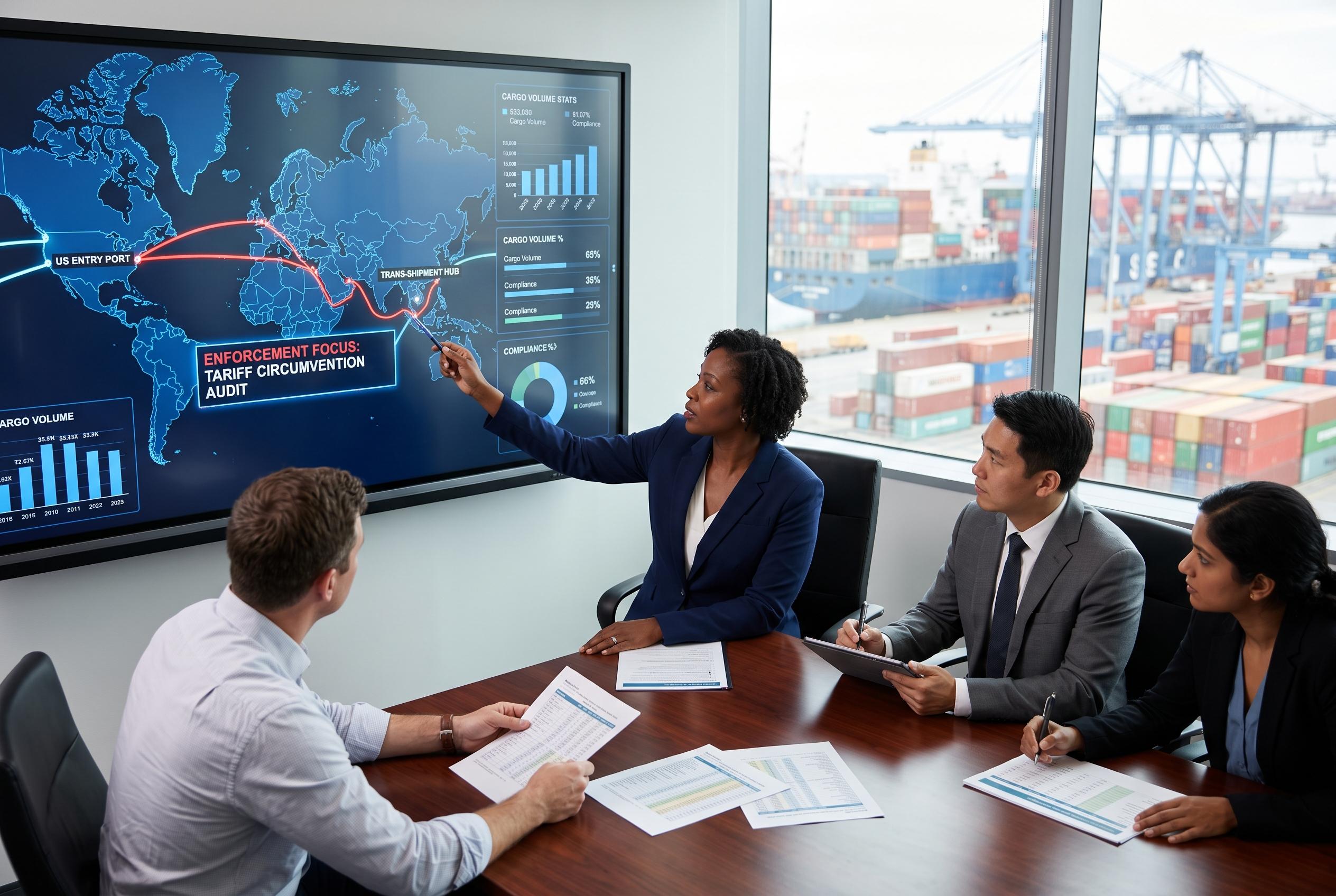

Washington escalates its crackdown on transshipment practices, singling out India and over 40 countries for alleged attempts to route Chinese goods around US tariffs, amid ongoing trade negotiations and policy shifts.
Washington has escalated its scrutiny of transshipment, issuing a report that accuses more than 40 countries of helping Chinese exporters sidestep US tariffs by routing goods through third markets, changing labels or falsely claiming non-Chinese origin. The White House Office of Trade and Manufacturing Policy described the practice as the “Great Transshipment Scam” and divided the countries into three tiers, with India placed in the first group alongside large industrial economies such as Canada, the European Union, Israel, Japan, Mexico, South Korea and Taiwan.
Senior trade adviser Peter Navarro singled out India in remarks to reporters, warning that higher US tariffs could encourage more complex rerouting schemes unless trading partners tighten enforcement. He argued that preferential access to the American market should not be used to mask the true origin of goods, and said the administration’s aim was to push partners towards reciprocity, fewer barriers and stronger intellectual property protection. The report gave examples of minimal assembly lines, including so-called screwdriver factories, that it says do not amount to substantial transformation.
The crackdown lands as Washington and New Delhi are already in delicate negotiations over trade. In February 2026, the two sides announced a trade deal framework that cut US tariffs on Indian imports and pledged wider market access for American industrial and agricultural goods, alongside work on digital trade rules and supply-chain resilience. That diplomatic track has been complicated by separate US pressure over India’s purchases of Russian oil, after President Donald Trump imposed a 25% tariff on imports from India in August 2025.
US officials said anti-transshipment clauses are now being inserted into new trade deals, including any future agreement with India. They also outlined tighter Customs and Border Protection powers, an AI-driven screening system to flag suspicious shipments before they reach US ports, and retroactive tariff claims on a broader year-long window if transshipment is found. The measures form part of a wider Trump administration trade posture that has also included higher duties on steel and aluminium and further Section 232 restrictions on strategic metals, while Washington continues to manage a separate tariff détente with China.
Disclaimer: This content is intended for informational purposes only. Readers are advised to exercise their own judgement, conduct due diligence, or consult a qualified expert before acting on any information provided.