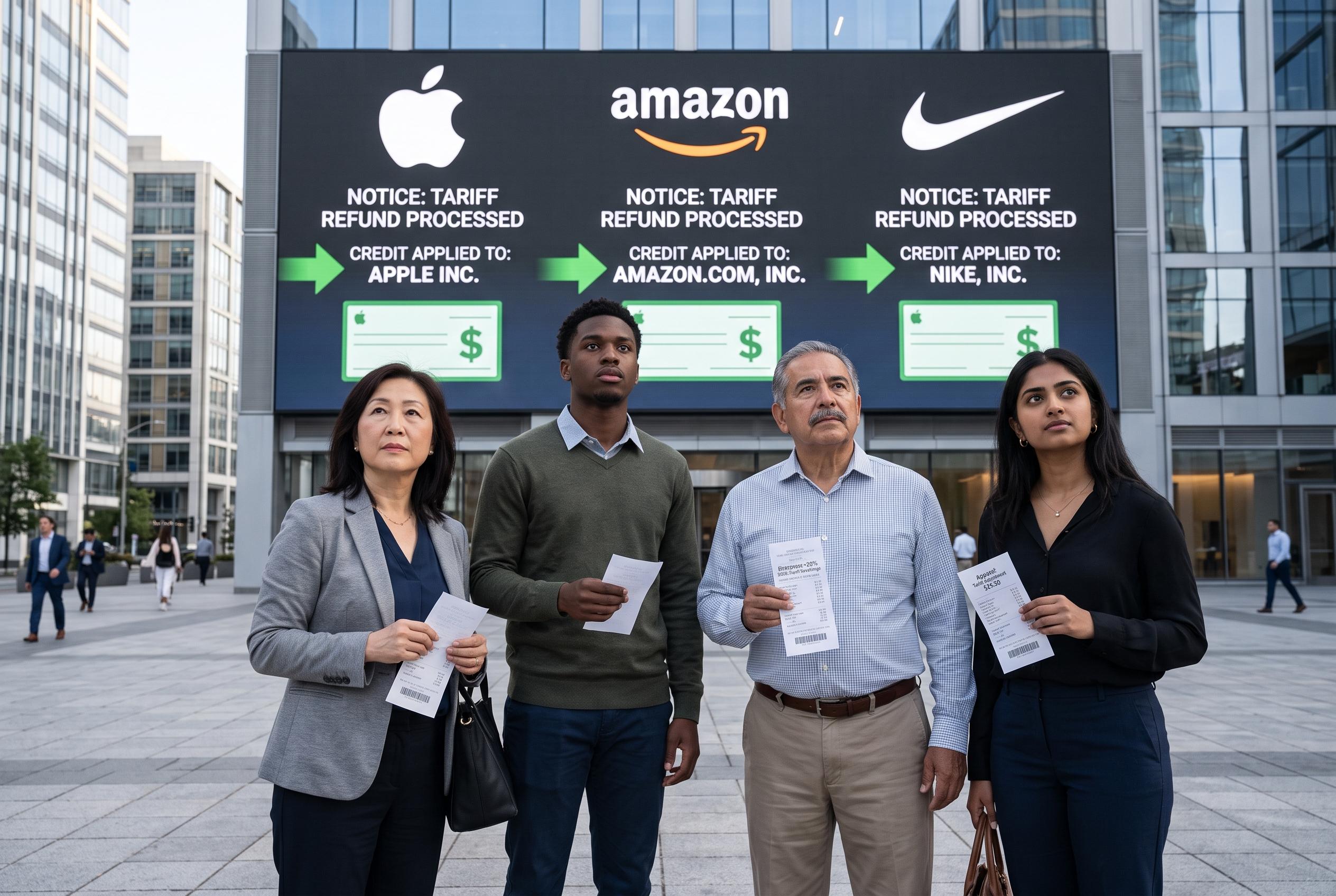

The collapse of Trump-era IEEPA tariffs in early 2026 has resulted in large refunds primarily going to major corporations like Apple, Amazon, and Nike, leaving consumers without automatic compensation despite the higher household costs incurred during the tariff period.
The collapse of Donald Trump’s IEEPA tariffs in early 2026 has set off a large round of refunds, but the money is going back to the companies that paid the duties, not the households that absorbed higher prices at the till. Under U.S. customs rules, refunds from Customs and Border Protection are issued to the importer of record, which means large retailers and brands are seeing the cash return while consumers are left with no automatic compensation.
That distinction matters because the tariffs were widely felt in household budgets. The Tax Foundation said Trump’s tariffs cost the average American family about $1,000 in 2025, a figure reported by ABC News and Yahoo Finance. Those estimates add weight to complaints that consumers paid more for imported goods while the legal remedy flowed elsewhere. The same analysis projected the burden could rise further if the duties remained in place.
Among the biggest beneficiaries were Apple, Amazon and Nike. The lead article said Apple received about $2.2 billion, Amazon roughly $600 million and Nike around $300 million. Yahoo Finance reported that Apple’s refund lifted its gross margin by about 2 percentage points in its fiscal third quarter, while Amazon’s chief financial officer, Brian Olsavsky, said the company had identified only limited cases where tariffs could be traced directly to customers. He said Amazon would contact affected buyers and issue refunds automatically, though the company has not said how many people qualify.
Other retailers have used the refunds to promise broader price relief rather than direct payouts. According to CNN, Costco chief executive Roland Vachris said the company would return value through lower prices and better deals, while Walmart and BJ’s have made similar pledges. PepsiCo chief executive Ramon Laguarta described the windfall as useful for offsetting freight and energy costs, again suggesting that the benefit may show up indirectly rather than as a visible rebate. The result is that households may see some pressure ease over time, but there is no standard mechanism forcing companies to hand back the money in cash.
Trump’s previously floated $2,000 tariff rebate checks for households never became law. Reuters has also reported that the Supreme Court’s ruling narrows future presidential use of IEEPA for tariffs, pushing any future trade action back towards older statutes with more formal oversight. For now, that leaves consumers with only the possibility of lower shelf prices and no direct refund in their name.
Disclaimer: This content is intended for informational purposes only. Readers are advised to exercise their own judgement, conduct due diligence, or consult a qualified expert before acting on any information provided.