
Global wearable band shipments declined by 2% in the second quarter of 2026, with market demand bifurcating into minimalist, screenless devices and high-end sports watches, reflecting changing consumer preferences and innovation strategies.
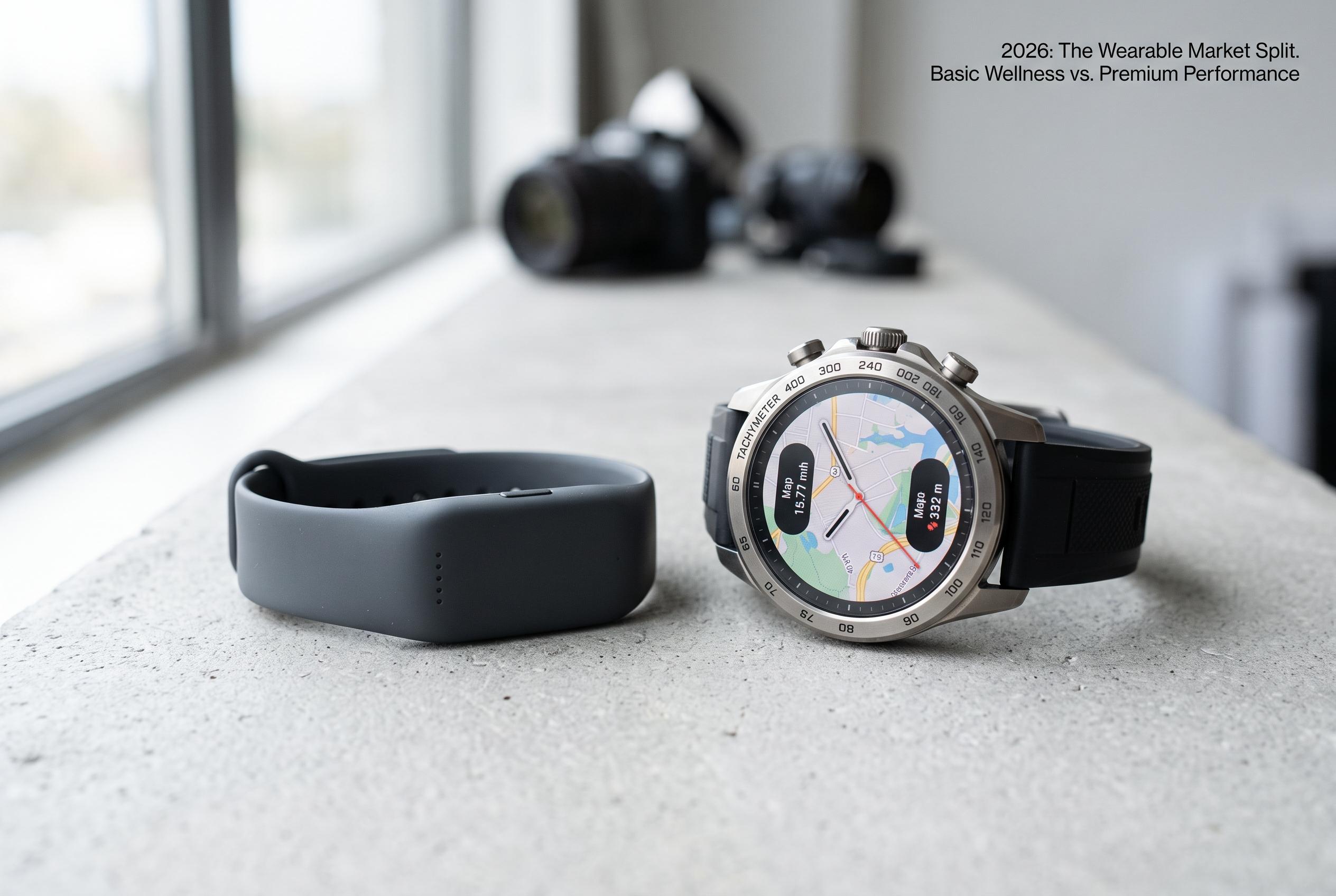
Global wearable band shipments fell 2% year on year in the second quarter of 2026, but the market is not weakening evenly. Omdia said the category is splitting into two distinct demand pools: minimalist, screenless devices on one side and higher-end sports watches on the other. Smartwatch shipments rose 6% in the quarter, helped by advanced sports models, while screenless basic bands gained traction as buyers looked for simpler devices with long battery life and continuous wearability.
The decline was driven instead by weaker performance in the middle of the market. Omdia said basic bands fell 9% as major vendors changed launch timing and product cycles, while basic watches slipped 3%, with demand particularly soft in India after earlier shipment spikes failed to continue into 2026. In Omdia’s view, consumers are increasingly rejecting a one-size-fits-all approach and choosing either stripped-back trackers or more capable devices with deeper fitness and training functions.
Apple remained the clear leader in smartwatches with 46% global share, but Garmin recorded the biggest gain among non-Apple vendors, rising to 15% and drawing level with Samsung, which stayed narrowly ahead in second place. Omdia said Garmin’s momentum reflects steady demand for runners, cyclists and outdoor users who are prepared to pay for more accurate training data and features that turn metrics into practical guidance. The research firm also pointed to Garmin’s recent expansion of the Forerunner range as a factor in broadening its reach.
In the broader wearable band market, Huawei led with 18% share in the second quarter, up from 17% a year earlier. Omdia said its growth was supported by a wider product line and the international launch of a children’s cellular smartwatch. The firm also highlighted Huawei’s cross-platform phone compatibility and new health features, including a Diabetes Risk Study, as part of its appeal. At the same time, screenless bands accounted for more than 15% of basic band shipments after launches such as Google’s Fitbit Air and Garmin’s Cirqa, although Omdia warned that the segment will need stronger software stability and added features to challenge established players such as Whoop. Rising memory and storage costs are also pushing prices higher across the category, with Omdia expecting vendors to lean more heavily on battery life, ecosystem integration and artificial intelligence features to justify premium pricing in the second half of 2026.
Disclaimer: This content is intended for informational purposes only. Readers are advised to exercise their own judgement, conduct due diligence, or consult a qualified expert before acting on any information provided.