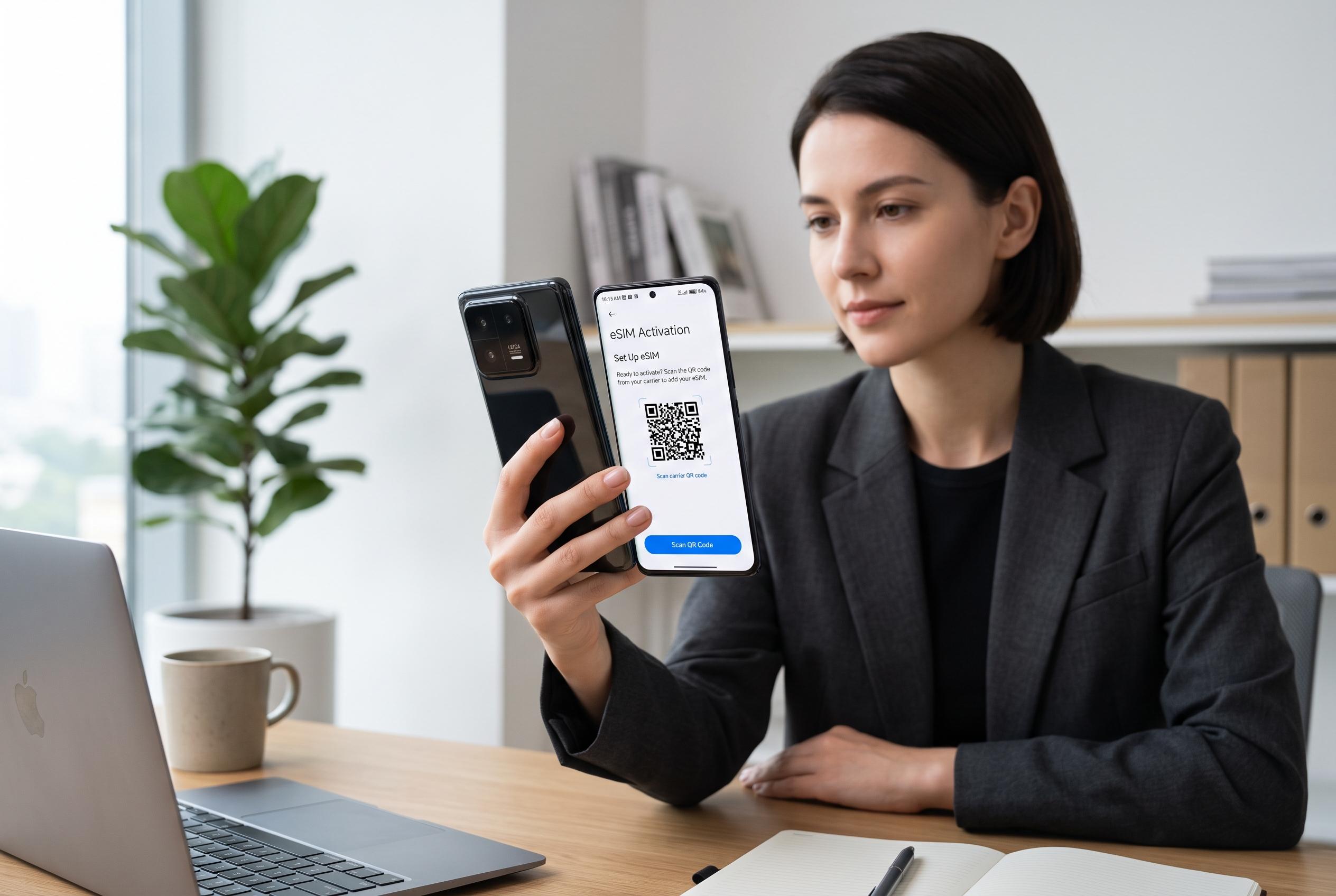

Xiaomi’s latest smartphones now increasingly support eSIM technology, offering users greater flexibility with dual lines and easier activation, particularly benefiting frequent travellers and multitaskers.
Xiaomi’s eSIM support is now spread across selected models from its own flagship range and from Redmi and POCO, giving buyers a wider set of choices than many expect. Xiaomi’s own support material describes eSIM as an embedded SIM that can be activated through software rather than by inserting a plastic card, with the added benefit that one handset can carry two lines at once. That matters for frequent travellers and for users who want to separate work and personal numbers without swapping cards.
On Xiaomi’s side, the clearest example is the Xiaomi 15, which combines top-end hardware with eSIM support alongside a physical nanoSIM slot. The phone pairs a Snapdragon 8 Elite chip with a 6.36-inch AMOLED LTPO display, Leica-tuned triple 50-megapixel cameras and a 5,240mAh battery with 90W wired charging and 50W wireless charging. Xiaomi says the eSIM setup is handled through the handset’s settings by installing a carrier profile, which makes activation faster than waiting for a physical card to arrive. In practice, that can be useful abroad, where users can add a local plan while keeping their main line active.
The same logic applies to the Xiaomi 15T Pro, which sits below the flagship line but keeps many premium features, including a MediaTek Dimensity 9400+ processor, a 6.83-inch AMOLED screen at 144Hz, IP68 protection and a 5,500mAh battery with 90W charging. The device also supports eSIM, allowing it to run a digital line together with a nanoSIM. Xiaomi’s rumoured or emerging 17T Pro is also being positioned with eSIM among its connectivity features, alongside Leica cameras, a high-end Snapdragon chip and a large battery, according to the material reviewed. Independent guides from eSIM providers note that Xiaomi’s eSIM support is still uneven across the wider catalogue, with the feature concentrated in newer, higher-end global or European variants rather than across all Redmi and POCO handsets.
Disclaimer: This content is intended for informational purposes only. Readers are advised to exercise their own judgement, conduct due diligence, or consult a qualified expert before acting on any information provided.