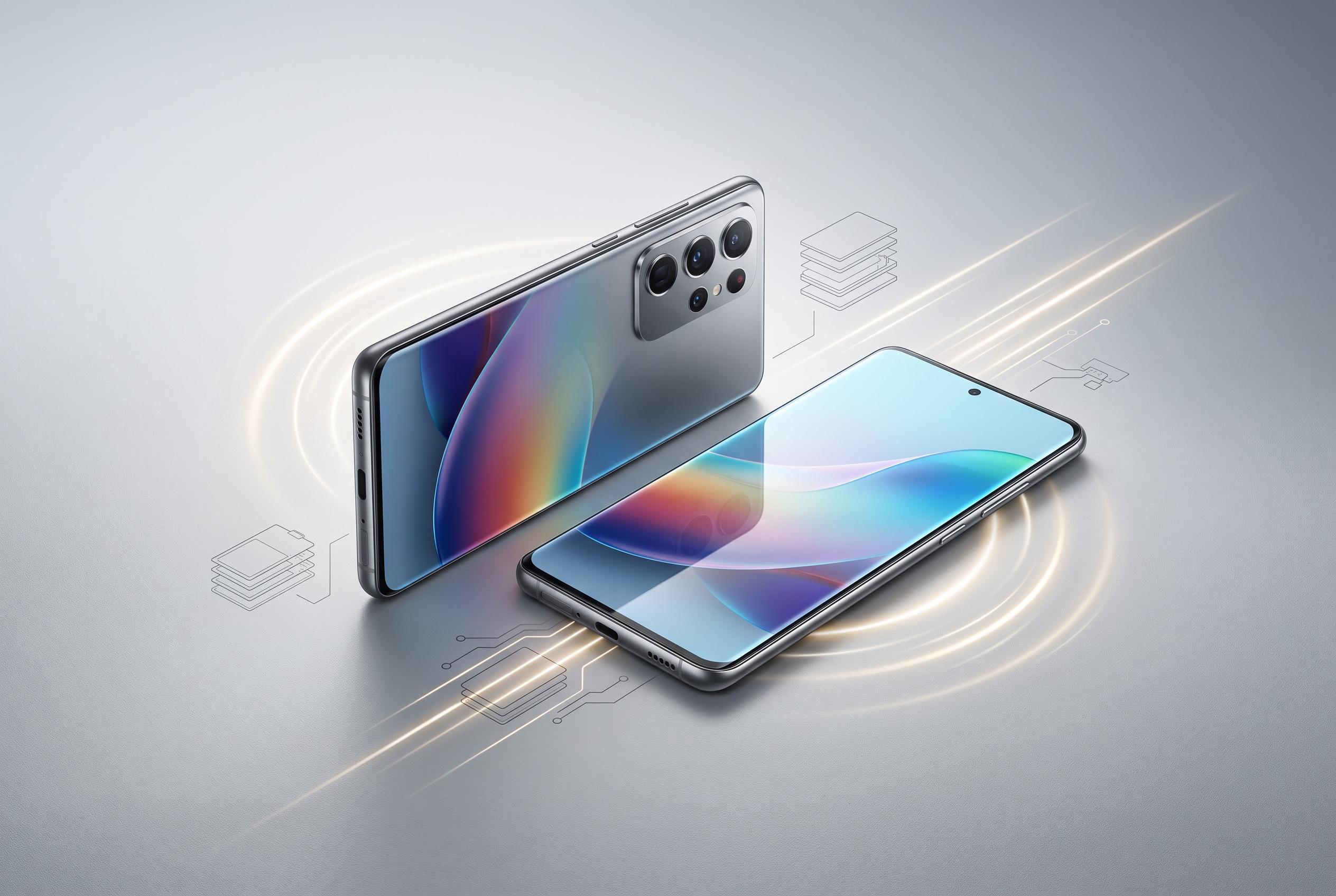

Xiaomi unveils its latest Redmi K-series flagship phones in China, featuring top-tier Snapdragon 8 Elite Gen 5 chips, massive batteries, advanced display technology, and enhanced gaming capabilities, setting new standards for performance and imaging.
Xiaomi has unveiled its latest Redmi flagship phones in China, positioning them as its most powerful K-series models yet and promising a blend of extreme performance, larger batteries and more ambitious camera hardware. The launch also confirms a promise the company made weeks earlier to bring the devices to market. The phones are powered by Qualcomm’s Snapdragon 8 Elite Gen 5 platform, with Xiaomi using a V Series version on the Pro model and the standard chip on the Pro Max, while LPDDR5X memory and UFS 4.1 storage are fitted across the range. According to Xiaomi’s own announcement, the company has also added custom auxiliary chips to keep performance stable under sustained load.
The Pro Max is the more heavily equipped handset. Xiaomi says it includes the D2 graphics chip for display rendering and refresh-rate management, while the Surge T1+ chip is designed to improve signal reception. Cooling hardware is substantial, with liquid cooling spread across 5,150 square millimetres in the Pro and 6,300 square millimetres in the Pro Max. The company is also targeting gamers through its updated Rage Engine, which it says can sustain more than 30 titles at 185 frames per second. On the Pro Max, Xiaomi has added CrossFire Mobile mode, which interpolates frames to smooth performance in demanding games.
The display technology is another headline feature. Xiaomi says the new M11 luminous material, developed with Tsinghua University, improves green sub-pixel efficiency by 20 per cent. The panel reaches a claimed 10,000 nits at 1 per cent window size and 4,500 nits at 25 per cent, with coverage of 90 per cent of the BT.2020 colour space, although full support for that standard will arrive through a software update in mid-November. The smaller device has a 6.56-inch 1.5K panel at 185Hz, while the Pro Max stretches to 6.9 inches with the same resolution and refresh rate. Some Chinese-language reporting and third-party listings describe the Pro Max display differently, citing 2K resolution and a 120Hz refresh rate, which suggests Xiaomi’s naming and regional specifications may need further clarification.
Battery capacity is also well above what most rivals offer. Xiaomi says the Pro carries an 8,580mAh cell with 26 per cent silicon content, while the Pro Max rises to 9,070mAh. Both support 100W wired charging and 50W wireless charging, plus 22.5W wireless reverse charging and 27W wired reverse charging through Xiaomi’s Surge P3 and Surge G2 charging chips. In imaging, the pair share a 200-megapixel main sensor with f/1.68 aperture and optical stabilisation. The Pro Max adds a 50-megapixel periscope telephoto camera with 5x optical zoom, while the Pro uses a 50-megapixel telephoto unit with 2.5x zoom. The ultra-wide camera is 8 megapixels on the Pro and 50 megapixels on the Pro Max, with a 32-megapixel front camera on both. Xiaomi also says the Pro Max includes Bose-tuned speakers and a separate subwoofer, while both phones carry IP66, IP68 and IP69 ratings and an ultrasonic fingerprint sensor under the display. Pricing in China starts at 3,999 yuan for the Pro and rises to 5,999 yuan for the top Pro Max variant, with no confirmed international launch yet.
Disclaimer: This content is intended for informational purposes only. Readers are advised to exercise their own judgement, conduct due diligence, or consult a qualified expert before acting on any information provided.