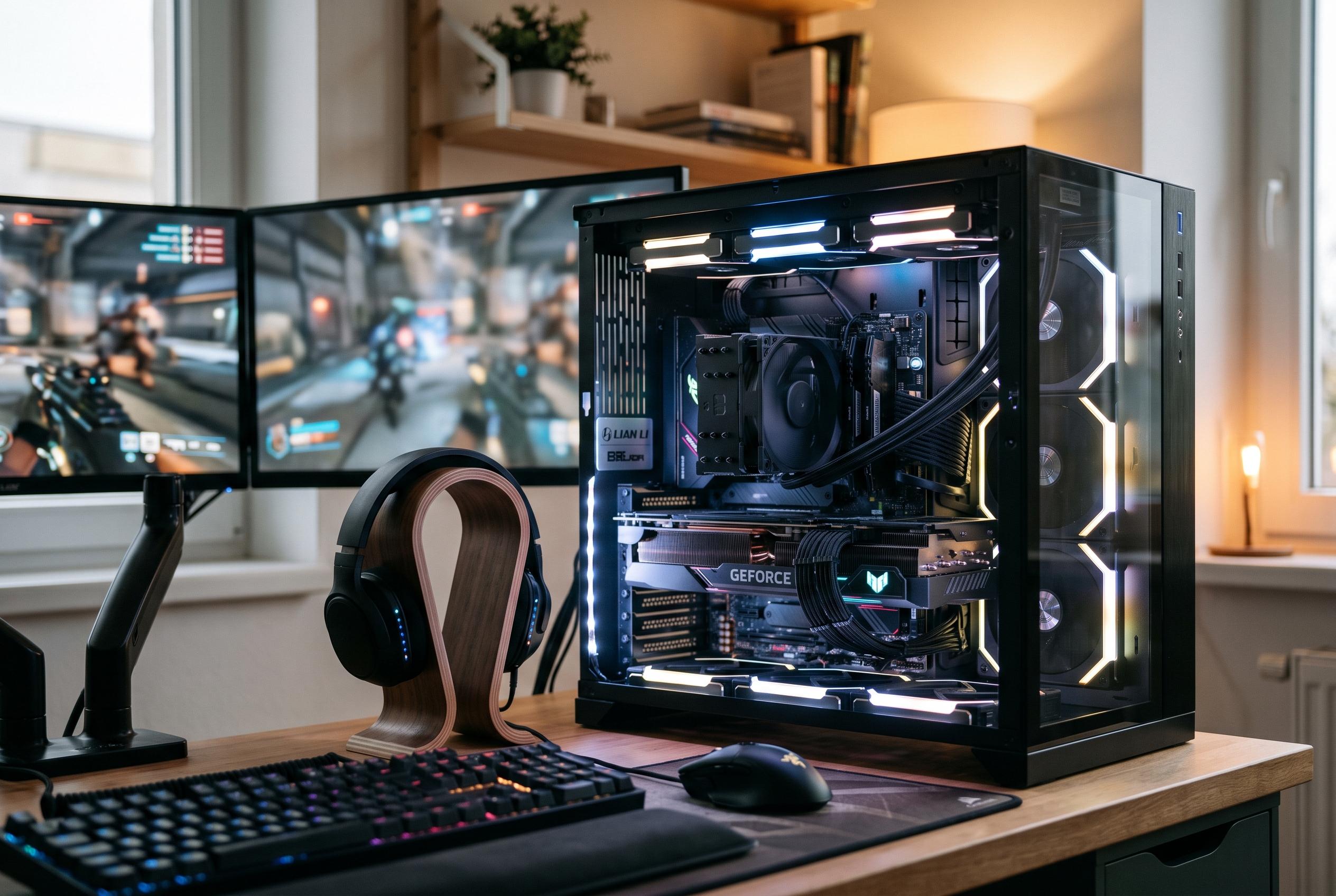

The RTX 5070 Ti remains a strong 1440p gaming card, but small performance differences between partner models and rising prices mean shoppers must weigh cheaper AMD alternatives and the faster RTX 5080.
The GeForce RTX 5070 Ti remains one of NVIDIA’s strongest options for high-refresh 1440p gaming, and it can also cope well with 4K in the right system. According to The PC Enthusiast’s latest buying guide, the problem is not capability but cost: prices have climbed enough that shoppers now need to compare the card not just with other RTX 5070 Ti models, but also with the faster RTX 5080 and, for gaming-focused builds, AMD’s Radeon RX 9070 XT. Tom’s Hardware and TechRadar both continue to place the RTX 5070 Ti among the best high-end graphics cards for 2026, largely because it combines strong frame rates with 16GB of memory and broad support for NVIDIA’s feature set.
That broader context matters because the real-world performance spread between most partner cards is small. The PC Enthusiast says its testing found only marginal differences, usually around 1% to 2%, between RTX 5070 Ti models from different board partners. That is consistent with other round-ups, which note that the underlying GPU is the same and that price differences mostly reflect cooling design, acoustics, size, factory tuning and extras such as RGB lighting or dual BIOS modes. In other words, shoppers are usually paying for the ownership experience, not a large gaming uplift.
For buyers trying to spend as little as possible, The PC Enthusiast points to the PNY GeForce RTX 5070 Ti Triple Fan OC as the most sensible starting point among the cards it found in stock from major retailers. It offers a straightforward triple-fan design, a metal backplate and a modest factory overclock, but without the decorative flourishes or larger price premium attached to more elaborate models. The site’s testing-based guidance is clear: if two cards deliver nearly the same frame rates, the cheaper and simpler one is usually the better buy unless a specific feature is needed.
At the more feature-rich end, Gigabyte’s Gaming OC stands out for its stronger cooling hardware, dual BIOS and added support features, while the PNY Epic-X RGB OC is aimed at users who want a more visible, lighting-heavy aesthetic. The PC Enthusiast notes that both are priced close to each other in current listings, so the decision is less about speed and more about layout and preference. That mirrors wider reviews from Aerovision Drones, OfZenAndComputing and Ranked10, which all emphasise that premium trims are primarily differentiated by thermal design, build quality and visual presentation rather than large performance gaps.
The most specialised option in the guide is the PNY Slim OC, a dual-slot card aimed at compact builds. Its appeal is obvious for small systems or cases with limited expansion-room clearance, but The PC Enthusiast also warns that slim does not always mean universally compatible, particularly once 16-pin power-cable routing is taken into account. That makes it a niche purchase: useful when size constraints are decisive, but poor value if the only goal is gaming performance. In effect, the slim card solves a packaging problem, not a frame-rate problem.
The publication also revisits some of the RTX 5070 Ti cards it has tested but found difficult to recommend at current prices because they are either out of stock or drifting into unreasonable third-party mark-ups. Its earlier testing highlighted models such as MSI’s Ventus 3X PZ OC, ZOTAC’s AMP Extreme Infinity and MSI’s Frieren Edition OC as well-built, quiet or visually distinctive options, but it cautions against paying large premiums for those qualities alone. That warning is especially relevant in a market where availability changes quickly and where a card can move from good value to poor value simply because one retailer has run out of stock.
The same price sensitivity shapes the broader comparison with the RTX 5080 and RX 9070 XT. The PC Enthusiast says the RTX 5080 is meaningfully faster, but not by enough to justify a large uplift unless the gap in asking price is modest. Its comparison with AMD’s rival is even tighter, with the two cards trading blows closely enough that the deciding factors become ray tracing, DLSS support, CUDA compatibility and power efficiency rather than raw raster performance. For most readers, the practical conclusion is simple: buy the RTX 5070 Ti only if its street price is sensible, and only after checking whether a cheaper AMD alternative or a slightly pricier RTX 5080 offers better overall value.
Disclaimer: This content is intended for informational purposes only. Readers are advised to exercise their own judgement, conduct due diligence, or consult a qualified expert before acting on any information provided.