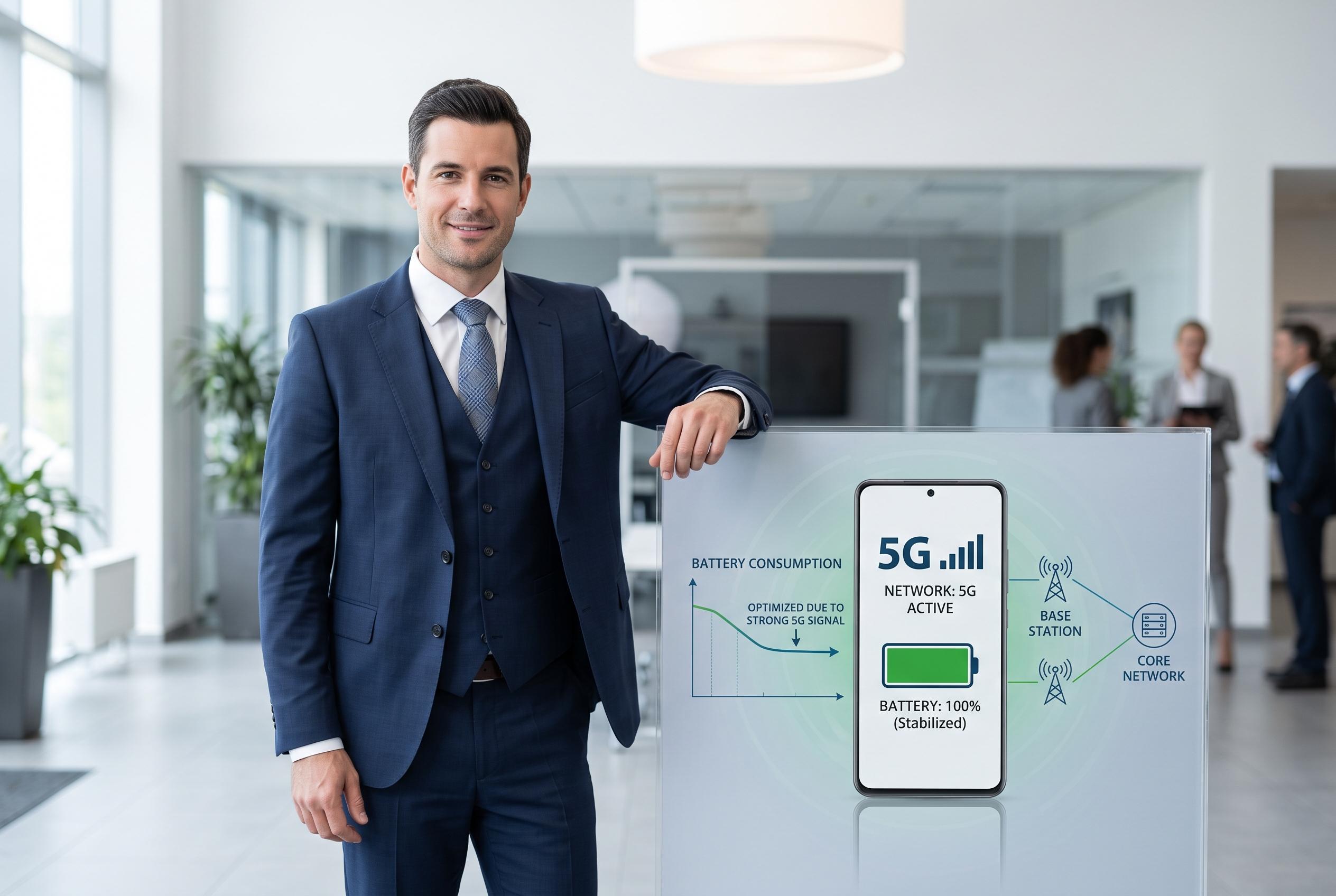

The notion that 5G inevitably consumes more battery than 4G is oversimplified. New research shows that signal strength, network architecture, and user behaviour significantly influence power consumption, challenging common assumptions about 5G battery drain.
The idea that 5G drains a phone’s battery faster than 4G is not entirely wrong, but it is also not a universal rule. The answer depends on signal strength, the network architecture in use and how a phone is being used. Jagat Review notes that 5G can increase power use in some situations, especially when reception is weak or the device is constantly searching for a stable connection.
That pattern is consistent with explanations from other tech publications. Science Insights says 5G can consume more power because the radio has to do more work, from handling wider channels to processing data at higher speeds. Batteries Plus adds that tests have found 5G can use around 6% to 11% more battery than 4G LTE on average, with the biggest drain often coming when a phone is stuck on a weak signal and repeatedly hunts for a better link.
The network setup also matters. Batteries Plus notes that so-called Non-Standalone 5G, where a handset uses both 4G and 5G at the same time, can raise power consumption further. PhoneArena has also quoted Xiaomi executive Lu Weibing as saying that 5G phones use roughly 20% more power than 4G models, reflecting the extra demands of the newer standard. That does not mean every 5G phone behaves the same way, but it does underline why battery life can vary so much from one device and one location to another.
Jagat Review points out that 5G is not always a battery drain. In areas with strong coverage, the handset does not need to work as hard to maintain the connection, and newer chipsets are getting more efficient. The article cites recent platforms such as Qualcomm’s Snapdragon 8 Elite, MediaTek’s Dimensity 9500 and Google’s Tensor G6 as examples of modems designed with better power management in mind. Faster downloads can also, in some cases, reduce overall battery use because the phone finishes the task sooner and returns to standby more quickly.
For everyday users, the practical advice is simple. Jagat Review recommends using automatic 4G and 5G switching when available, staying on 5G only where coverage is strong, keeping software up to date and relying on Wi-Fi at home whenever possible. Android Authority and other reviewers have made similar recommendations, including adaptive connectivity modes that balance speed with battery life. In the end, 5G is not inherently battery-hungry, but poor signal and heavier use can make it look that way.
Disclaimer: This content is intended for informational purposes only. Readers are advised to exercise their own judgement, conduct due diligence, or consult a qualified expert before acting on any information provided.