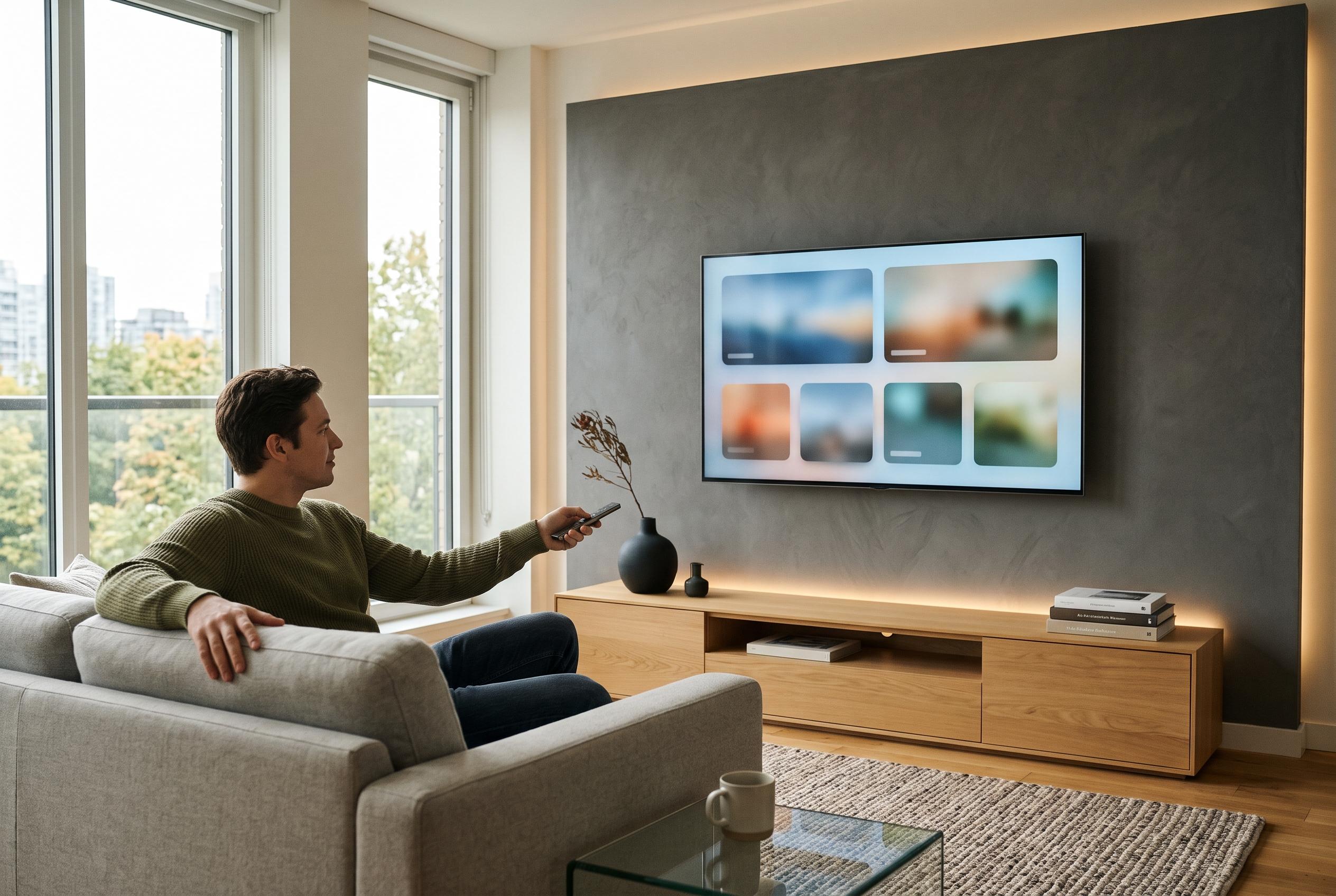

AI-assisted projects are producing cleaner, ad-free smart TV home screens, but Samsung’s tightly controlled Tizen platform makes replacing Smart Hub difficult and risky.
A recent wave of AI-assisted “vibe coding” is being used to rebuild smart TV home screens with less clutter, fewer recommendations and no advertising, according to TechRadar. The trend, which began to spread widely after an October post about a custom launcher drew millions of views, has now moved beyond Google TV and Android TV to Samsung’s Tizen platform, where users are trying to strip away the Smart Hub and replace it with something simpler.
On Samsung sets, that is more difficult than on Android-based televisions. Tizen is Samsung’s proprietary Linux-based operating system, and while it supports major streaming apps and features such as Multi View and Samsung TV Plus, RTings says its interface has long been criticised for feeling crowded and ad-heavy. The publication notes that users can disable targeted advertising, but cannot remove all ads from the interface. That limits what home-screen customisation can achieve on the platform.
The latest experiments show both the appeal and the constraints of trying anyway. Free My TV, an open-source home-screen replacement described by its developers as ad-free, is designed to work across Google TV, Android TV, LG webOS and Samsung Tizen. It uses the TV’s own ADB connection rather than root access, and can be switched off to restore the original launcher. On Android-based sets, that kind of approach can be enough to build a lighter interface in a short session.
Samsung’s own software makes the Tizen case more resistant. The company has steadily filled Smart Hub with content tiles and promotional placements, and its ad business has also pushed inventory into automated buying systems, widening the role of advertising inside the TV interface. That has made the appeal of a stripped-back replacement stronger, but also underlined how tightly Samsung controls the built-in experience.
In the reported test on a 2022 Samsung The Frame running Tizen 6.5, an open-source project called Arn0 succeeded in building a cleaner home screen with app tiles, weather and HDMI inputs, but it did not fully replace the system. The Home button still opened Smart Hub, because Samsung does not document a straightforward way to swap the launcher. The project can redirect that button only through undocumented system preferences, and only on a very specific software version. Newer Tizen builds appear to require a temporary root step or another exploit path, which increases the security risk and narrows the number of compatible televisions.
That fragmentation is now a pattern across the wider market. The more capable tools tend to be highly model-specific, while the broader, safer options are usually limited to disabling services rather than replacing the whole interface. For owners willing to experiment, the result can be a faster and less distracting TV. For everyone else, Samsung’s Smart Hub remains largely what it was designed to be: the default, and not easily displaced.
Disclaimer: This content is intended for informational purposes only. Readers are advised to exercise their own judgement, conduct due diligence, or consult a qualified expert before acting on any information provided.