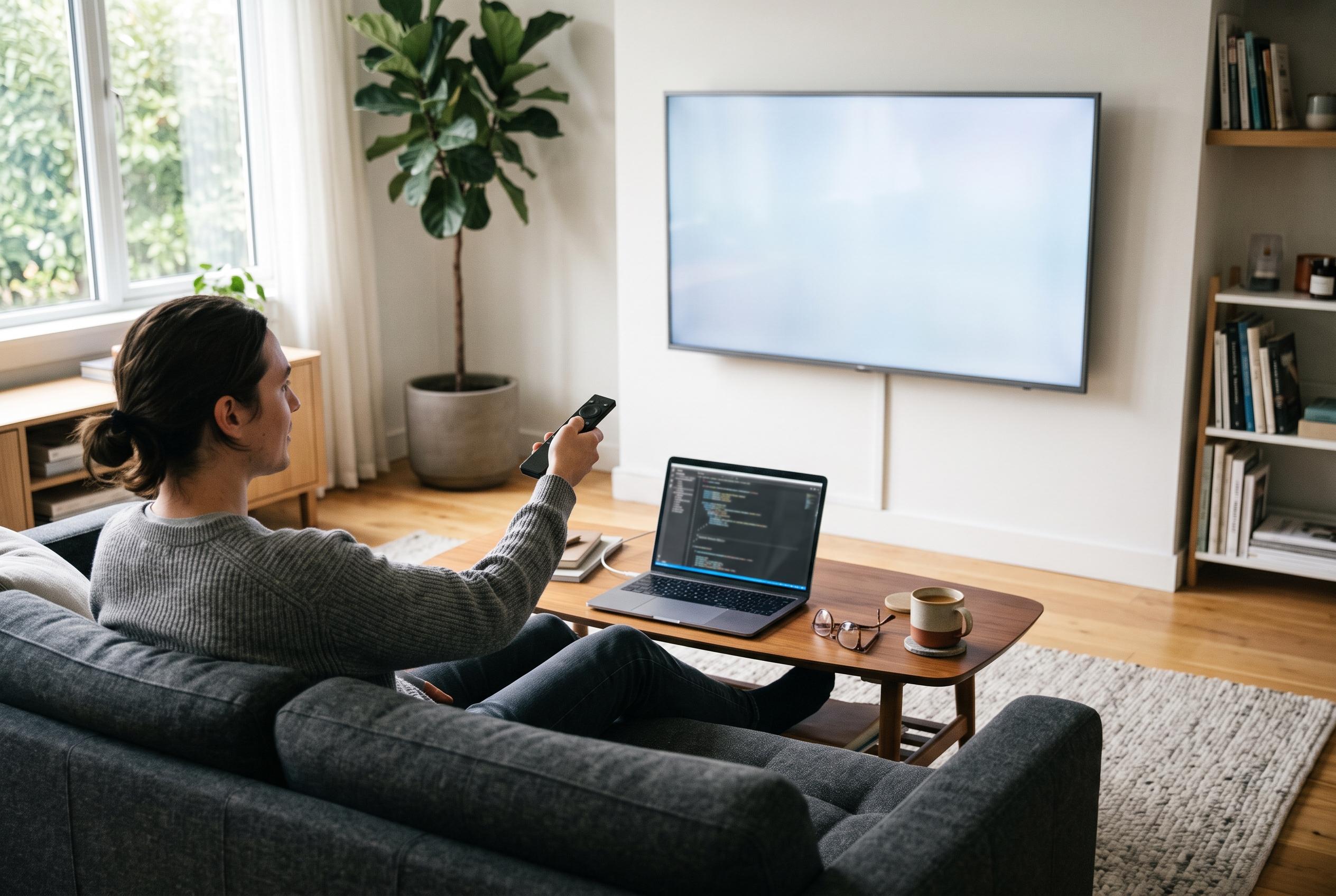

Open-source projects are using AI-assisted coding and Android Debug Bridge to strip advertising, tracking and unwanted software from smart televisions without rooting them.
Smart TVs are increasingly being treated less as finished appliances and more as software platforms that users can reshape. According to TechCrunch, a new wave of developers is using AI coding agents to remove advertising, disable tracking functions and simplify the home screen on televisions, turning them back into something closer to a basic display. The trend is being driven by open-source projects such as DumbTV and CleanYourTV, which have drawn attention for promising a cleaner interface without requiring invasive hardware changes.
The attraction is not merely cosmetic. Smart TVs now commonly bundle sponsored content, data collection and content recommendations into the operating system itself. Reports from TechCrunch and other technology outlets describe tools that strip out promotional tiles, telemetry and other preinstalled components, particularly on Android TV, Google TV and Fire TV devices. In practice, the aim is to leave only the streaming apps, HDMI inputs and other functions that the owner actually wants to keep.
What makes these projects notable is the method. The scripts work through Android Debug Bridge, or ADB, a standard command channel that allows one device on the same network to send instructions to another. That means users do not need to unlock the television, gain root access or alter the system partition. According to the project descriptions and reporting around them, the process is designed to be reversible, which lowers the risk of permanent damage and helps avoid voiding a warranty.
The technical appeal lies in AI-assisted reverse engineering. Rather than manually mapping every menu and package, developers can use coding models such as Claude to analyse the interface and generate scripts that remove or disable unwanted functions. That broader shift matters beyond televisions. It shows how AI is being used not only to build new products, but also to undo design choices made by manufacturers, particularly where advertising and tracking have become deeply embedded in consumer devices.
For privacy-focused users, the development sits alongside a wider debate about how much data smart TVs collect and how much control owners really have. Samsung and LG televisions have already faced scrutiny over viewing data and voice features, while consumer guidance has long advised checking privacy menus and content-recognition settings. The newer AI-driven tools go further, offering a more radical form of decluttering for those willing to modify the software layer rather than simply toggle a hidden setting.
Disclaimer: This content is intended for informational purposes only. Readers are advised to exercise their own judgement, conduct due diligence, or consult a qualified expert before acting on any information provided.