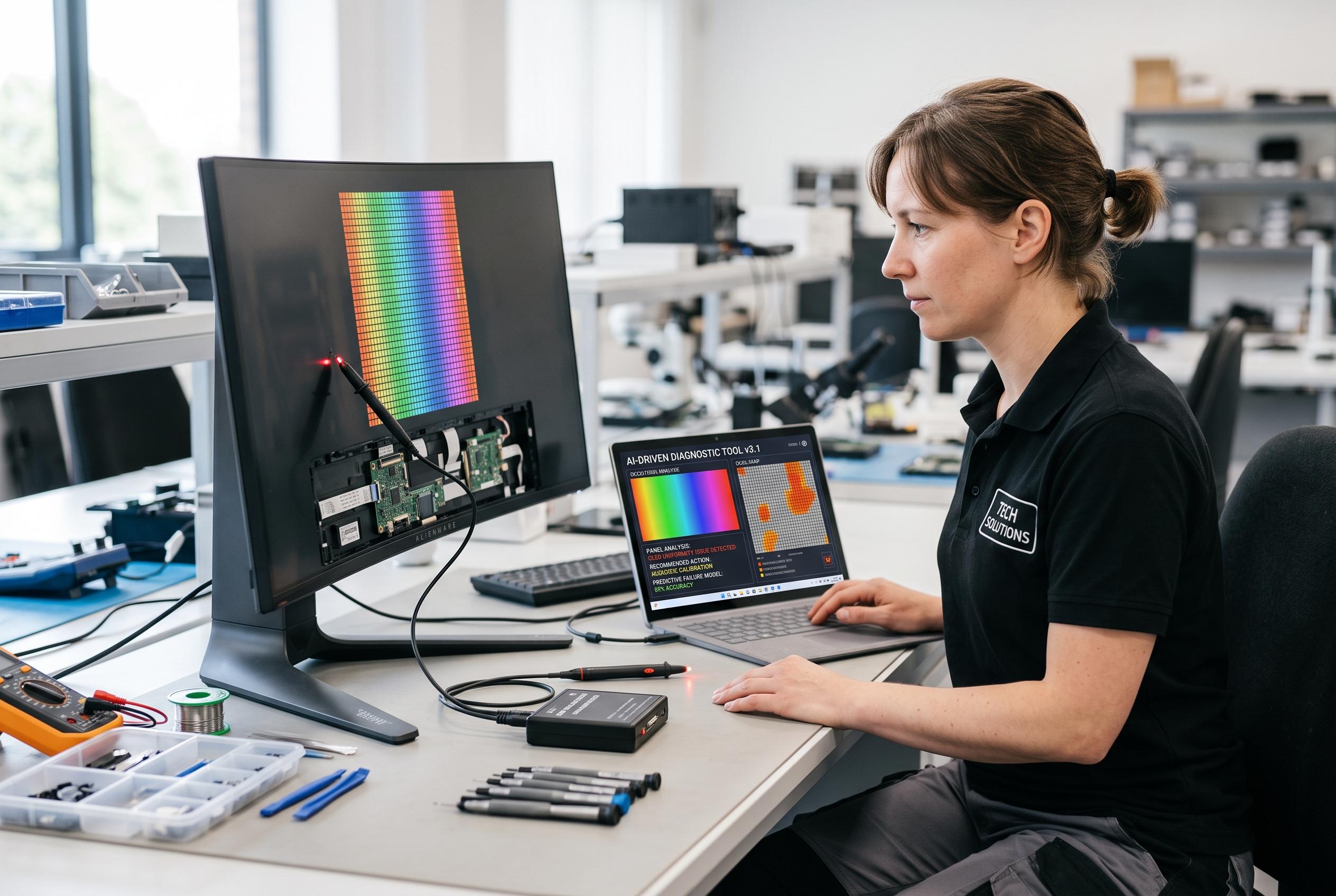

A high-end curved OLED monitor repair highlights how AI is revolutionising device diagnostics, enabling instant solutions and changing support standards across industries.
A recent repair scare with a high-end curved OLED monitor underlines how quickly AI is moving from novelty to practical support tool. When the display suddenly went blank during work, the process of identifying the fault no longer depended on trawling through scattered manufacturer pages and dense warranty wording. Instead, ChatGPT was used to pull together the product details, search the relevant support material and narrow the likely cause in under a minute.
That speed matters because hardware troubleshooting is often less about the fault itself than about finding the right documentation. Manualschat.ai, for example, is built around this problem: it uses manuals from more than 20,000 brands to deliver step-by-step guidance without forcing users to search through lengthy instructions. Similar logic underpins Telemetron, which says its AI support platform helps hardware firms monitor devices in real time, diagnose faults automatically and resolve tickets more quickly by linking customer, device and support data.
The monitor case also shows why AI can be useful at the worst possible moment. When a device fails, users are rarely calm, and the possibility of an expensive replacement can distort decision-making. In this case, the AI not only suggested checking whether the product was still under warranty, but also helped find the customer support route. That led to a free replacement of equal or better specification, all within about 30 minutes.
The wider market is moving in the same direction. Tassient’s Aipex is aimed at IT teams that need to interrogate live device states, examine charts and approve actions while troubleshooting. Auvik AI, powered by Aurora, says it prioritises alerts and offers tailored remediation advice across network environments. In more specialised settings, Mytaia applies the same approach to medical equipment, while SpectralBot combines augmented reality with AI to guide audio-visual troubleshooting. The common aim is not just faster answers, but a shorter path from fault to action.
What makes the technology notable is not only the convenience, but the way it changes the practical standard for support. A problem that once meant hours of reading, guesswork and escalation can now be reduced to a structured diagnosis in minutes. For consumers and enterprises alike, that may be the real shift: AI is beginning to make troubleshooting feel less like administration and more like an immediate service.
Disclaimer: This content is intended for informational purposes only. Readers are advised to exercise their own judgement, conduct due diligence, or consult a qualified expert before acting on any information provided.