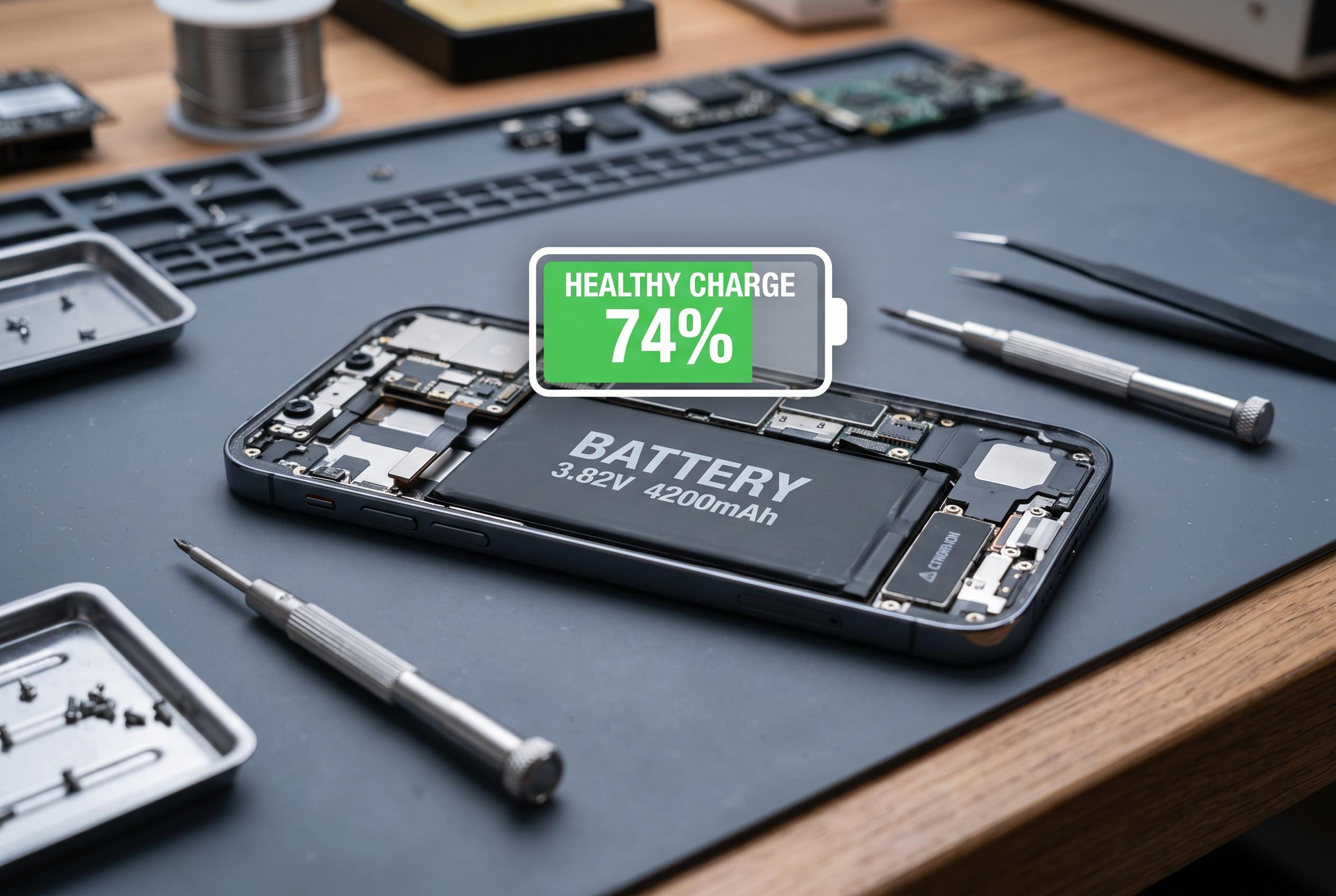

While cycle count provides some insight, remaining capacity offers a more accurate measure of a battery’s true condition, helping users decide when to replace and optimise device lifespan.
A smartphone battery’s cycle count can be useful, but it does not tell the full story. The more revealing measure is the battery’s remaining maximum capacity, which shows how much charge it can still hold compared with when it was new. As batteries age chemically, that figure falls and the handset typically runs for less time between charges. According to the source material, a battery often becomes noticeably less reliable once its capacity drops to about 80% of the original level.
Cycle count is best understood as the total equivalent of 100% of battery use, not simply the number of times a phone has been plugged in. Using 50% of a charge one day and another 50% the next still counts as one full cycle. That is why the count can be misleading on its own. A phone with a moderate cycle count may already have suffered substantial wear if it has been exposed to heat or routinely driven down to very low charge levels, while another device with a similar count may remain in better condition.
The sources also point out that battery degradation varies widely by model, battery quality and how the phone is used. Repeated overheating, especially during charging or demanding tasks, can accelerate wear. Frequent deep discharges can do the same. For that reason, two identical phones can show very different battery health even if their cycle counts are similar.
As a rough guide, substantial capacity loss is often seen after several hundred full cycles, with 300 to 500 cycles cited as a broad range. Some modern smartphone batteries are designed to retain around 80% of their original capacity after roughly 500 to 1,000 cycles, depending on the device. For owners trying to judge whether a replacement is needed, the key sign is not the cycle count alone but whether the remaining capacity has fallen close to that 80% mark and the phone’s battery life has become noticeably shorter.
Disclaimer: This content is intended for informational purposes only. Readers are advised to exercise their own judgement, conduct due diligence, or consult a qualified expert before acting on any information provided.