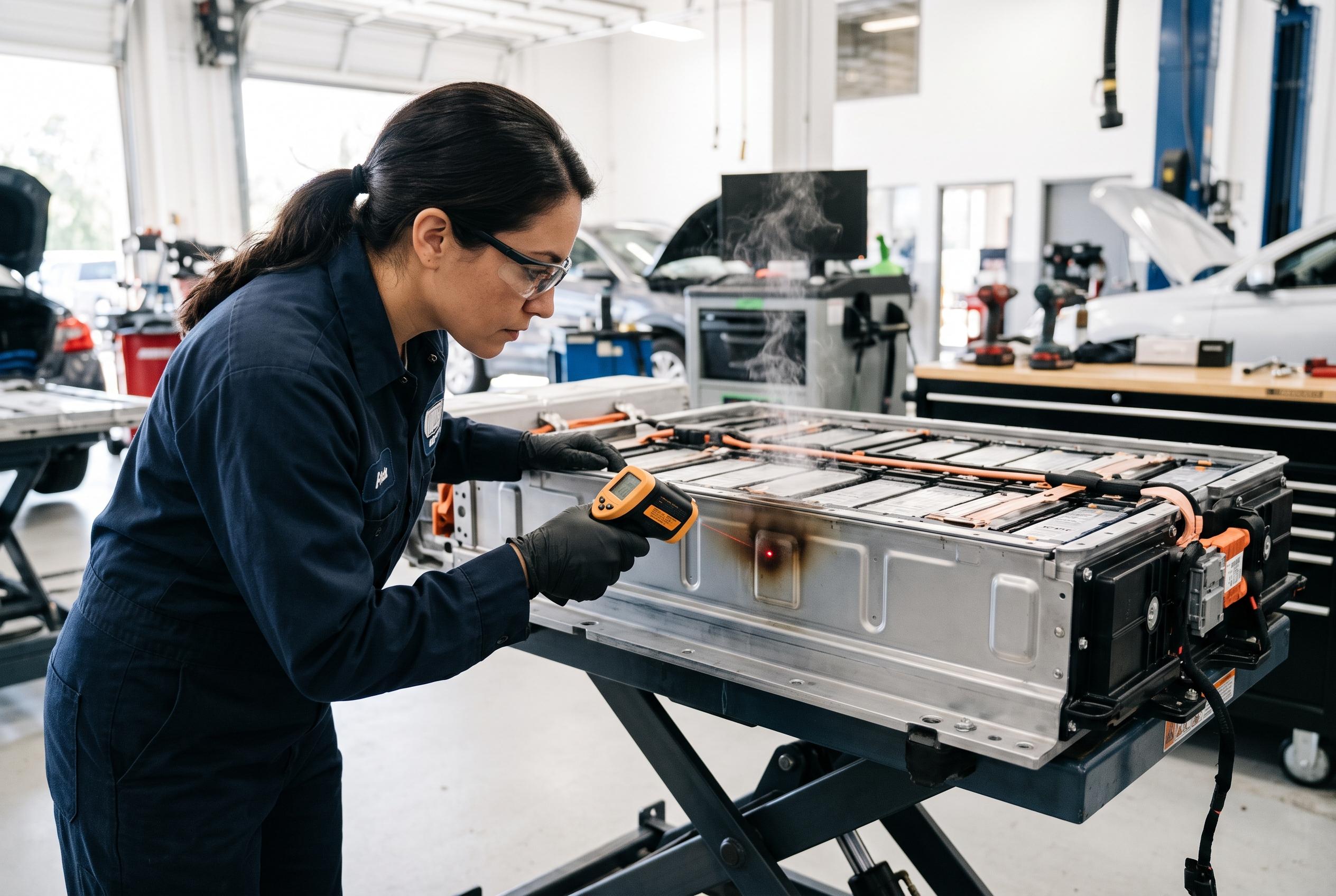

Experts emphasise the importance of recognising early symptoms like unusual heat, swelling, and odours in electric vehicle batteries to prevent catastrophic fires. Close inspection and professional intervention remain crucial following any signs of failure or damage, especially post-collision warnings.
Battery safety in electric vehicles depends on spotting the earliest signs of failure before a small fault becomes a fire risk. Experts cited in the lead report say the clearest warning is unusual heat: if a vehicle or battery pack becomes hotter than normal during charging or use, that can indicate a thermal runaway condition, where rising internal temperature triggers a self-sustaining reaction. Fire services in London and the Northern Territory give similar advice for lithium-ion batteries in other devices, pointing to excessive heat, swelling, hissing, cracking and strong chemical smells as red flags that should never be ignored.
Other warning signs can be less obvious but are equally important. According to the UK government’s battery-safety guidance for e-cycle users, problems such as failure to charge properly, leaks, bulging and unusual noises can point to internal damage or chemical instability. Portland Fire & Rescue says users should also treat popping sounds, colour changes and unusual odours as potential failure indicators. In practice, these symptoms suggest that a battery may be damaged, overloaded or exposed to conditions that could lead to overheating.
The most serious indicators are smoke, vapour or visible gas discharge. The Northern Territory emergency service warns that failing batteries can release toxic and flammable gases, which makes close inspection dangerous. EV battery failures may also be delayed after a collision: a vehicle can appear stable at first, yet hidden damage inside the battery pack can later trigger heat buildup and reignition, according to EV.com. That is why post-crash inspection by trained professionals is essential even when the exterior damage seems limited.
The basic response is consistent across the sources: move away from the vehicle, stop trying to charge or start it, and leave all intervention to specialists. The lead article says anyone noticing these signs should not attempt to operate the car or continue charging it. Fire services add that, where there is smoke or fire, the priority is evacuation and emergency response rather than direct action by the owner. For readers, the practical lesson is straightforward: treat abnormal heat, smells, sounds, swelling and charging faults as early warnings, not minor inconveniences.
Disclaimer: This content is intended for informational purposes only. Readers are advised to exercise their own judgement, conduct due diligence, or consult a qualified expert before acting on any information provided.