
Discover how leveraging current smartphone, wearable, and smart home features can improve sleep quality without the need for new hardware, by automating bedtime routines, adjusting display modes, and maintaining consistent sleep patterns.
You do not need new hardware to improve sleep. Much of the useful control is already built into the phone, watch and smart home gear people carry every day. The trick is not finding a single perfect gadget, but using a few existing settings in a more deliberate way.
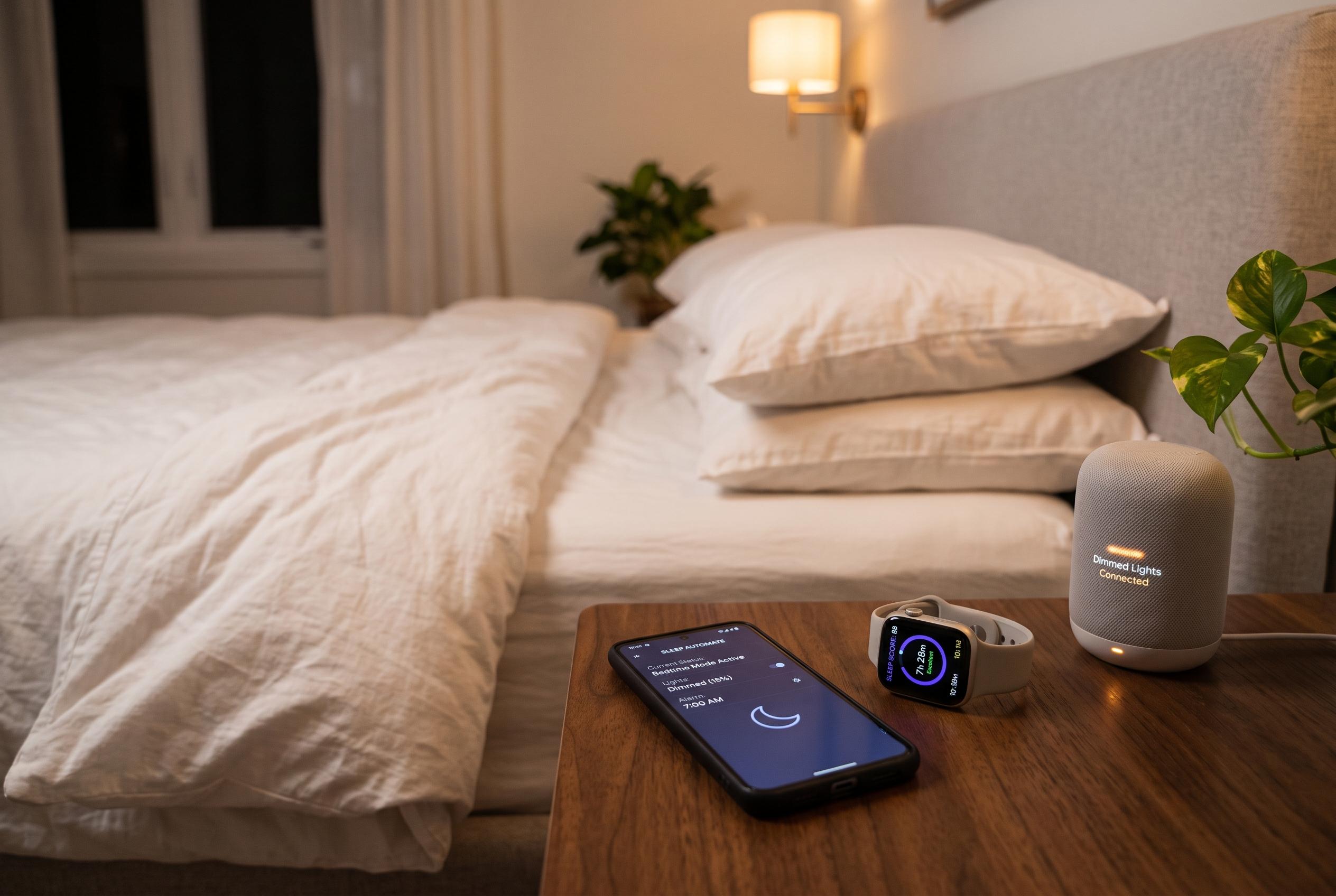
The first place to start is bedtime automation. On the iPhone, Wind Down can be set for a window of 15 minutes to three hours, then hands off to Sleep Focus, which dims the display and filters notifications to an allow list, according to MacRumors. Apple’s Sleep Mode also works across iPhone and Apple Watch, helping to mute interruptions while feeding sleep tracking on the watch. Google and Samsung offer similar controls through Bedtime mode, Do Not Disturb and Samsung’s own Modes and Routines, with Google’s support pages showing how interruptions can be switched off or managed automatically.
Dark mode is another simple change with a practical effect. Apple and Android both added it in 2019, and it can now be scheduled so the screen shifts to darker tones at sunset or on a set timetable. Samsung’s support material also says its dark or night modes can be tied to sunrise and sunset. Paired with Apple’s Night Shift or Samsung’s Eye Comfort Shield, the display becomes less harsh in the evening, which may reduce strain before sleep.
The bedroom itself can be automated too. A smart plug can shut off a lamp at a fixed hour or turn on a fan or white-noise machine without manual intervention. On an iPhone, Background Sounds can also play rain, ocean or static through the night without a separate subscription or app. These are modest tools, but they help remove the small decisions that tend to keep people awake.
Temperature matters as well. Sleep specialists generally recommend a cooler room because the body needs to drop in temperature before sleep settles properly. That is why some connected thermostats and mattress systems now automate nighttime cooling and warming through the night. The aim is not luxury for its own sake, but a steadier thermal environment that supports the body’s normal sleep cycle.
Consistency often matters more than any individual feature. Apple Health, Samsung Health, Google Fit and wearable trackers can show whether bedtime and wake time are drifting across the week, including weekends. A regular pattern tends to make sleep easier to start and wake-ups less abrupt, even if total hours do not change much.
The least glamorous setting may be the most effective: the alarm. Silent alarms on the wrist, from Apple Watch, Fitbit or Garmin, are often easier to live with than a phone siren. Some devices, including Fitbit’s Smart Wake feature, can also time the alert for lighter sleep. For many people, that means a calmer start to the day and one less reason to fling the handset across the room.
Disclaimer: This content is intended for informational purposes only. Readers are advised to exercise their own judgement, conduct due diligence, or consult a qualified expert before acting on any information provided.