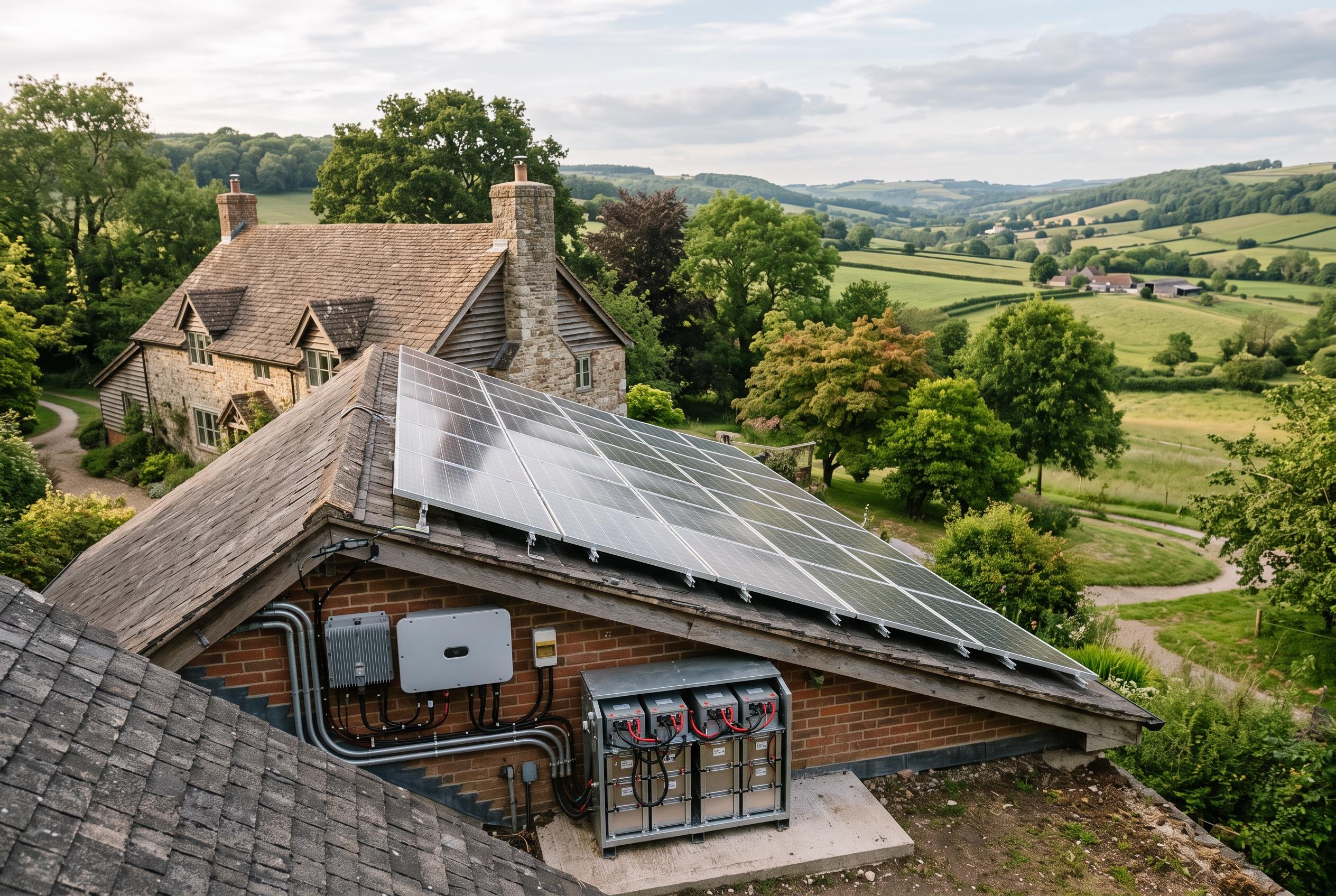

Proper sizing and design are critical for off-grid solar systems on rural properties. This article highlights common faults, seasonal challenges, and the importance of professional reviews to prevent costly downtime and enhance system resilience.
Off-grid solar on rural properties is only as reliable as the design behind it. A system can look adequate on paper and still struggle in practice if it does not match the property’s real energy profile, seasonal output, backup arrangements and operating conditions. On a working rural site, that means accounting for pumps, refrigeration, workshop tools, water treatment and household demand at the same time, not just average daily consumption.
Before buying a property with an existing standalone solar setup, it is wise to have it examined by a competent technician. Just Plug Solar notes that apparently functioning systems can still conceal degraded batteries, loose connections and neglected maintenance, all of which may create unexpected repair bills after completion. That warning is consistent with the broader point that reliability depends on the condition of the whole installation, not only whether the lights are on.
Several faults recur in poorly performing systems. Safety-focused guidance from Just Plug Solar and other technical sources points to loose connections, mismatched protection devices, poor grounding, incorrect wiring and moisture exposure as common weaknesses that reduce efficiency and can damage equipment. Inverters are particularly vulnerable if they are installed in unsuitable environments or connected incorrectly, while batteries can deteriorate quietly until they no longer hold enough usable charge.
Seasonal output is another critical factor. A system that performs well in summer may still fail in winter if the array cannot recharge the batteries after longer nights and shorter days. Environmental conditions such as shading, dust, heat and soiling can also reduce production. If the battery bank is too small, the site may have reasonable daytime generation yet still run short overnight, forcing the generator to start more often than expected.
Load growth is equally important. A rural property that later adds a second dwelling, irrigation equipment, an air conditioner, a cold room or an electric vehicle charger may push an older system beyond its original assumptions. In that situation, the answer may be more solar, more storage, a larger inverter, or changes to when loads are run. Monitoring data is useful here because it shows whether the problem is a failed component or a broader design limit.
The practical lesson is that off-grid systems should be specified for the property, not for an idealised average day. The best installations are sized around winter performance, motor-start demand, backup generator behaviour and future expansion. For buyers and owners alike, a proper technical review is the most reliable way to avoid false confidence and prevent avoidable downtime.
Disclaimer: This content is intended for informational purposes only. Readers are advised to exercise their own judgement, conduct due diligence, or consult a qualified expert before acting on any information provided.