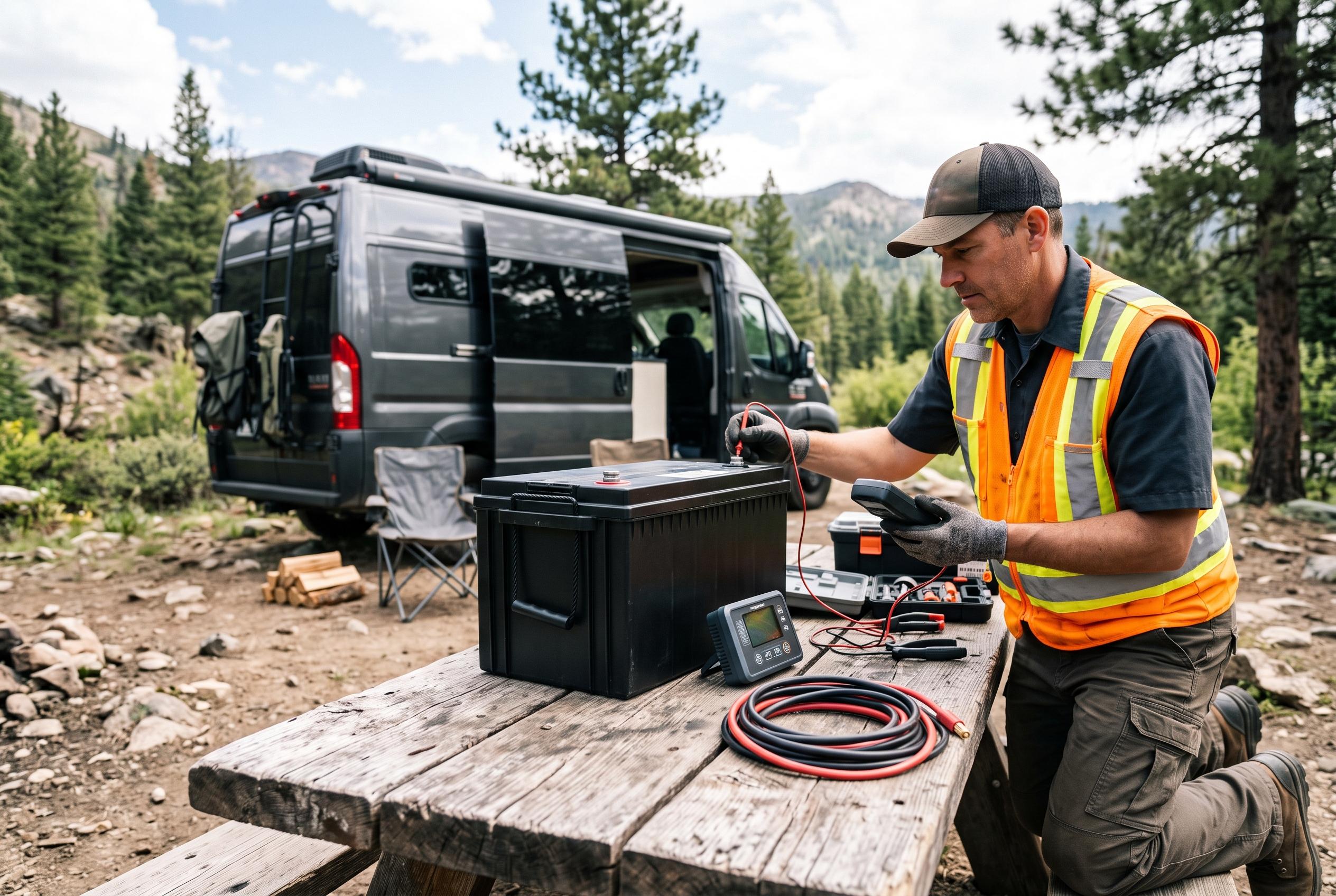

Routine inspection, correct charging, and understanding battery chemistry are vital for dependable RV power, especially during long trips or storage periods, where simple checks can prevent roadside failures.
A reliable battery bank is the difference between a comfortable off-grid stop and a cut-short journey. In the lead article, Research Snipers argues that the most useful checks are the simplest ones: confirm the battery’s resting voltage, test it under load, inspect the cabling, and make sure the charging profile matches the chemistry. That advice aligns with RV maintenance guides from RV Resources, RV.com and Camping World, which all stress that routine inspection and correct charging are central to battery life and trip reliability.
The first step is to understand what the battery is actually doing, not what the display claims. A rested voltage reading, taken after the charger has been off for several hours, remains one of the quickest ways to judge lead-acid health. RV Resources and the RVDA both note that voltage, state of charge and load behaviour together give a far more accurate picture than a dashboard gauge alone. For lithium systems, a dedicated monitor is often more useful because voltage alone can be misleading.
Load testing matters because a battery can look healthy at rest and still fail when asked to power a furnace fan, inverter or water pump. The practical test described in the lead article mirrors standard RV care advice: apply a modest load, watch how quickly the voltage falls and note whether the battery recovers promptly once the load is removed. A battery that sags sharply or hits low-voltage cut-off too early is usually nearing the end of its useful life.
Connections are another common fault line. Camping World and RV.com both recommend cleaning terminals, checking for corrosion and confirming that cables are secure end to end. Loose lugs, oxidised terminals and poor grounding can mimic battery failure, even when the cells themselves are still serviceable. In practice, many roadside power complaints are solved not by replacing the battery, but by correcting a bad connection.
Chemistry and capacity should also match the way the coach is used. A weekend camper who spends most nights on shore power does not need the same storage system as a full-time boondocker. The lead article’s comparison between flooded lead-acid and lithium iron phosphate is consistent with current RV guidance: lithium offers far more usable capacity per kilogram, while lead-acid is cheaper but less forgiving of deep discharge. The right choice depends on how often the coach is off-grid, how many appliances run overnight and whether an inverter is expected to carry heavier household loads.
Cold weather and storage discipline remain critical, especially for travellers who leave rigs parked for long periods. Lithium batteries generally should not be charged below freezing unless the pack has built-in heating, while lead-acid batteries lose effective capacity in low temperatures. For long-term storage, the guidance across RV Resources, Camping World and long-stay RV maintenance advice is broadly the same: fully charge before parking, reduce parasitic drains and check the bank regularly so it does not sit for months at a damaging state of charge.
Disclaimer: This content is intended for informational purposes only. Readers are advised to exercise their own judgement, conduct due diligence, or consult a qualified expert before acting on any information provided.