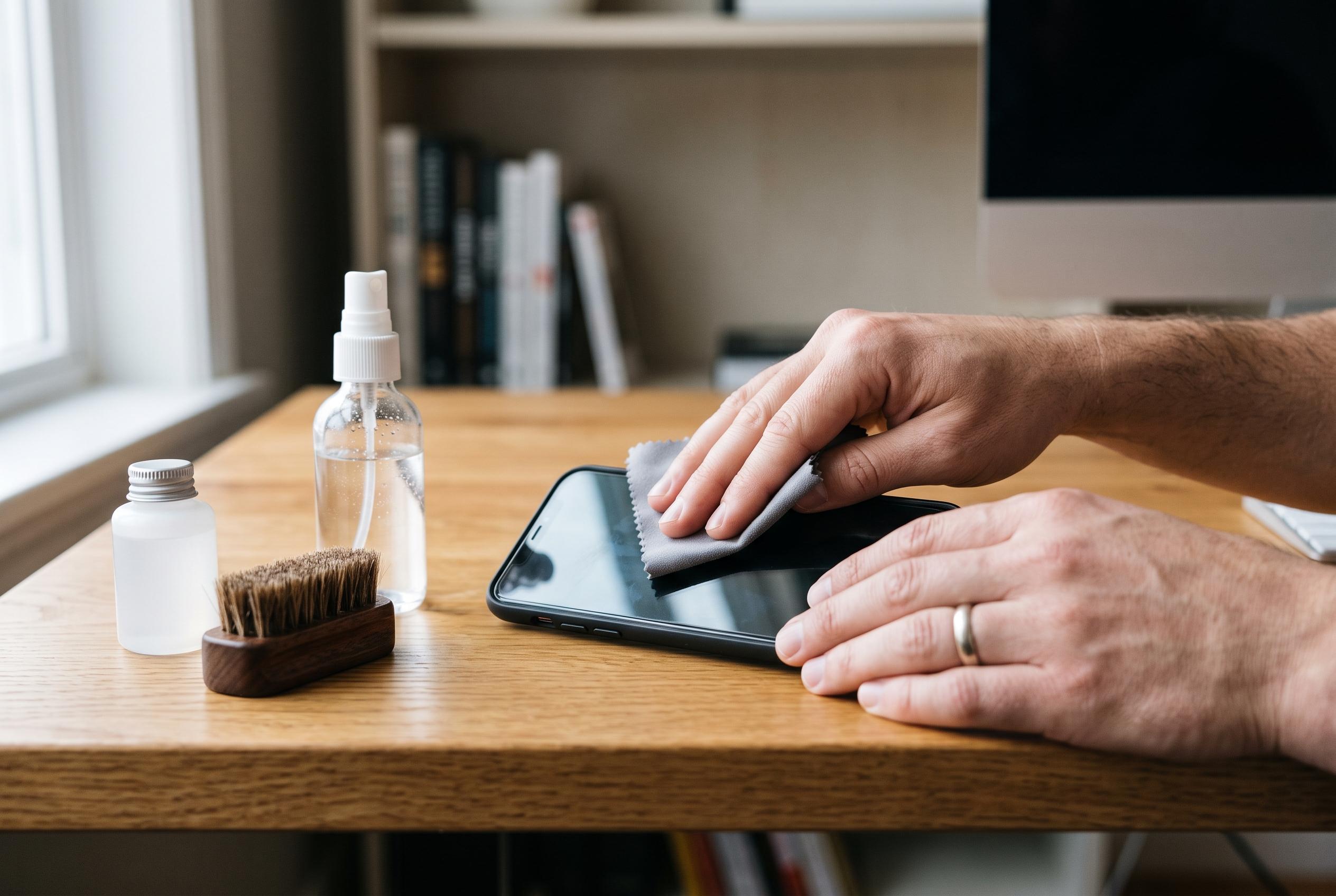

While cleaning your smartphone is good sense, using the wrong products can cause lasting damage. Experts recommend gentle cleaning techniques to preserve device longevity and functionality.
Cleaning a smartphone is sensible maintenance, but the wrong products can do lasting harm. As Engadget notes, the modern handset may be built from tough materials, yet its screen coating and internal openings remain vulnerable to harsh cleaners, excess liquid and abrasive cloths. The safest approach is simple: use gentle methods, keep moisture controlled, and avoid anything that can strip the display’s protective layer.
The most common mistake is reaching for household sprays designed for glass, along with bleach, hydrogen peroxide or similar aggressive chemicals. Tom’s Guide and Good Housekeeping both warn that these products can wear away the oleophobic coating on a phone screen, the thin layer that helps repel oils and reduces fingerprints. Once that coating is damaged, the display tends to pick up smears more quickly and becomes harder to keep clean.
A microfibre cloth remains the best everyday tool. If a screen needs more than a dry wipe, the cloth should be only lightly dampened with water or a small amount of mild soap solution. Several guides, including those from Samsung-focused site SamMobile and Android Central, say a cloth can also be used with a screen-safe cleaner or a solution containing 70% isopropyl alcohol, but the liquid should be applied to the cloth rather than the device itself. The phone should be switched off and removed from its case before cleaning.
Extra care is needed around ports, speaker grilles, buttons and camera modules. Spraying liquid directly onto the handset can let moisture seep into gaps and cause internal damage. That warning is especially important for people who assume a water-resistant phone is safe from careless cleaning. Water resistance is not the same as waterproofing, and deliberate wetting still creates risk, particularly when the device is connected to power.
Compressed air is another poor choice. According to Good Housekeeping, it can force dust deeper into openings instead of removing it. Paper towels and rough fabric are also best avoided because they can act like fine abrasive material and leave microscopic scratches over time. Even alcohol wipes should not be used too often, since repeated use may gradually weaken the screen coating. The same rules apply to cases: plastic and silicone covers can usually be washed with mild soap and water, while leather needs a gentler touch because alcohol can dry and crack the material.
Disclaimer: This content is intended for informational purposes only. Readers are advised to exercise their own judgement, conduct due diligence, or consult a qualified expert before acting on any information provided.