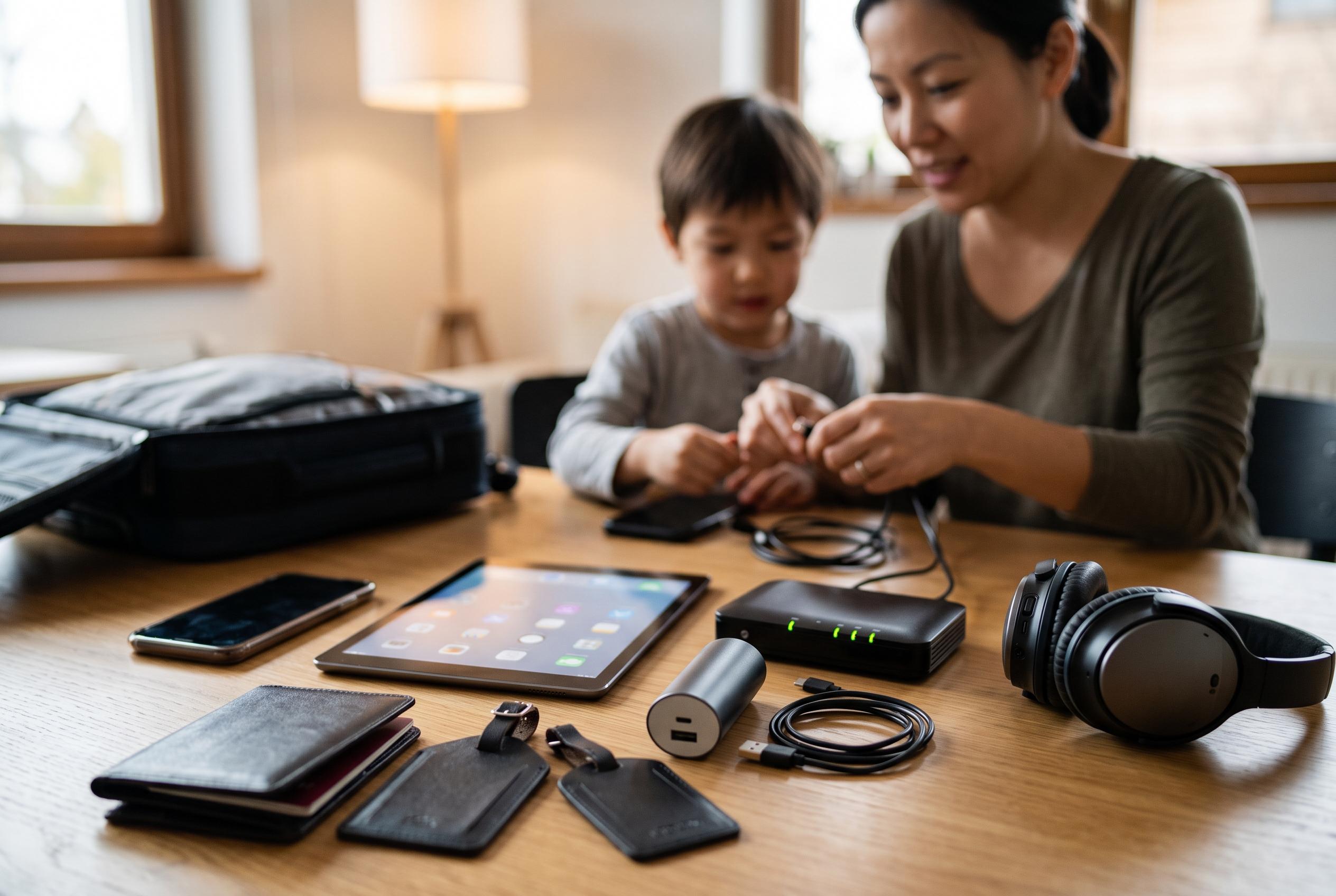

As family holidays become increasingly reliant on digital devices, experts recommend proactive steps to protect privacy, ensure connectivity, and manage device security to prevent holiday disruptions and safeguard personal data.
Family holidays now carry a digital load that can be as demanding as the luggage. Parents rely on phones for bookings and boarding passes, children arrive with tablets and games, and teenagers often expect constant access to messaging and social apps. The result is convenience, but also more opportunities for a lost handset, a weak password or a hurried tap on the wrong link.
The safest approach is to prepare devices well before departure. Tech Mobile Review recommends updating phones and tablets in advance, turning on screen locks and location-finding tools, and backing up photos and documents while reliable Wi-Fi is still available. REI’s travel gear guidance adds that travellers should also pack the right charging kit, including cables, power banks and adapters suited to the destination, so that dead batteries do not become the first problem of the trip.
Families should also decide in advance how they will connect once away from home. That means agreeing who may approve a new network, when mobile data should be used and how to respond to sign-in pages that ask for more information than expected. The checklist published by Extraordinary Chaos suggests that a VPN can add an encrypted layer on unfamiliar Wi-Fi, but it does not replace basic caution, and sensitive tasks such as banking are often better delayed until a trusted connection is available.
Children and teenagers need rules they can remember, not a long briefing that is forgotten by the time the holiday starts. A simple set of instructions works best: ask before joining an unknown network, do not install software because a pop-up insists on it, never share a password or verification code, and tell an adult immediately if a device goes missing or starts behaving oddly. SignalHaven Compliance also stresses the importance of parental controls, strong account protection and two-factor authentication as part of a wider family safety plan.
The setting also matters. Airports create pressure through crowds, low batteries and rushed decisions. Hotels introduce guest networks, shared computers and connected televisions. Cruise holidays often add limited bandwidth and official apps that should be downloaded in advance. In each case, the same principle applies: use only known networks, avoid logging into primary accounts on machines you do not control and keep essential travel details stored offline as well as on the device.
Lost-device planning is just as important as prevention. Families should agree on what happens if a phone disappears: call it, check the last known location, lock it remotely if needed, then contact the mobile provider and secure key accounts if there is any sign of access. The broader aim is not to turn a holiday into a security exercise, but to make device use predictable enough that one mistake does not disrupt the whole trip. Becloser’s road-trip advice, for example, emphasises offline maps, shared location tools and simple meeting-point rules, while Travel Dojo argues for keeping the kit lean and practical, with only the devices and accessories that are actually needed.
Disclaimer: This content is intended for informational purposes only. Readers are advised to exercise their own judgement, conduct due diligence, or consult a qualified expert before acting on any information provided.