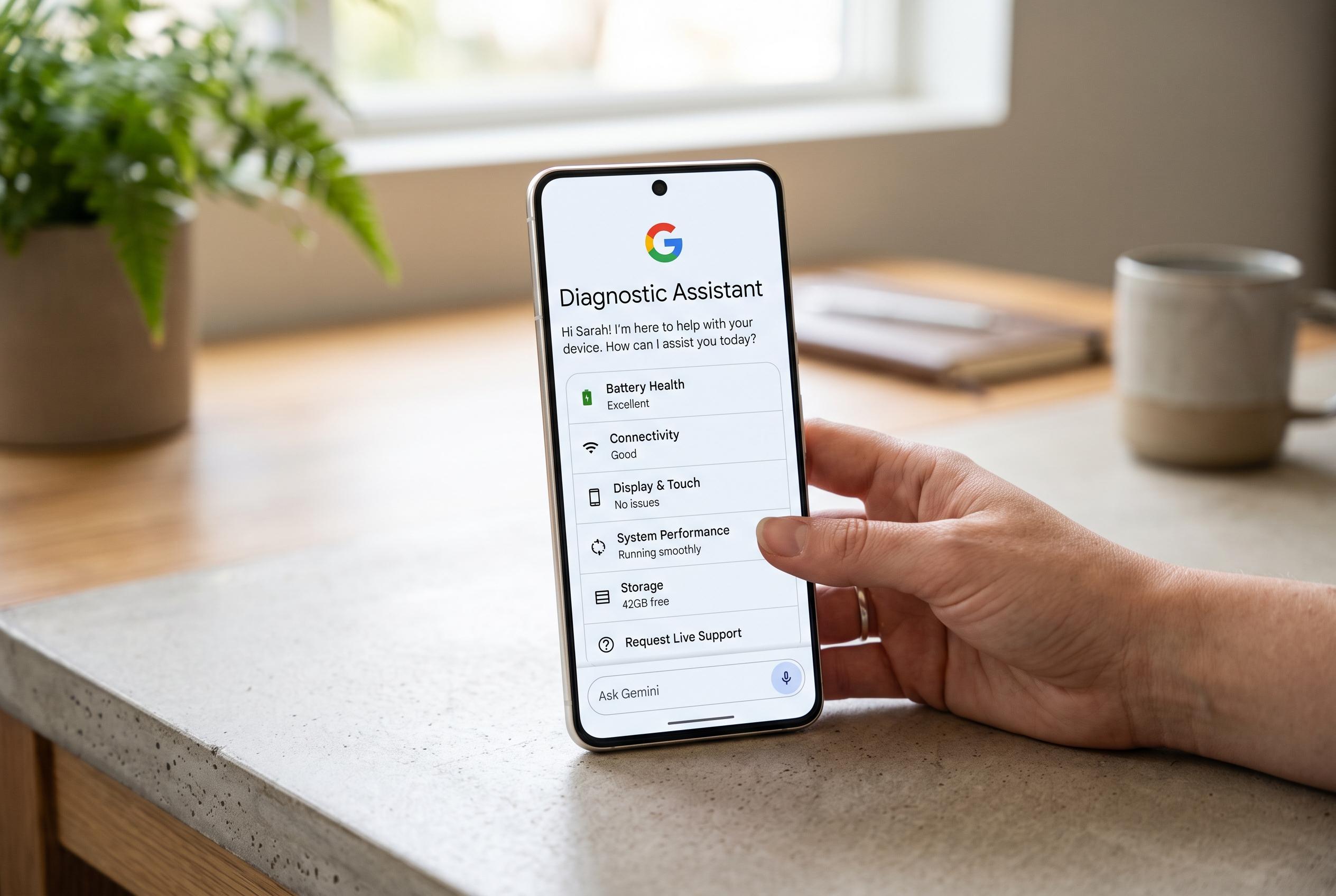

Google is integrating its Gemini AI into Pixel devices as a practical support tool, enabling users to diagnose and fix common issues directly through the device, marking a shift in AI-driven device assistance.
Google is preparing to give Gemini a more practical role on Pixel phones, turning the AI assistant into a built-in device-support tool that can help users diagnose everyday problems and, in some cases, guide them through fixes inside Android. The experimental feature, called “Device Help”, is designed to let people describe issues in plain language and receive tailored advice based on what is happening on the handset. According to Google’s own Pixel support material, Gemini is already built into Pixel 9 devices and later models, with broader availability on Pixel devices running Android 10 or above and at least 2GB of RAM. The company also says users can interact with Gemini by text, voice, images and camera input, while warning that its answers may be inaccurate or unsuitable in some cases.
The idea marks a shift in how Google wants users to think about its AI. Rather than acting only as a chat-based assistant for general queries, Gemini is being positioned as a more hands-on part of the phone itself. That could make support tasks less cumbersome for Pixel owners, who would no longer need to hunt through menus or search online forums to figure out why a battery is draining quickly, why a handset feels slow or why a Wi-Fi connection is misbehaving. Instead, the assistant would interpret the complaint, explain possible causes and point to the relevant settings.
Google has already been expanding Gemini’s reach across its devices and services. The company’s Pixel Store materials describe it as an assistant that can pull information from Google apps, images, text, audio and even what is visible on screen or in the surrounding environment. That wider access is part of what makes a support function like Device Help plausible: the assistant is not just answering questions in the abstract, but drawing on context from the device itself. Google has also been steadily extending Gemini-powered tools into other parts of the Android experience, including photo editing on Google Photos, where conversational prompts can be used to change an image.
If the feature is rolled out more widely, it could make some of Android’s more technical functions easier for ordinary users to handle. Areas such as battery use, connectivity, app permissions, notifications, storage and performance are all likely candidates for AI-assisted troubleshooting. In some cases, Gemini may do more than explain what to check: it could walk users through the necessary steps or carry out authorised changes directly. That would make the assistant feel less like a search tool and more like an intelligent interface layered over the operating system.
The bigger question is whether users will trust an AI that can both diagnose and act. Any system with access to device settings raises familiar concerns about privacy, transparency and control. Google will need to show clearly what data the assistant can see, what permissions it uses and how much authority it has to alter settings. For Pixel, however, Device Help fits a broader strategy: make Gemini a central part of the Android experience, not an add-on. If Google gets the balance right, the feature could become one of the most useful examples yet of AI moving from conversation into genuine device support.
Disclaimer: This content is intended for informational purposes only. Readers are advised to exercise their own judgement, conduct due diligence, or consult a qualified expert before acting on any information provided.