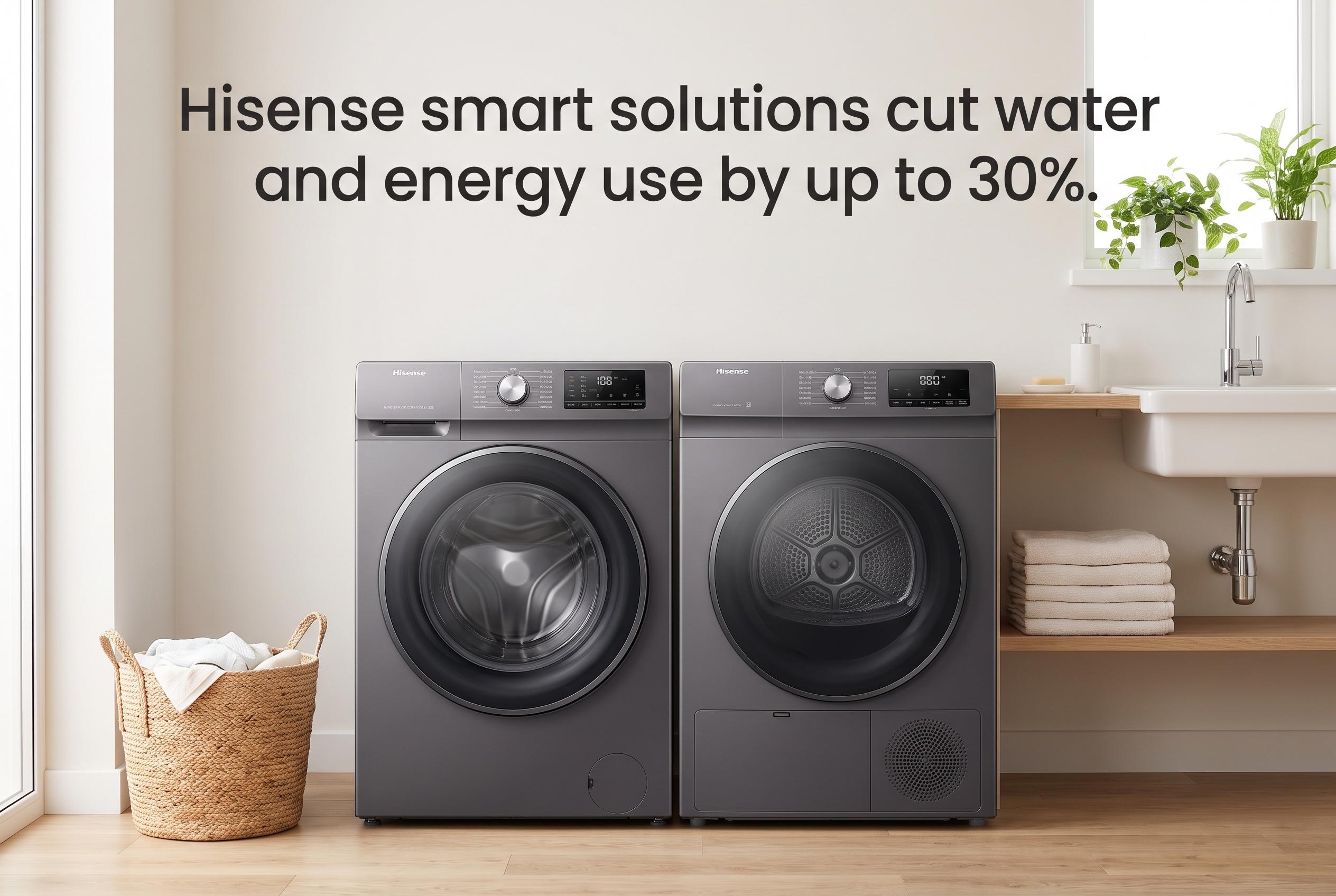

As household energy demand rises with summer heat, Hisense introduces smart washing and drying solutions that reduce water and electricity consumption by up to 30%, while maintaining effective cleaning performance.
With summer heat pushing up household energy use, Hisense has set out a series of washing tips aimed at cutting water and electricity consumption without sacrificing cleaning performance. In a company statement highlighted by TuGTech, the appliance maker said smaller changes in routine can reduce waste at a time when beach towels, swimwear and frequent laundry loads are becoming more common.
Hisense says one of the main errors is using too much detergent, which does not improve hygiene. Its machines with AutoDosing are designed to calculate the required amount automatically, while Smart Assist adjusts wash settings according to fabric colour and dirt level. The company also claims its current range can be up to 30% more efficient than traditional Class A models and can shorten wash times by as much as 38%. Product pages for models including the WF7S1247BW, WF5S1045BW, WF3S1045BW3, WF5I9043BBFS, WF5S1245BW and WF7S1247BB describe the same core features, along with remote control through the ConnectLife app for tracking water and energy use.
The brand also recommends lower wash temperatures, both to protect lighter summer fabrics and to cut running costs. On the drying side, its Serie 3s line includes a Refresh programme and anti-allergy drying modes aimed at heavier seasonal use. Hisense says these functions are meant to handle mixed and frequent loads more efficiently while reducing the need for manual intervention.
For dishwashing, the company advises against rinsing plates before loading the machine, arguing that the practice adds unnecessary water use. Instead, it points to an Auto programme that adapts the cycle to the size of the load and the level of dirt, as well as a half-load option when the machine is not full. It also cites Auto Dry, which opens the door automatically near the end of the cycle to release steam and use room ventilation to finish the process with less energy.
Disclaimer: This content is intended for informational purposes only. Readers are advised to exercise their own judgement, conduct due diligence, or consult a qualified expert before acting on any information provided.