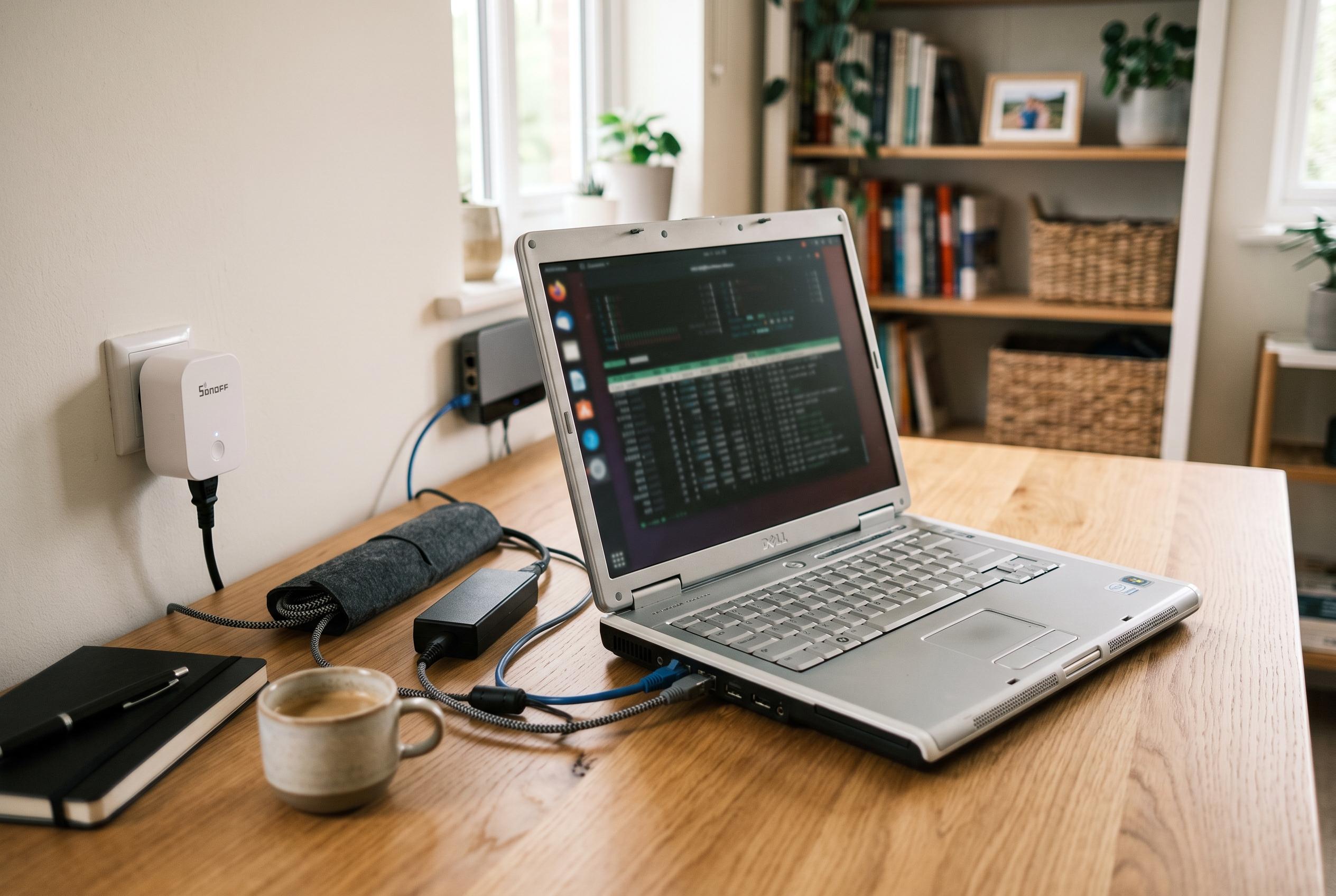

Tech enthusiasts are repurposing ageing laptops as home servers by integrating software and smart plugs to manage battery health and power, offering an affordable and sustainable solution.
Repurposing an old laptop as a Proxmox server is appealing for a simple reason: the hardware is often already available, and Proxmox VE is designed to run on modest x86-64 systems. Proxmox says the platform needs only a 64-bit CPU and as little as 1GB of RAM for evaluation, which helps explain why ageing notebooks and small PCs remain popular for home labs. Proxmox has also widened its reach more recently with official arm64 support in version 9.2, but the laptop in this case is still an x86 machine doing the kind of quiet, always-on work that suits the software well.
The problem, as XDA Developers explains, is the battery. A laptop can be a useful server shell because it already includes a screen, keyboard and built-in power management, but leaving a lithium-ion battery connected and charged around the clock is not ideal for a machine that is expected to run continuously. The writer says the battery in his Acer Predator Helios 300 could not easily be removed and there was no BIOS option to disable it, which pushed him towards a software-based workaround rather than a hardware fix.
That workaround relied on Glances, a monitoring tool that can expose system metrics through a web interface. Home Assistant’s Glances integration can read those metrics, including battery data, provided Glances is running in web server mode on the host. The XDA Developers setup used a Proxmox community script to install Glances on the node, then linked it to Home Assistant so the battery state could be used as an automation trigger.
A low-cost smart plug completed the arrangement. According to the article, the laptop’s AC adapter was connected to a TP-Link Tapo plug, allowing Home Assistant to switch mains power on and off according to battery thresholds. In the reported configuration, the plug turns off when the battery reaches 80% and switches back on when it falls below 30%, reducing the time the battery spends at full charge while keeping the server available.
The result is a pragmatic compromise rather than a perfect technical solution. It does not remove the battery risk entirely, but it does limit unnecessary charging on a machine that is being used as a home server. The writer also says the laptop has proved dependable for monitoring, networking and small local AI workloads, which underlines why recycled laptops remain attractive Proxmox nodes despite their awkward power-management quirks.
Disclaimer: This content is intended for informational purposes only. Readers are advised to exercise their own judgement, conduct due diligence, or consult a qualified expert before acting on any information provided.