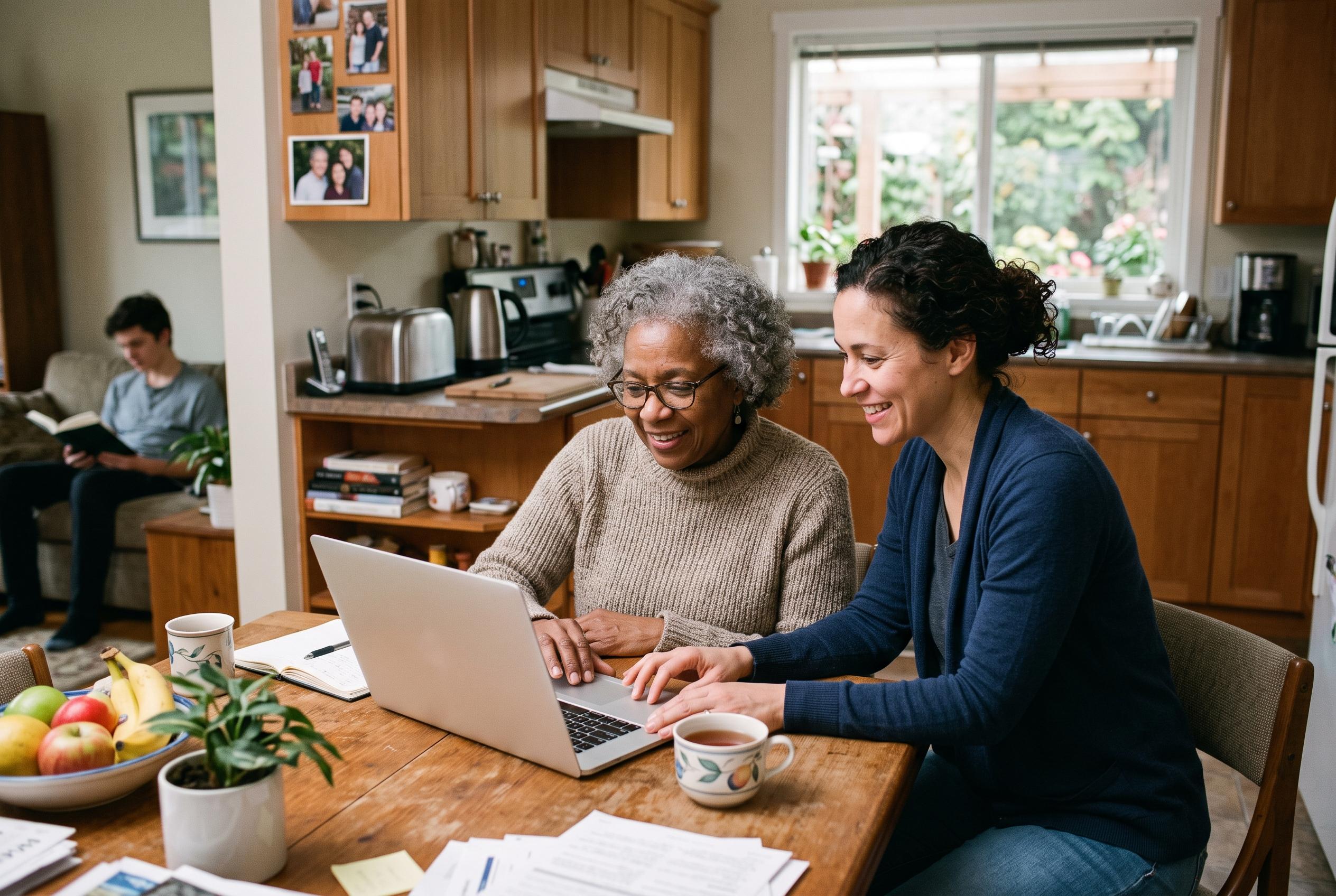

From updating devices and securing email accounts to verifying urgent requests and preparing for mistakes, a calm household plan can reduce digital risks without turning everyday technology into constant supervision.
Retirement is increasingly lived through screens. Older adults now rely on smartphones, tablets and laptops for family contact, telehealth, prescription management and banking. That convenience brings clear benefits, but it also expands the number of ways personal data can be exposed if basic protections are ignored.
The most effective first step is to secure the devices that are used every day. That means installing operating system and app updates promptly, removing software that is no longer needed and switching on automatic updates where possible. Security researchers and senior-focused guidance consistently note that outdated software leaves known vulnerabilities open, while unused apps can continue to collect data in the background. It is also sensible to review permissions regularly and to avoid downloading software from unfamiliar links. SeniorTechSafety, which publishes plain-language cyber advice for older adults, makes the same point in its guidance on passwords, scams and device protection, while the All Seniors Foundation’s 2025 safety guide also stresses routine patching and cautious browsing.
Passwords remain one of the most common weak points. Many people reuse the same login details across several accounts because they are difficult to remember, but that creates a single point of failure if one service is breached. A reputable password manager can reduce that burden, and a securely kept written record may be acceptable for those who prefer it, provided it is stored safely near the computer rather than left in the open. The email account deserves particular attention because it is usually the recovery route for other services. Multi-factor authentication should be enabled wherever possible, especially for email, banking, healthcare portals and social media. Where an authenticator app is available, it is generally stronger than a text message code.
Scams often succeed by creating pressure. Messages that demand immediate action, warnings that an account will be closed the same day, or calls claiming that a relative needs money urgently all use the same tactic: they try to force a response before the target has time to think. Guidance from senior safety organisations says the best defence is to verify requests through a separate channel, such as calling a number taken from an official statement rather than from the message itself. A verification code should never be shared with anyone who asks for it unexpectedly. The All Seniors Foundation warns that phishing emails, tech-support pop-ups, romance scams and government impostors remain among the most common threats aimed at older adults.
Safety should not mean stripping away independence. Caregivers often step in after a single mistake and end up managing everything, but that can make older adults less confident and more dependent. A better approach is to divide tasks according to the person’s health, memory, experience and preferences. For example, video calls and family messaging may be fully manageable after a brief setup, while online shopping might only need periodic checks on sellers and payment settings. Banking, money transfers and unfamiliar app installations may justify closer oversight. Bed For Seniors and Avosi both recommend a balanced routine that protects privacy without turning everyday use into constant supervision.
Every household that includes an older adult using digital services should also have a simple response plan for mistakes. Important contacts, including the bank, mobile provider, healthcare office and a trusted family member, should be kept in one accessible place. If a suspicious login, unfamiliar charge or strange message appears, the device should be disconnected from the internet, the password changed from a trusted device, the relevant provider contacted and recent account activity reviewed. Just as importantly, families should avoid blame. If people fear being criticised, they are more likely to hide errors, and that gives scammers more time to cause damage. The most useful systems are calm, brief and easy to remember, because complicated rules tend to break down precisely when pressure rises.
Disclaimer: This content is intended for informational purposes only. Readers are advised to exercise their own judgement, conduct due diligence, or consult a qualified expert before acting on any information provided.