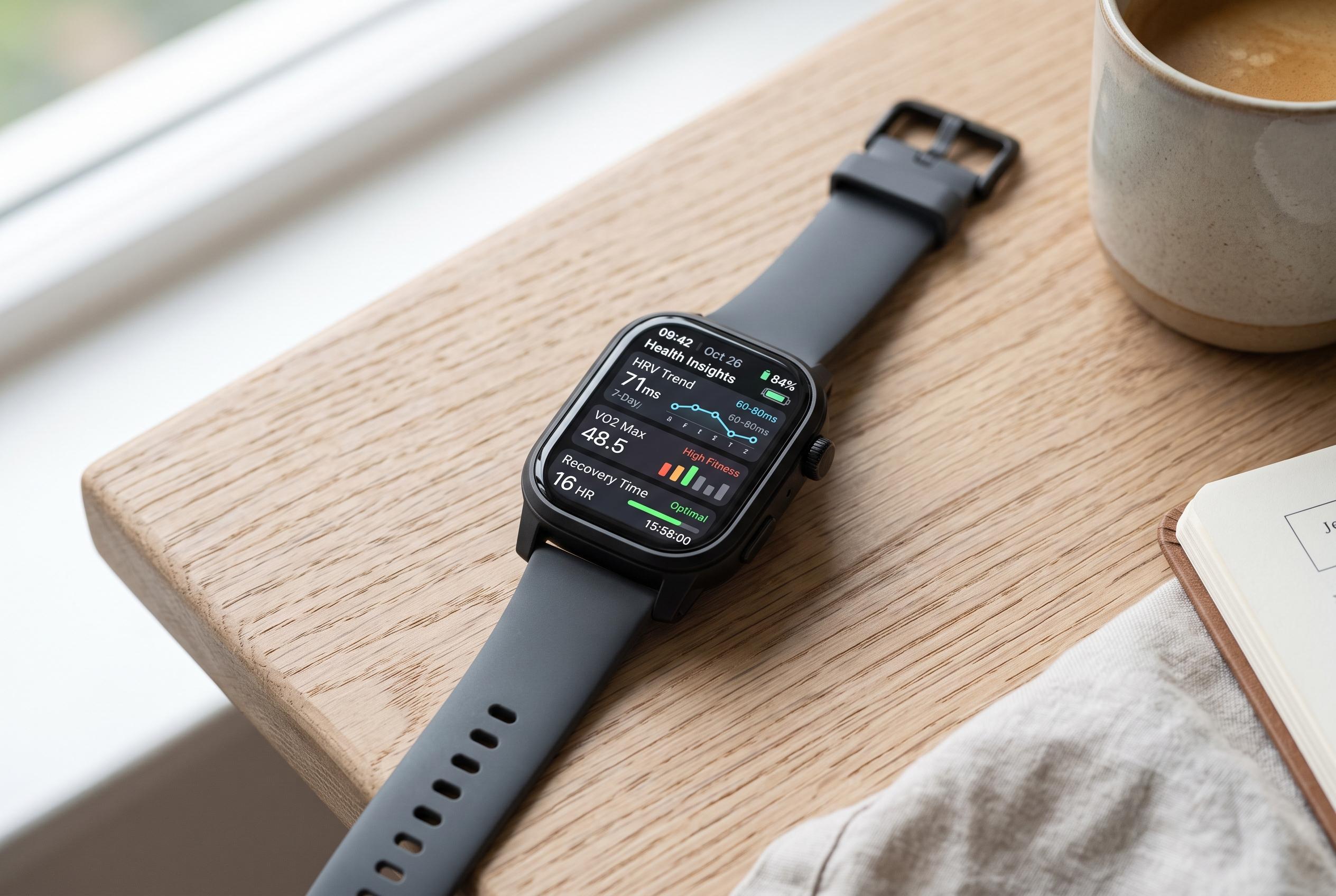

Beyond step counts, smartwatches now provide vital physiological data, such as HRV, VO₂ max, and recovery time, that can revolutionise training effectiveness and prevent overtraining. Experts emphasise these metrics as crucial tools for personalised fitness management, though they remain estimates requiring professional oversight.
Smartwatches do far more than count steps. For people training regularly, the more useful value lies in the physiological data they collect, which can help users judge effort, recovery and progress with greater precision. According to Canaltech, Thiago Augusto Costa de Oliveira, a professor at the School of Physical Education and Sport at the University of São Paulo, says the key advantage is having objective information about how the body responds to each stimulus.
One of the most useful indicators is heart rate variability, or HRV, which measures the tiny differences in time between consecutive heartbeats. The device estimates this from pulse sensor readings, often most reliably during sleep, and uses it as a sign of how the nervous system is handling stress and recovery. The Portuguese health site Medicare and Garmin both note that a higher HRV usually points to better adaptation and recovery, while a lower reading can signal strain, poor sleep or other stressors. The practical value is not the number alone, but whether the trend is improving or worsening over time.
Another important measure is VO₂ max, a shorthand for the maximum amount of oxygen the body can take in, transport and use during hard exercise. Canaltech says many watches estimate it from heart rate, pace, distance and, in some models, GPS data. Brazilian health publications BOA FORMA and Tua Saúde describe it as a key marker of cardiorespiratory fitness and cardiovascular health. As Oliveira told Canaltech, the main point is not a single reading but the direction of travel: a steady rise over months usually suggests training is improving aerobic capacity.
The article also highlights heart rate zones, which show how intensely a person is working during a session. This helps correct a common misconception that training as hard as possible every time is the fastest route to progress. In reality, lower intensities can support endurance work and recovery, while constant time in the highest zones tends to increase fatigue and carbohydrate use. Canaltech says the watch can make that pattern visible during or after a workout, helping users avoid overreaching and unnecessary injury risk.
The final metric is recovery time, an estimate of how long the body may need before the next demanding session. Watches calculate this from variables such as exercise intensity, heart rate, HRV and sometimes sleep quality. Oliveira warns that repeated training without enough recovery can contribute to overtraining, with consequences including reduced performance, mood changes, sleep disturbance and a higher risk of injury. He also stresses that smartwatches are support tools, not substitutes for professional supervision, because their readings are still algorithm-based estimates with known limits, especially during intense or highly dynamic exercise.
Disclaimer: This content is intended for informational purposes only. Readers are advised to exercise their own judgement, conduct due diligence, or consult a qualified expert before acting on any information provided.