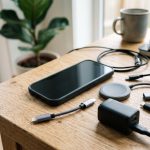

Planning ahead with charged batteries, car chargers, solar, or manual devices can ensure connectivity when the power fails, alongside safety tips for safe charging during outages.
During a blackout, a dead phone can quickly become more than an inconvenience. The most reliable way to stay connected is to prepare before the power fails, with a charged power bank, a car charger, a laptop, a solar charger or a hand-crank device ready to use.
A battery pack remains the quickest option. If it has been topped up in advance, it can usually deliver several full charges, depending on capacity. Public safety advice from the US Centres for Disease Control and Prevention is clear on one point: charge phones and other essential devices before a storm, not after the lights go out.
A vehicle can also provide temporary power. A phone may be charged through a car’s USB port or a 12-volt adaptor, but the engine should be running if the session is likely to be long, to avoid draining the car battery. Guidance from power-outage specialists also warns against using a vehicle in an enclosed space because of the risk of carbon monoxide.
A laptop can serve as an emergency source too, although charging is slower and often partial. Solar chargers offer a cleaner off-grid alternative, but their effectiveness depends heavily on direct sunlight. Hand-crank chargers go one step further by relying only on manual energy, making them useful when every other source has failed.
Whatever the method, safety matters. The most important precautions are to use certified accessories, avoid charging overnight and keep the device in a ventilated space. Battery-saving measures also help stretch remaining power: lower screen brightness, switch on low-power mode, close background apps and turn off wireless functions that are not needed.
Disclaimer: This content is intended for informational purposes only. Readers are advised to exercise their own judgement, conduct due diligence, or consult a qualified expert before acting on any information provided.