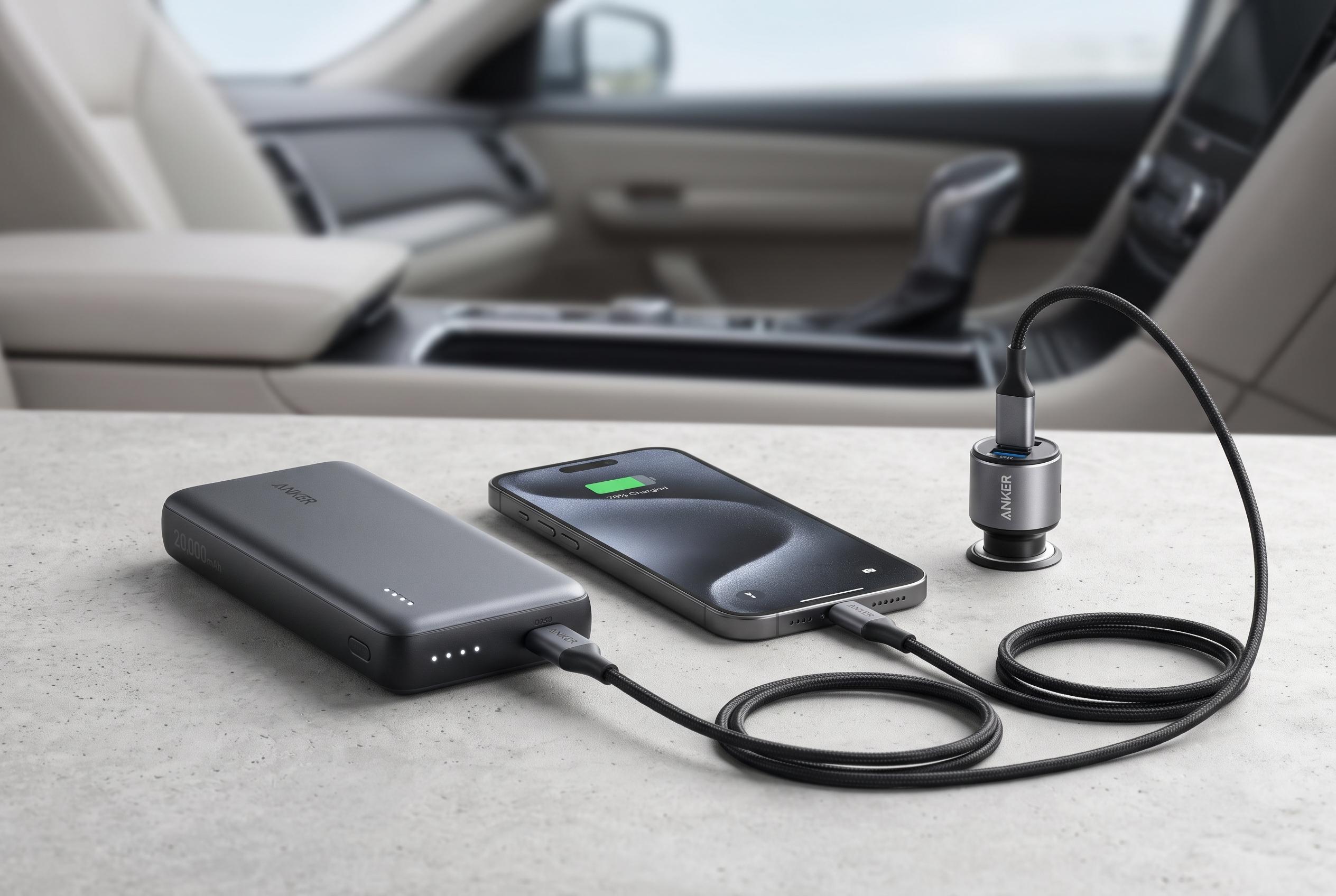

With blackouts becoming more frequent, exploring practical methods to preserve smartphone battery life and maintain connectivity is essential. From power banks to car chargers, discover the best techniques to stay connected when the mains supply fails.
A power cut can strike without warning, whether because of severe weather, grid faults or planned maintenance. When a smartphone battery is already low, the loss of mains power can quickly become more than an inconvenience: it can mean no contact, no access to useful information and no easy way to call for help. As Telefonino.net notes, there are several ways to keep a phone running even when the electricity at home is out. According to PowerOutage.us, a 10,000 mAh power bank can typically deliver two to three full charges, making it one of the most practical emergency options.
The simplest answer is still a charged power bank. These external batteries store energy in advance and then pass it to a phone through a USB cable. Larger models can provide several top-ups, although the exact number depends on the phone’s battery size and on energy lost during conversion. For that reason, it is sensible to keep a power bank topped up and in an easy-to-reach place rather than buried in a drawer.
A car can also serve as a temporary charging point. Both Batteries Plus and CarParts say many modern vehicles have built-in USB ports, while a 12-volt adapter can be used if needed. The key point is to avoid draining the vehicle battery: charging is safer with the engine running, and only for as long as necessary. CarParts also warns that leaving a running car in a garage or other enclosed space creates a serious carbon monoxide risk.
A laptop may offer another stopgap solution if it still has battery life left. A USB cable is usually enough to transfer power from the computer to the phone, although charging will normally be slower than with a wall socket. Even so, it can be enough to keep a phone alive until electricity returns.
For people who want a method that does not depend on the grid at all, portable solar chargers are worth considering. They convert sunlight into usable power and can recharge small electronics outdoors. Their main weakness is speed: performance falls sharply in poor light, and small solar panels built into some power banks are best viewed as emergency back-ups rather than fast chargers.
For longer outages, portable power stations have become an increasingly popular option. These larger battery units can power several devices at once, including phones, tablets, laptops and some small appliances. They cost more than a standard power bank, but they are among the most useful tools for blackouts that last hours or even days.
There are also smaller accessories that can help in a pinch, such as solar lamps with USB ports and hand-crank chargers. The latter generate only limited power, but may be enough to place an emergency call or send a message. Just as important as finding a source of electricity is reducing demand: lowering screen brightness, switching on battery-saver mode, turning off Bluetooth, GPS and Wi-Fi when they are not needed and using aeroplane mode can all extend battery life. Telefonino.net also advises keeping the battery above 20% where possible and preparing in advance by fully charging devices, checking torches and loading offline maps before a storm or outage arrives.
Disclaimer: This content is intended for informational purposes only. Readers are advised to exercise their own judgement, conduct due diligence, or consult a qualified expert before acting on any information provided.