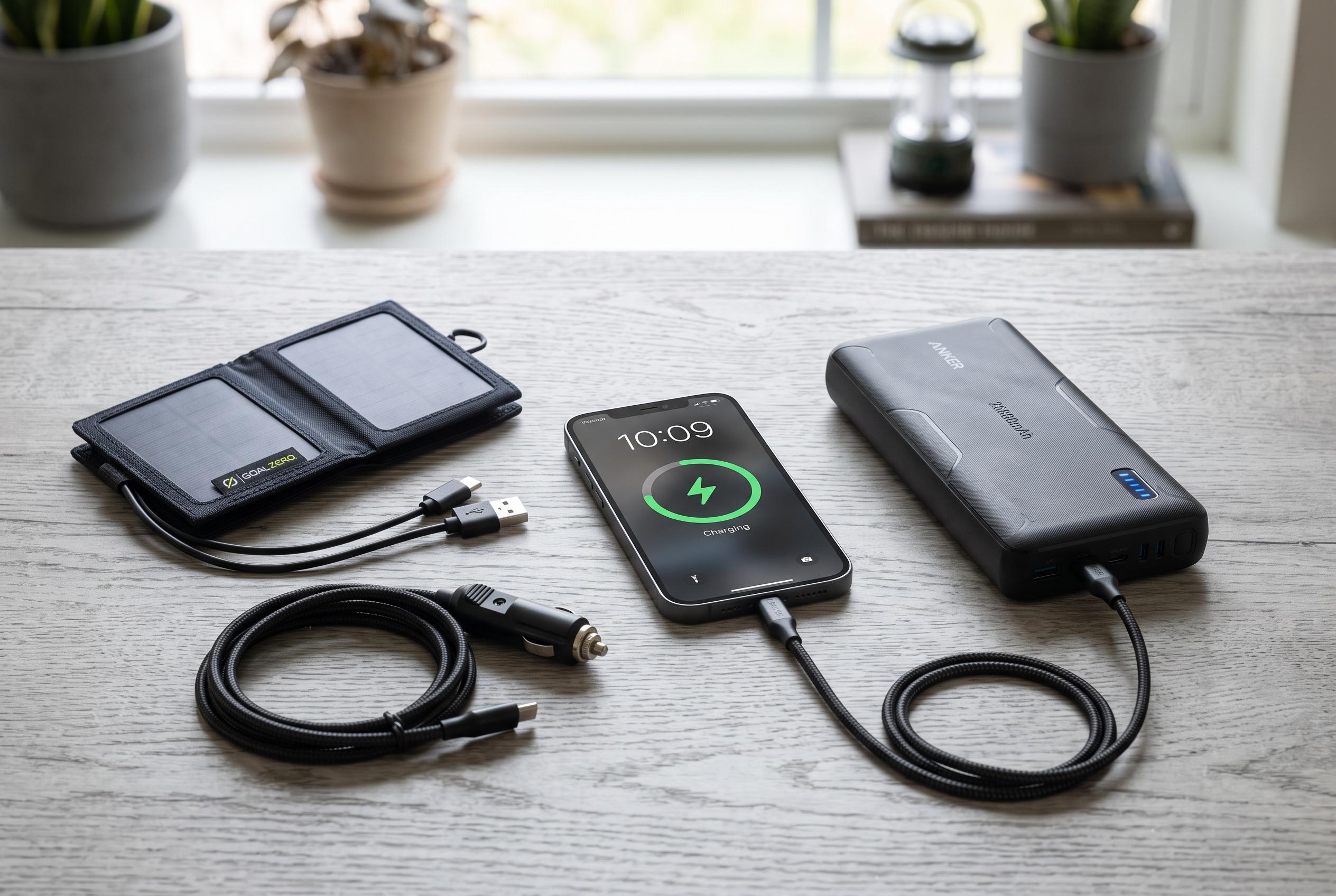

In the event of a power cut, smart preparation using power banks, vehicles, solar chargers, and safe practices can keep your smartphone alive when you need it most.
A power cut can leave a smartphone with a dwindling battery just when it is most needed. The practical answer is not panic but preparation: a charged power bank is the most reliable first-line option, and a well-sized unit can usually deliver one to three full phone charges, according to the guidance included in the source material.
If no power bank is available, a car can serve as an emergency charger through its USB port or 12V socket. The key precaution is to run the engine while charging so the vehicle battery is not drained. A laptop can also provide a useful temporary top-up over USB, although the process is slower and is unlikely to fully recharge a phone before household electricity returns.
For longer outages, solar charging becomes more useful. Portable solar chargers and solar power banks can convert direct sunlight into electricity, but they work best in clear conditions and usually make more sense when used to recharge a power bank first rather than a phone directly. In cities, public charging points in stations, shopping centres and transport hubs can also help, though users are advised to rely on their own cable and avoid unnecessary data transfers while connected.
Battery conservation matters just as much as finding a charging source. Turning on low-power mode, lowering screen brightness and switching off Bluetooth, location services and mobile data when they are not needed can extend runtime significantly. Briefly using aeroplane mode can also help stretch the remaining charge, especially if messages are being checked only at intervals.
Safety should remain part of the plan. REI and Electrical Safety First both stress the importance of reputable chargers and power banks, while EcoFlow warns against pass-through charging unless the manufacturer specifically allows it. It is also wise to charge on a hard, ventilated surface, keep batteries away from heat and never leave devices charging unattended overnight, particularly under bedding or in enclosed spaces where heat can build up.
Disclaimer: This content is intended for informational purposes only. Readers are advised to exercise their own judgement, conduct due diligence, or consult a qualified expert before acting on any information provided.