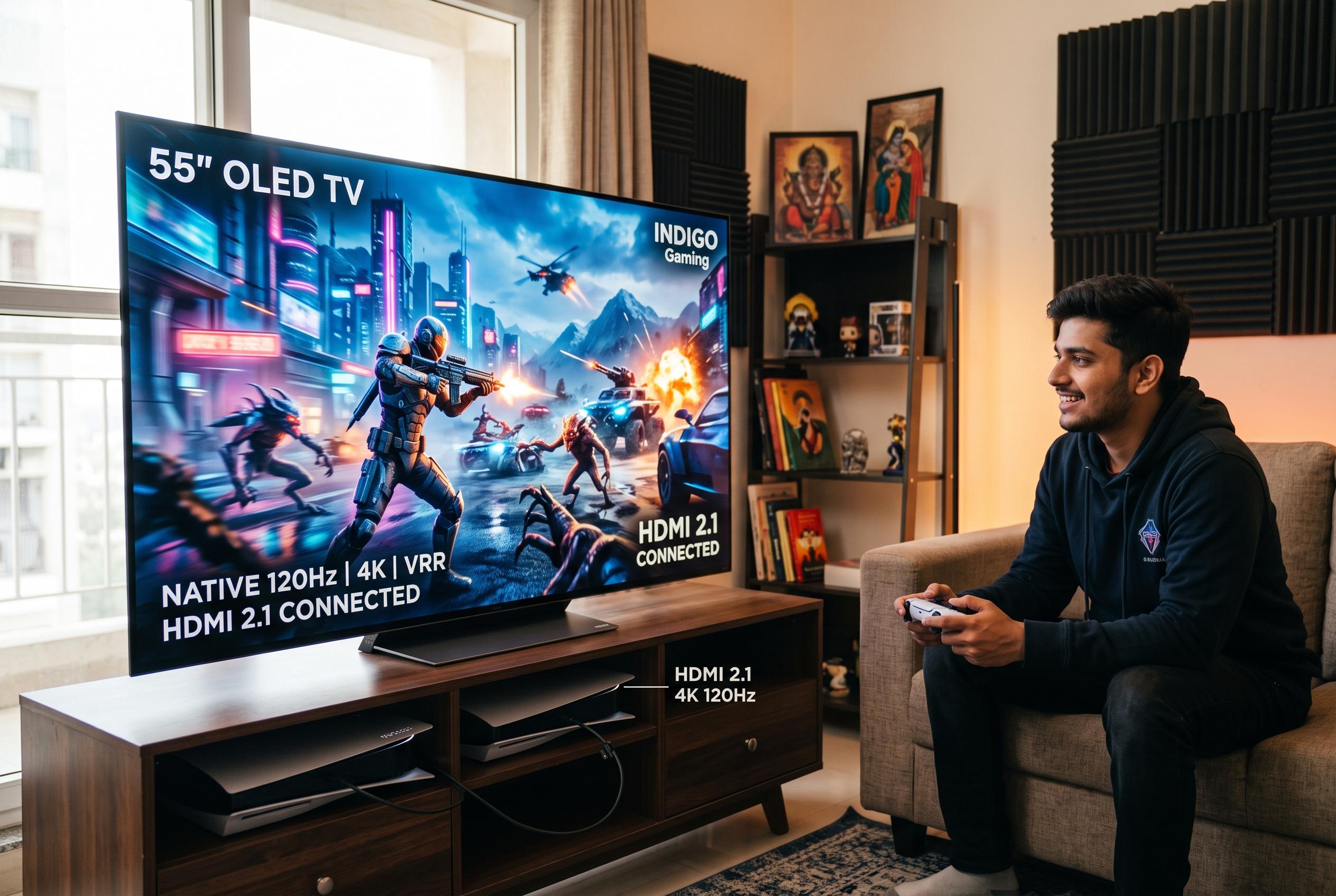

Indian gamers building a setup around PlayStation 5 or Xbox Series X should prioritise native 120Hz refresh rates and HDMI 2.1 support, with low latency and VRR features key to enhancing gameplay and responsiveness in 2026’s competitive gaming landscape.
For Indian buyers building a gaming setup around a PlayStation 5 or Xbox Series X, native 120Hz should be treated as the starting point, not an upgrade. The key distinction is whether the panel itself refreshes at 120Hz, rather than merely simulating motion with processing tricks. That difference matters because fast-moving games look smoother and feel more stable when the display can keep up with the console’s output, especially in action and competitive titles. The guide argues that this should be the first specification checked before looking at size, brand or extras.
Beyond refresh rate, the most useful gaming features are HDMI 2.1, variable refresh rate and auto low-latency mode. HDMI 2.1 provides the bandwidth needed for 4K at 120Hz, while variable refresh rate helps prevent screen tearing by matching the display to the game’s frame rate. Auto low-latency mode switches the set into Game Mode without manual input. The guide also stresses input lag, noting that anything under 15 milliseconds in Game Mode is a strong target and under 10 milliseconds is better for competitive play. In practical terms, input lag often affects responsiveness more than refresh rate alone.
The same guidance points buyers towards 4K Android TV or Google TV models from Sony and TCL, citing their combination of fast response times and access to the Google Play app library. That is a useful distinction for viewers who want gaming features without giving up streaming flexibility. Broader 2026 buying guides from What Hi-Fi? and Product Hunter place similar emphasis on HDMI 2.1, VRR, ALLM and low latency, while also showing how the market has widened to include premium OLED and Mini LED options. Those lists include sets such as the LG C5 OLED and Hisense’s 65E8S, suggesting that serious gaming performance is no longer limited to one panel type or one price band. 91mobiles’ India-focused QLED round-up makes the same point from another angle: buyers now have to weigh gaming performance alongside brightness, colour volume and value.
For most shoppers, the decision comes down to matching the console’s capabilities with the panel’s native strengths. A genuine 120Hz screen, proper HDMI 2.1 support and low latency will do more for gameplay than headline marketing terms or inflated motion figures. The result is a simpler rule: check the panel first, then the gaming features, then the software ecosystem.
Disclaimer: This content is intended for informational purposes only. Readers are advised to exercise their own judgement, conduct due diligence, or consult a qualified expert before acting on any information provided.