
A comprehensive guide clarifies how to select affordable USB-C chargers that meet device needs, emphasizing the importance of standards, certification, and compatibility over wattage hype.
A low-cost USB-C charger can be perfectly adequate, provided the right specifications are in place. The key is not to chase the biggest number on the box, but to check whether the charger supports USB Power Delivery, and whether it matches the charging behaviour your device expects. The USB Implementers Forum says USB Power Delivery can scale up to 240W, while also letting devices draw only the power they need.
Wattage still matters, but only in context. A charger’s headline output is its maximum, not a promise of what every port can deliver at once. On multi-port units, the power is often shared across ports, so the combined figure can be misleading if it is read as an additive total. For phones, tablets and even some laptops, the most useful check is whether the charger can meet or exceed the device’s own peak charging rate.
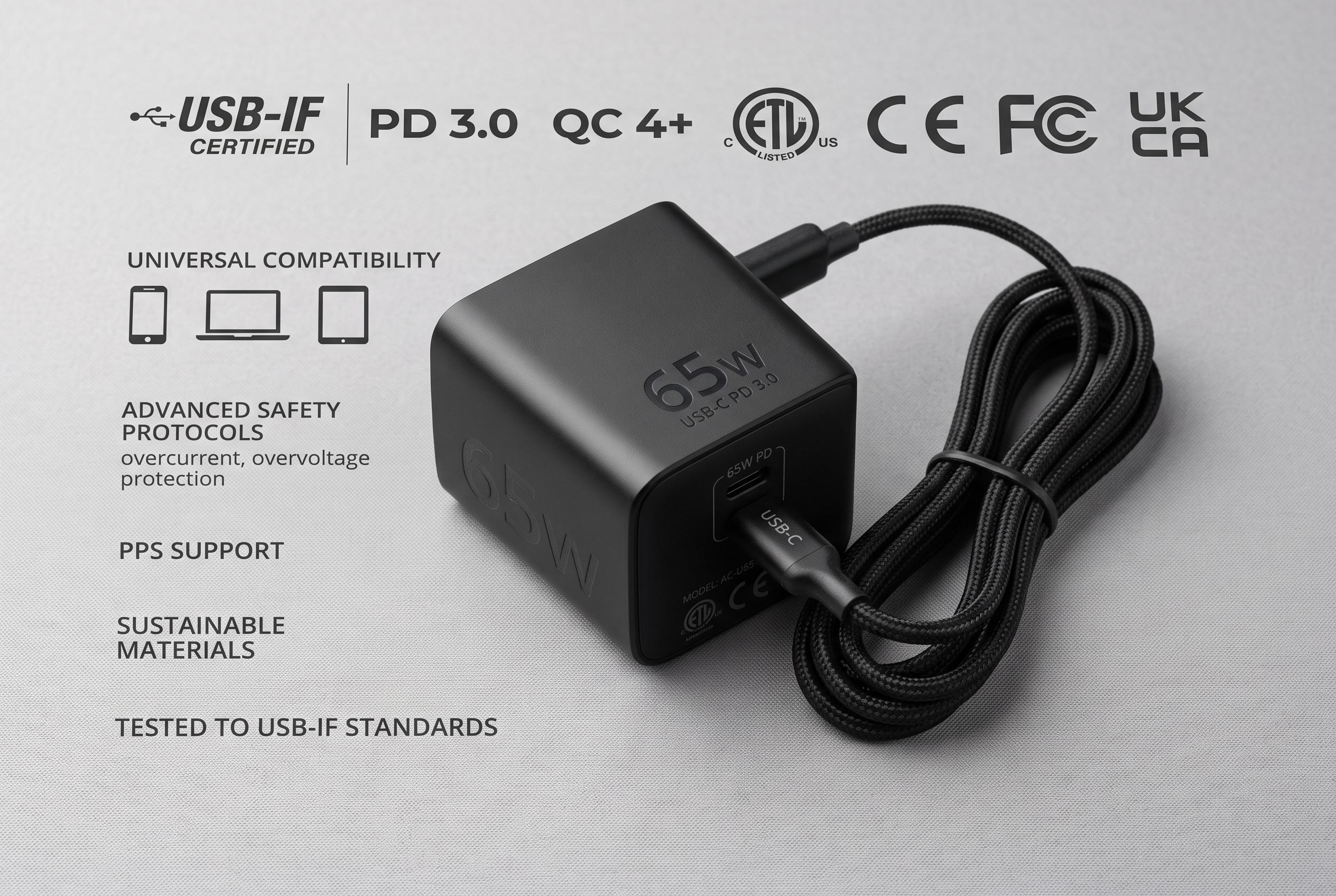
For most buyers, USB PD is the baseline spec worth paying attention to. Tom’s Hardware notes that USB PD is a standardised, bidirectional negotiation system, and that PPS, introduced with USB PD 3.0, allows finer control over voltage and current. That matters because more precise control can reduce heat and improve charging efficiency, which is especially important for small batteries and compact phones.
Certification is another useful filter. USB-IF’s certified charger programme exists to identify products that have been tested against the relevant USB requirements, including PPS support on certified fast chargers. That does not guarantee premium build quality, but it does reduce the risk of buying a charger whose claims are unsupported. In practice, a certified product from a known brand is a safer bet than an anonymous adapter with a printed logo.
There is one major caveat: some phones charge fastest only with their own proprietary systems. Brands such as OnePlus, Oppo and Xiaomi use custom protocols that can exceed standard USB PD speeds on compatible devices. Those top speeds usually depend on a matching charger and cable, so a universal USB-C brick may still charge the phone well, but not at its full rated rate.
Gallium nitride, or GaN, is best treated as a convenience feature rather than a requirement. It can help chargers run smaller and waste less energy as heat, but it does not automatically make a charger faster, safer or better supported. The same caution applies to cables: even a good charger will be held back by a cable that cannot carry the power level the phone needs. In other words, the cheapest sensible charger is the one that supports the right standard, the right output and the right cable , not necessarily the one with the most marketing terms.
Disclaimer: This content is intended for informational purposes only. Readers are advised to exercise their own judgement, conduct due diligence, or consult a qualified expert before acting on any information provided.