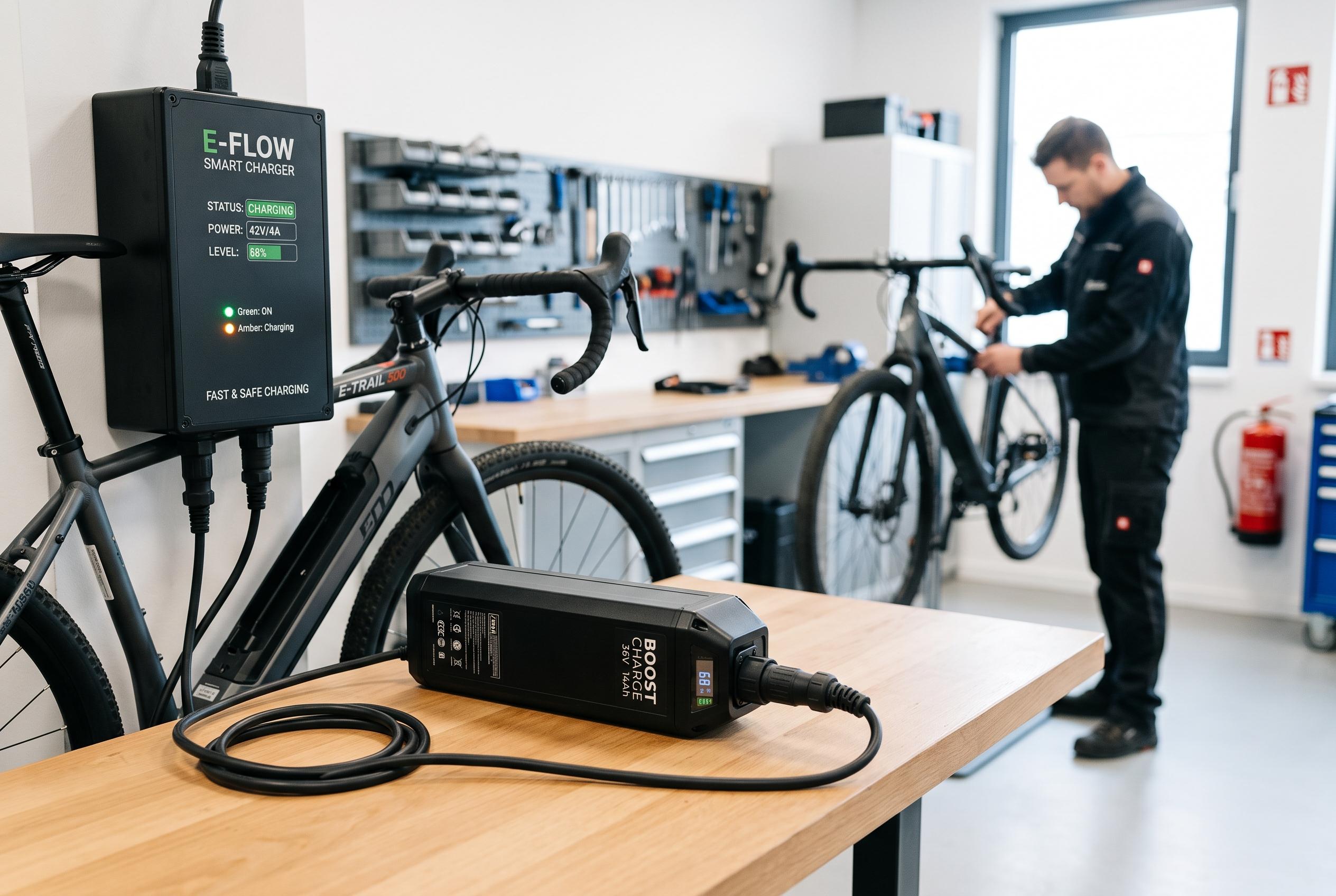

Advances in e-bike battery care highlight safer, more efficient charging habits that can prolong battery life and prevent hazards amid increasing electric bike adoption.
Charging an e-bike battery is straightforward, but the details matter. The safest approach is to use the charger supplied by the manufacturer, place the battery on a hard, open and well-ventilated surface, and disconnect it once it reaches full charge. Electrical Safety First and REI both advise against charging near combustible materials, while REI also notes that some systems may continue drawing power if left plugged in for long periods.
Charging time depends mainly on battery capacity and charger output. Smaller packs are usually ready in around two to three hours, while larger batteries can take four to six hours or longer. REI says charging conditions and temperature also affect timing, and the Superhuman guide notes that a 252Wh battery will charge far faster than an 840Wh pack with the same charger. In practice, users who only need a short top-up will see the biggest difference from battery size.
Good charging habits can also extend battery life. Sun Bike and TXEDBIKE both say lithium-ion batteries do not need to be fully drained before recharging, because they do not suffer from the memory effect associated with older battery types. For everyday use, keeping the battery within a moderate range and avoiding repeated full discharges is generally kinder to the cells. Heat remains a major factor in wear, so charging in a hot garage or leaving the battery in direct sunlight should be avoided.
Safety guidance is equally clear. Popular Mechanics and Electrical Safety First recommend avoiding unattended charging, especially overnight or near exits, and keeping the battery away from curtains, paper and other flammable items. The battery should be allowed to cool after a ride before it is plugged in, particularly in warm weather. If a battery becomes swollen, unusually hot or gives off a strange smell, ElectricBikeCompare advises stopping use and seeking support rather than continuing to charge it.
For storage, Sun Bike and the Superhuman guide suggest leaving the battery at roughly 40% to 60% charge if it will not be used for weeks or longer, then checking it periodically so it does not fall too low. That is a practical compromise for riders who want both convenience and longer battery life. The basic rule remains the same: use the correct charger, charge in a safe place and avoid the extremes of always empty or always full.
Disclaimer: This content is intended for informational purposes only. Readers are advised to exercise their own judgement, conduct due diligence, or consult a qualified expert before acting on any information provided.