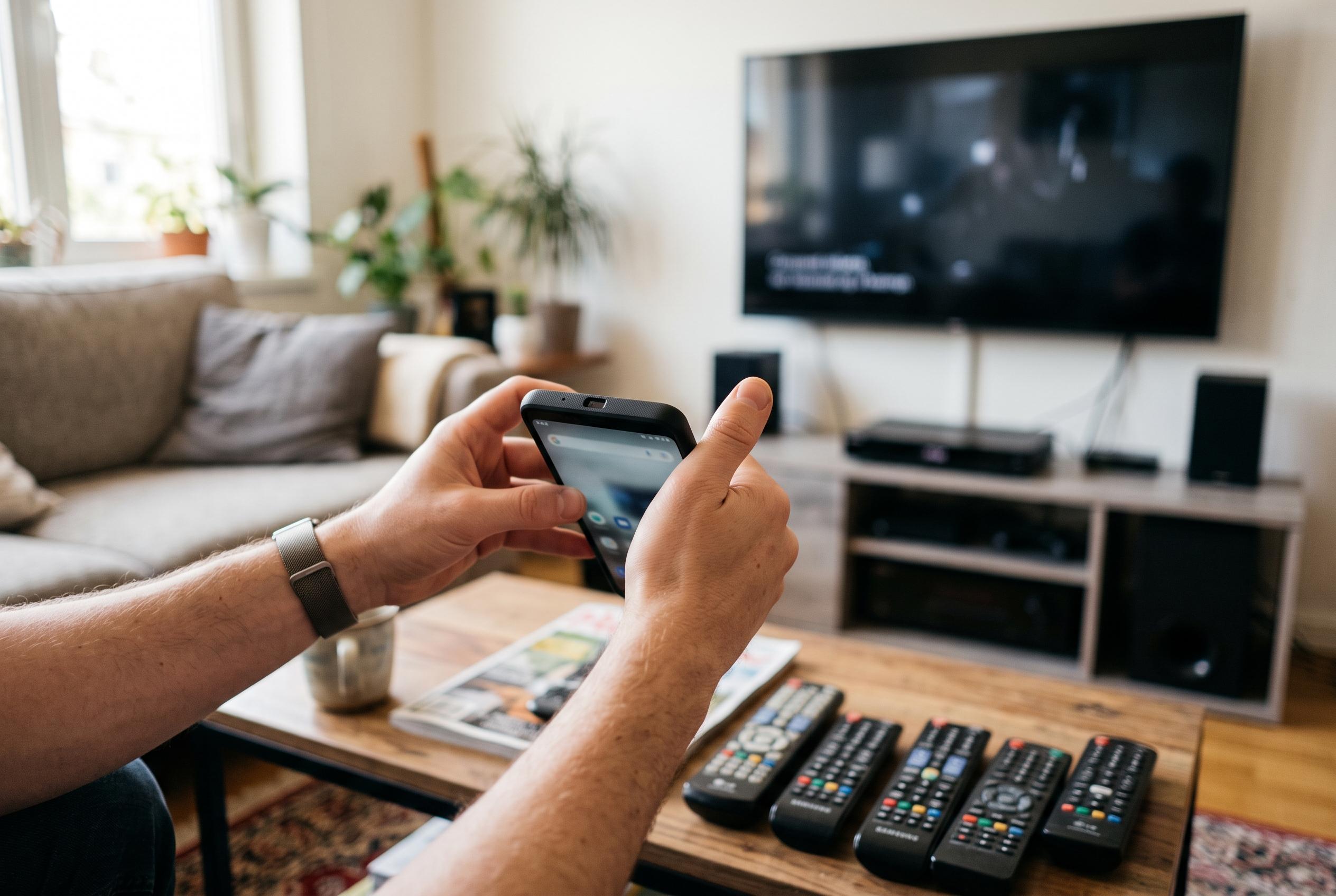

A growing number of Android smartphones equipped with infrared blasters can replace multiple traditional remote controls, offering a practical and cost-effective solution for device management at home.
A spare Android phone can do the work of several remote controls if it has an infrared blaster, a hardware feature that still appears on some models even as it has disappeared from many mainstream handsets. The appeal is straightforward: one device can replace the small pile of remotes that tends to accumulate beside a television, air conditioner, air purifier and audio system. For anyone trying to reduce clutter, simplify battery management and avoid paying for a dedicated universal handset, the idea is practical rather than novel, but it remains underused.
The key requirement is infrared hardware, not just an app. Many phones with an IR blaster ship with a built-in remote application that includes a database of brands and device types, allowing users to choose a manufacturer, try a model profile and test the buttons until the commands work. The XDA article describes that process as particularly effective with older Oppo handsets, while notes from Google Play show that more advanced remote apps can also send custom infrared codes, import signal files and even support external dongles or audio-to-IR adapters. By contrast, guides on Android hardware stress that an app alone cannot create infrared capability on a phone that lacks the emitter.
Compatibility is not universal, but it is often broader than users expect. Oppo says its own IR Remote app supports televisions and air conditioners, while Xiaomi’s Mi Remote covers a wider spread of equipment, including set-top boxes and projectors. Where the first-party software falls short, third-party tools can fill the gap, and many devices reuse code sets across related model lines, which makes trial and error worthwhile. The practical result is an offline system that mimics a physical handset without needing a smart home hub, a cloud account or a permanent network connection.
In day-to-day use, the benefit is less about novelty than convenience. The XDA writer found television control useful in principle, but air conditioning proved the clearest win because the phone interface was easier to read than the original remote. That also matters in a market where dedicated universal remotes are still available but increasingly specialised. Tom’s Guide recently highlighted premium and budget options from SofaBaton that can handle dozens of devices and integrate with smart-home systems, but they add cost and setup time. A phone with built-in infrared can therefore be an economical compromise for users who mainly want to control legacy appliances and do not need a separate controller at all.
Disclaimer: This content is intended for informational purposes only. Readers are advised to exercise their own judgement, conduct due diligence, or consult a qualified expert before acting on any information provided.