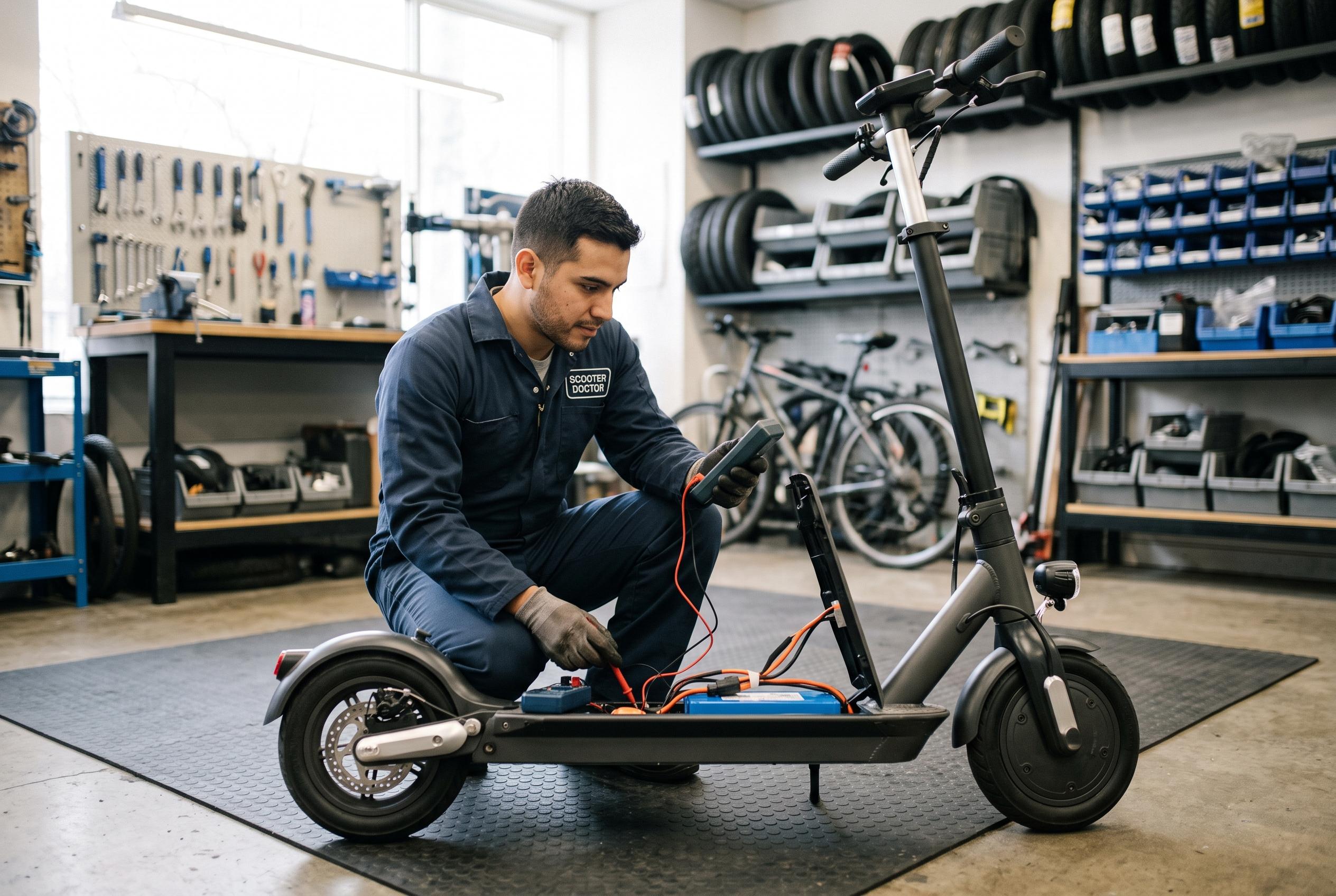

As summer ends, riders are encouraged to conduct comprehensive inspections of their electric scooters, focusing on tyres, brakes, batteries, and other vital components to safeguard performance and safety amidst post-season wear.
A busy summer can leave an electric scooter with more wear than is immediately visible. Higher temperatures, frequent charging, dust and longer journeys all place added strain on tyres, brakes, fixings and the battery. Maintenance guides from scooter and e-bike specialists consistently recommend a post-summer inspection to catch small issues before they affect safety or daily commuting.
Tyres should be the first priority. Industry maintenance checklists stress regular pressure checks, careful inspection for cuts, embedded debris and uneven wear, and prompt attention to slow punctures or air loss. Underinflation is not just a handling issue; it also increases rolling resistance and can reduce range. A proper visual check of both tyres is one of the simplest ways to spot summer damage early.
Brakes deserve the same attention. Maintenance advice from multiple scooter guides says riders should look for reduced responsiveness, unusual noises and worn pads or discs after sustained use. If the lever feel has changed or braking distance seems longer, the system may need adjustment or replacement rather than further use. In practical terms, brake checks are one of the most important routine safety steps before returning to regular commuting.
It is also sensible to inspect the folding mechanism, stem, handlebar and visible bolts. Riding on uneven roads creates vibration, and over time that can loosen fasteners or introduce play in the frame. Maintenance specialists recommend checking for movement, rattling and any sign that the scooter no longer feels solid when folded or unfolded. That is especially relevant after a season of frequent or long-distance use.
Suspension, where fitted, should be checked next. Guides from scooter makers and maintenance sites say riders should listen for noise, watch for excessive movement and look for visible wear or damage. A well-functioning suspension system improves stability as well as comfort, particularly on rougher surfaces. For scooters used regularly on broken roads or mixed terrain, suspension condition can have a material effect on ride quality.
Battery care remains central, particularly after months of heat and repeated charging. Maintenance advice from scooter and e-bike publishers commonly warns against charging immediately after a hot ride, using non-original chargers, or leaving the battery fully discharged for long periods. Riders should watch for reduced range, abnormal charging behaviour, unusual heat or sudden percentage changes. While range can vary for several reasons, persistent deterioration is worth investigating.
Lights and indicators should be tested before daylight hours shorten further. Maintenance checklists recommend confirming that the front light, rear light, brake light, turn signals and reflectors all work as intended. Visibility is a basic safety requirement, and faults are easier to correct before they are discovered on a dark commute.
Cleaning should be done carefully. Across scooter maintenance guides, the same warning appears repeatedly: do not use a pressure washer. A soft or slightly damp cloth is usually the safest approach, with special care taken around electrical components, suspension and wheel assemblies. Cleaning is not only cosmetic; it also makes wear, corrosion and loosened parts easier to spot.
The final step is to listen to the scooter in use. New clicking, scraping, rattling or motor noises, as well as changes in steering, acceleration or braking, can signal that a component needs attention. Many worn parts can be replaced individually, including tyres, chargers, displays and brake components, but compatibility matters. Checking the exact model before ordering parts is especially important for electronic items and control systems.
Disclaimer: This content is intended for informational purposes only. Readers are advised to exercise their own judgement, conduct due diligence, or consult a qualified expert before acting on any information provided.