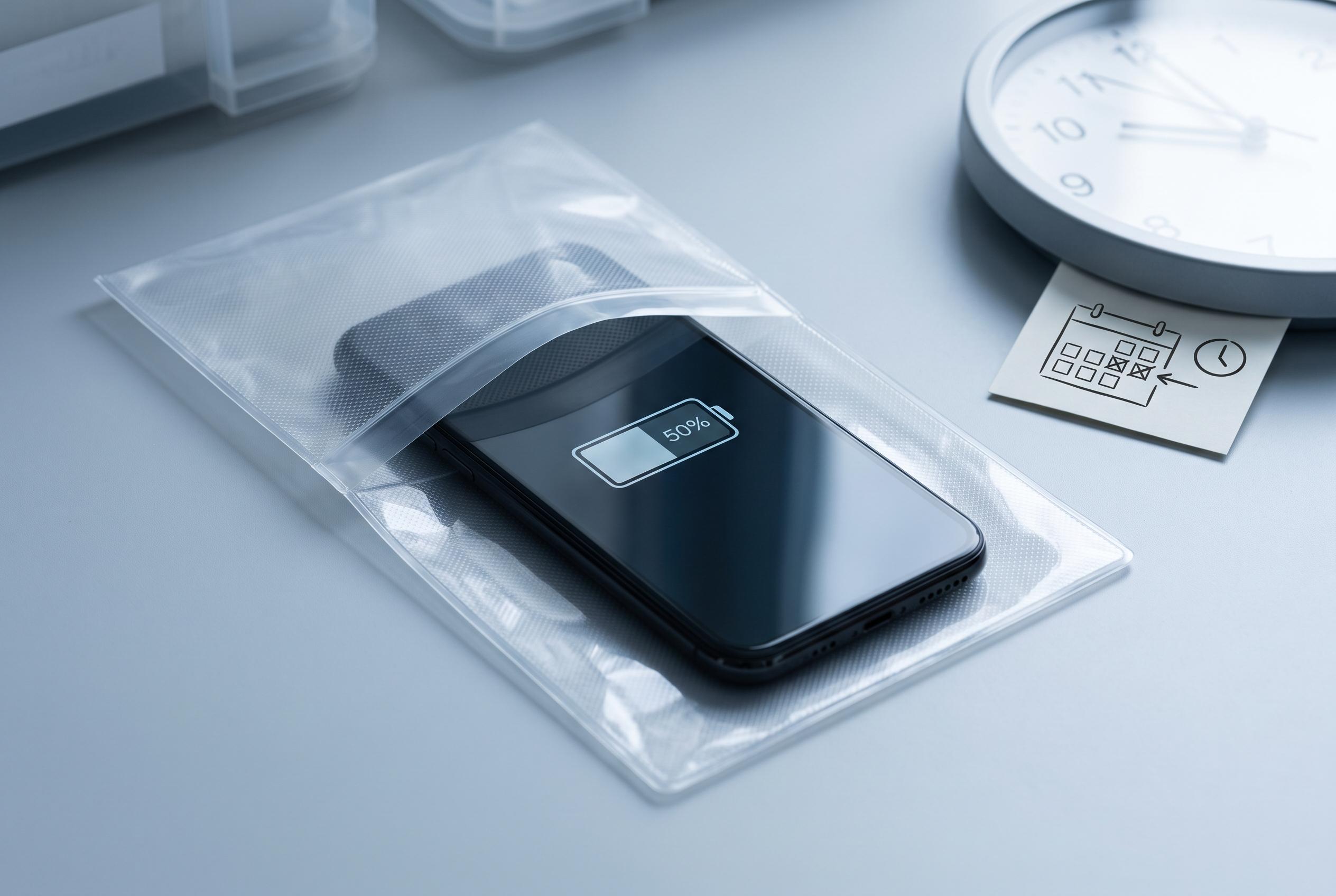

Experts emphasise that storing smartphones with about 50% charge in a cool, stable environment can prevent battery damage over extended periods, with regular checks advised for devices left unused for more than six months.
If a smartphone is to be stored for an extended period, battery charge and environment matter as much as whether the device is switched off. Technology site BGR, as reported by Day.Az, said the safest approach is to leave the handset with roughly half a charge rather than put it away fully drained. Apple has also warned that storing an iPhone with an empty battery can damage the cell.
The reason is that lithium-ion batteries continue to lose power even when idle. According to the guidance cited by BGR, self-discharge is the result of internal chemical reactions and can drain a battery by a few percentage points each month. That makes a completely empty battery risky over time, because the phone may fall into deep discharge and fail to start again.
Location is also important. The device should be kept in a cool, dry place away from direct sunlight and other heat sources. Battery-maintenance guides from Android Central and Renogy both advise avoiding high temperatures and stress on the cell, while Renogy recommends storage in a stable environment rather than one that swings sharply in temperature. For day-to-day use, those same guides say keeping a battery away from extremes helps preserve capacity.
Owners who plan not to use the phone for more than six months should check it periodically and power it on at intervals. Android Central recommends monitoring charge before it drops too low, while Renogy advises regular inspections during long-term storage. The practical warning is simple: a phone left in a box for months without care may not recover when it is needed again.
Disclaimer: This content is intended for informational purposes only. Readers are advised to exercise their own judgement, conduct due diligence, or consult a qualified expert before acting on any information provided.