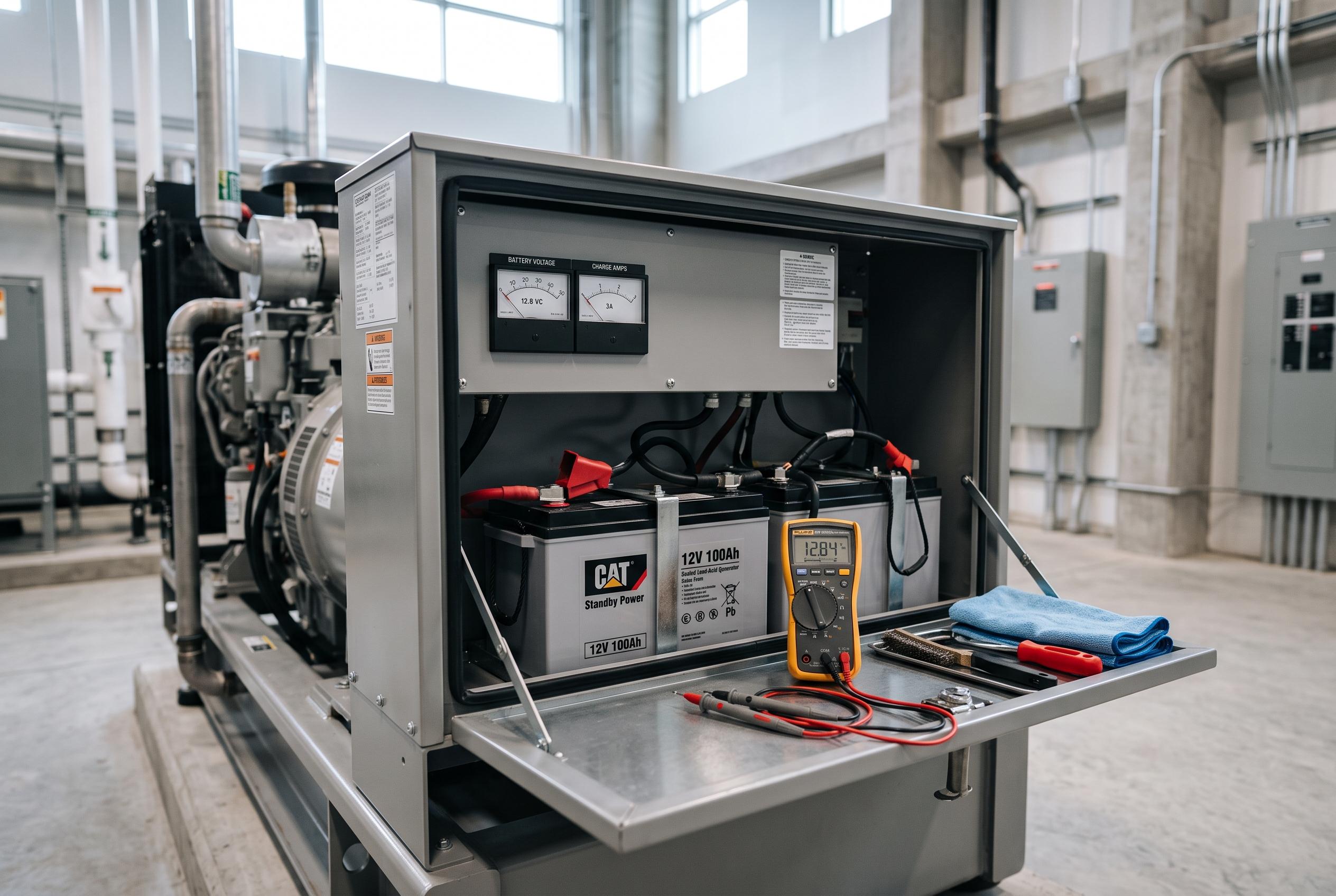

Infrequent testing and neglect of battery maintenance can lead to generator failures when they are needed most. Experts emphasise simple, regular routines including voltage checks and terminal cleaning to ensure reliability.
A standby generator can only start if its battery is ready, yet that battery is often the least scrutinised part of the system. According to the Wild Oak Trail guide, the problem is structural: the battery sits unused for long periods and is only given brief charging during its weekly exercise cycle. OffGrid Compare makes the same wider point in a separate maintenance overview, noting that infrequent testing is one of the main reasons standby units fail when they are needed most.
A practical schedule should therefore be simple and repeatable. The monthly check is the most important: confirm voltage, listen for slow cranking and inspect the terminals for corrosion or loose fittings. Honda advises checking battery voltage every three months and keeping the battery fully charged, particularly if the generator is rarely used. Batteries Plus and National Generator Authority both stress that terminal cleaning, charger checks and connection inspection belong in the routine, not as emergency repairs after a no-start.
Voltage readings need to be interpreted by chemistry, not by guesswork. The Wild Oak Trail guide says a healthy 12V AGM or lead-acid battery will usually rest at about 12.6V to 12.8V, while a 12V LiFePO4 battery should read higher, at roughly 13.2V to 13.6V. That distinction matters because a reading that looks normal for one battery type may be misleading for another. If the reading is trending down over time, that is more important than the number on any single day.
Quarterly maintenance is about prevention. Clean the terminals, check that cable clamps are tight and apply a protective coating after cleaning to slow future corrosion. Honda’s guidance also supports periodic dirt and corrosion removal, while Batteries Plus says a generator that is seldom used should still be exercised regularly so the charging system and starting battery stay healthy. Industry schedules from Generator Price and the National Generator Authority place this kind of battery care alongside broader service work, reflecting the fact that electrical reliability is part of overall generator reliability.
Annual testing should go beyond voltage. The Wild Oak Trail guide recommends a load test or cold-cranking-amp test, because a battery can show acceptable voltage yet still fail to deliver enough current under load. That same guide suggests treating batteries older than three years as replacement candidates rather than waiting for a winter failure. Batteries Plus goes even further, recommending proactive replacement every two to three years, while other maintenance schedules place battery checks alongside load bank testing, fuel work and full system inspection.
Battery chemistry changes the pace of maintenance, but not the need for it. LiFePO4 units are generally more tolerant of idle time and partial charging than AGM batteries, and the Wild Oak Trail guide notes that they do not suffer the same sulphation issues. Even so, terminal cleaning, voltage monitoring and charger checks still apply, and many LiFePO4 batteries include a battery management system that should be watched for fault codes or app alerts. For owners trying to avoid an outage-time surprise, the main lesson is consistent: inspect often, test properly and replace before the battery reaches the point of obvious decline.
Disclaimer: This content is intended for informational purposes only. Readers are advised to exercise their own judgement, conduct due diligence, or consult a qualified expert before acting on any information provided.