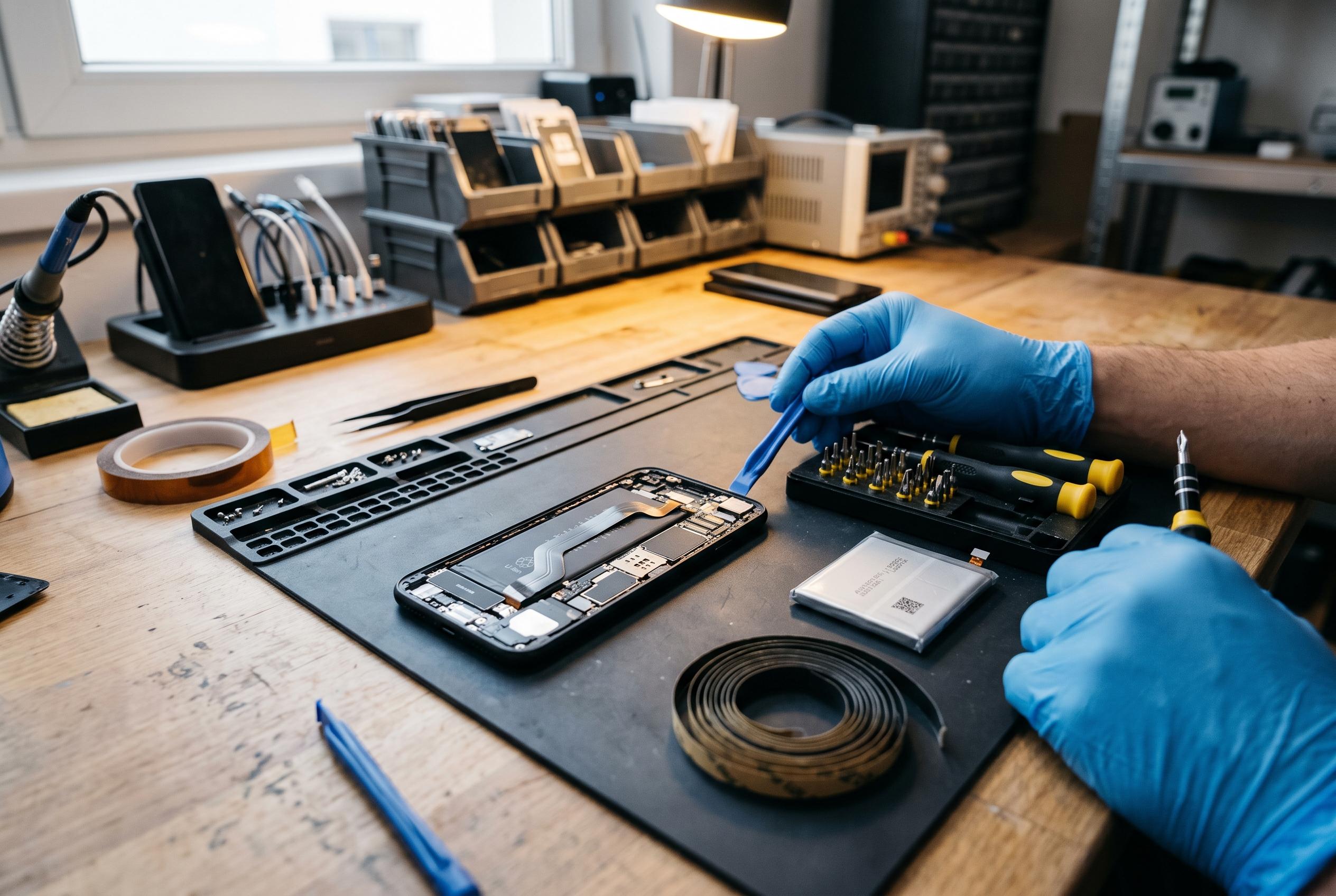

As phones age, battery decline often prompts premature upgrades, but affordable replacement options challenge this trend, highlighting a potential shift in device longevity and repairability.
For many people, an ageing phone does not fail all at once. The display still looks fine, the software still runs well enough and the cameras remain usable. What changes first is often the battery, and that single weak point can make an otherwise capable handset feel ready for retirement. In practice, that can create a false sense that a full upgrade is overdue when the real problem is simply reduced battery capacity.
Lithium-ion batteries do not stay at peak performance indefinitely. Over time, chemical changes inside the cell reduce the amount of energy it can store and deliver, especially after repeated charging and exposure to heat. Battery specialists commonly point to signs such as shorter screen-on time, faster drain and, in more severe cases, sudden shutdowns. The effect is gradual for most users, which is why a phone can seem to age unevenly: the hardware still works, but it no longer lasts the day.
Before assuming the battery is at fault, it is sensible to check what is consuming power. Android devices usually include battery-usage tools in Settings, where users can see whether a particular app is draining the phone in the background. On some newer handsets, including recent Pixel models, battery-health information is also available and can show how much capacity remains compared with when the battery was new. If the drain is tied to a misbehaving app or a settings issue, a battery swap may be unnecessary.
That said, once the battery itself has clearly worn down, replacement can be far cheaper than buying a new device. Repair specialists often price battery work at well under £100, while a new flagship phone can cost many times that amount. In the UK, recent reporting has put professional battery replacement in the £40 to £90 range, which makes the economics especially clear for anyone whose current phone still meets their needs in every other respect.
The difficulty is that modern phones are no longer designed around easy battery access. In older devices, the back cover could often be removed and the battery lifted out in seconds. Today, batteries are commonly fixed in place with adhesive, and opening the handset may require heating, prying and careful disassembly of glued panels or internal components. Manufacturers use these methods to achieve thinner builds and better resistance to water, but the trade-off is reduced repairability.
Even so, repairability is improving in some devices. iFixit’s current database highlights models such as the Fairphone 6, where battery replacement is designed to be quick and does not rely on strong adhesive. That is still the exception rather than the rule, but it shows that easier battery replacement is possible. For most people, the practical question is straightforward: if the phone remains fast enough, the screen is intact and software support is still available, a new battery may extend its useful life for a fraction of the price of an upgrade.
Disclaimer: This content is intended for informational purposes only. Readers are advised to exercise their own judgement, conduct due diligence, or consult a qualified expert before acting on any information provided.