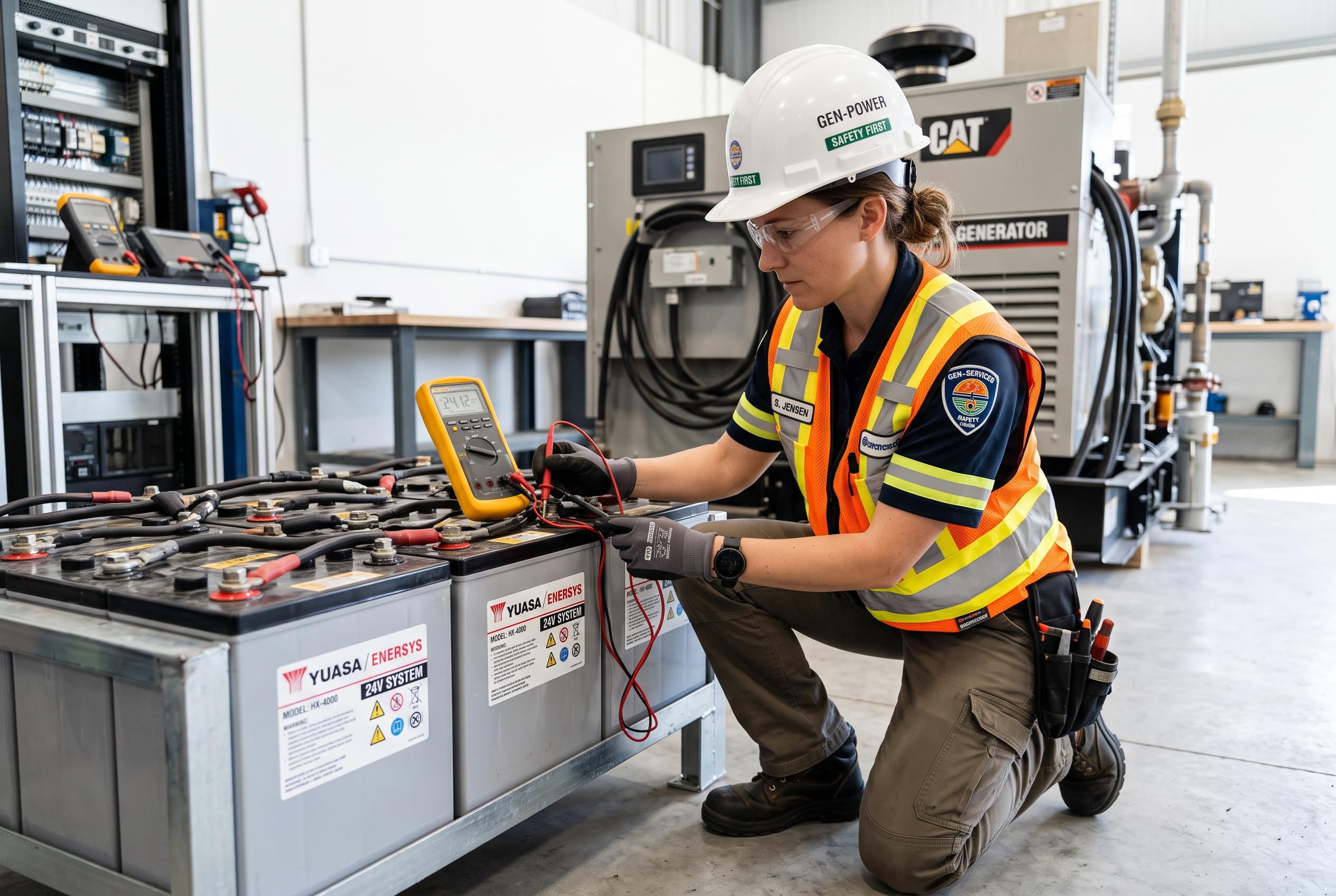

A step-by-step guide emphasising safety and specification matching for the replacement of standby generator batteries, including the option to upgrade to LiFePO4 alongside considerations for compatibility and longevity.
A standby generator battery is easy to overlook until the power fails and the unit has to start immediately. Because it spends most of its life idle and is usually maintained only by a low-rate onboard charger, the battery often weakens without obvious warning. The practical answer is to replace it on a routine three-to-five-year cycle, even if it still appears to be working. The most important rule is simple: the generator must be taken out of automatic mode before any terminal is touched.
According to guidance from generator battery specialists, the replacement process starts with safety and specification matching. The unit should be switched to OFF, then isolated from the automatic transfer switch so it cannot receive a start signal while being serviced. The new battery must meet the generator’s cold cranking amp requirement, and the exact group size should be taken from the owner’s manual rather than guessed from the old battery. Industry guidance also notes that many home standby units use common 12-volt batteries, but terminal layout and physical size still need to match the generator’s cabling and tray.
The mechanical part of the job is straightforward. After opening the battery compartment, the old battery should be inspected for its voltage, group size and cranking specification before removal. The negative cable is disconnected first, followed by the positive cable, which reduces the risk of short circuits. The old battery can then be lifted out, the tray and cable ends cleaned, and the replacement set in place with the positive connection made first and the negative connection last. Several repair guides also recommend using terminal protection spray or anti-corrosion washers to slow future build-up in the enclosed compartment.
Once the compartment is closed, power can be restored and the generator returned to AUTO mode for a test start. If the engine cranks slowly or fails to start, the first checks should be cable tightness and battery charge. Battery retailers and generator service guides say the same basic rule applies across brands: the battery must deliver enough starting current for the specific model, and a correct installation does not compensate for an under-sized or poorly charged unit.
Some homeowners now consider LiFePO4 as an upgrade, but that choice needs more care than a direct AGM swap. The appeal is clear: longer service life, less maintenance and strong performance in many backup applications. The complication is the charging system inside a standby generator, which is usually designed for lead-acid batteries and may maintain a float voltage that is not ideal for lithium iron phosphate chemistry. Battery makers say some LiFePO4 products with a suitable battery management system can cope with this arrangement, but the safest approach is to confirm compatibility with both the battery maker and the generator manufacturer before changing chemistry.
Disclaimer: This content is intended for informational purposes only. Readers are advised to exercise their own judgement, conduct due diligence, or consult a qualified expert before acting on any information provided.