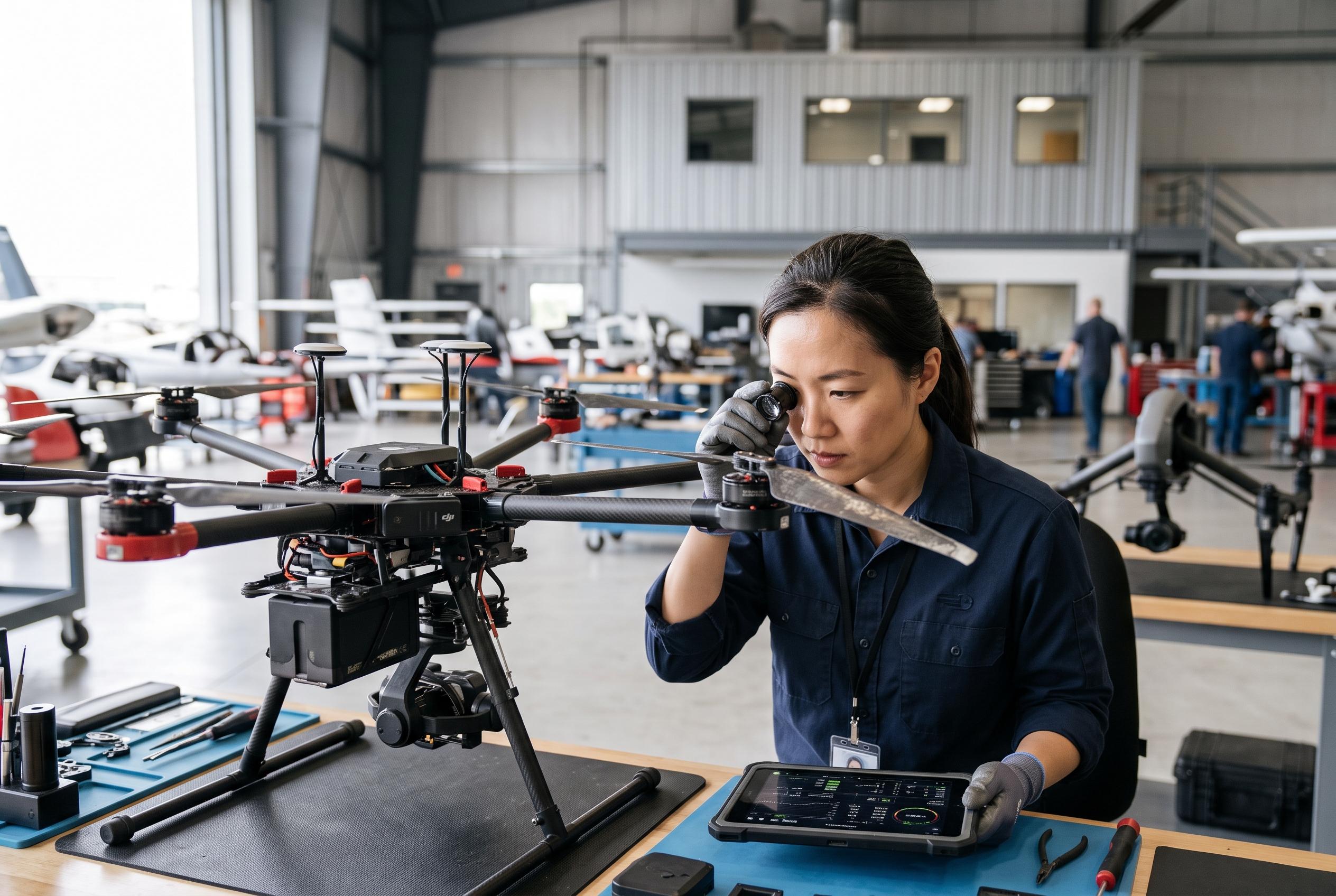

Regular pre- and post-flight checks, along with scheduled longer inspections, are vital for identifying early signs of drone failure, prolonging equipment lifespan, and ensuring safe operations, industry experts advise.
A drone that appears to be flying normally can still be carrying the early signs of failure. Small faults such as a cracked propeller, a loose screw, dust in a motor vent or a battery that has been left at full charge for too long often show up on the ground first. According to drone maintenance guidance from DJI and industry checklists from Propeller Aero and Drone Gear Setup, safe operation depends on repeated checks before and after each flight, not on a single once-over before take-off.
The first line of defence is a short pre-flight inspection. Pilots should examine the airframe, propellers, arms and landing gear for cracks, chips, loose fittings or deformation, then confirm that the motors spin freely and that the remote controller, antennas and switches are intact. Industry checklists also stress that batteries should be checked for swelling, puffing or other visible damage, while flight-ready software and firmware should be current before the aircraft leaves the ground. For commercial operators in the United States, that kind of assessment also aligns with Part 107 requirements to evaluate the operating environment, weather, airspace and control link before flight.
The same discipline matters after landing. Guidance from Drone Gear and Propeller Aero recommends inspecting the aircraft again for new damage, removing dust and debris from vents and gimbal areas, switching the battery off and checking its condition before storage. Batteries should not be left hot, fully charged or fully depleted for long periods, and they should be kept in a cool, dry place. Propeller Aero also advises periodic deep cycling of batteries to help preserve performance, while other maintenance schedules suggest a similar practice every 20 flights.
Longer interval checks are where many owners fall behind. A practical schedule, drawing on Drone Gear Setup and manufacturer-style routines, includes a monthly power-on inspection, a deeper review around every 25 flights, and seasonal checks for aircraft exposed to cold, moisture or dust. Those longer inspections should include motor noise, calibration, airframe stress, gimbal movement and the condition of any parts that experience repeated vibration. The point is not only to spot visible wear, but also to catch issues such as calibration drift or heat-related deterioration before they become flight faults.
Battery care deserves particular attention because it affects both safety and lifespan. Propeller Aero advises avoiding overcharging, storing packs properly and watching closely for swelling or other physical change. Drone maintenance guides also note that batteries are consumable items, not permanent components, and that their useful life shortens quickly when they are stored badly or cycled carelessly. For pilots who fly regularly, keeping spare batteries, logging usage and replacing packs that show reduced capacity are all part of normal upkeep rather than optional extras.
The wider value of a maintenance routine is simple: it reduces downtime, lowers repair risk and helps preserve resale value. A drone with a clear service history, healthy batteries and regular inspections is easier to trust than one with an unknown background. For professional operators, it also supports compliance and creates a record that can be used if a fault, warranty question or insurance claim ever arises.
Disclaimer: This content is intended for informational purposes only. Readers are advised to exercise their own judgement, conduct due diligence, or consult a qualified expert before acting on any information provided.