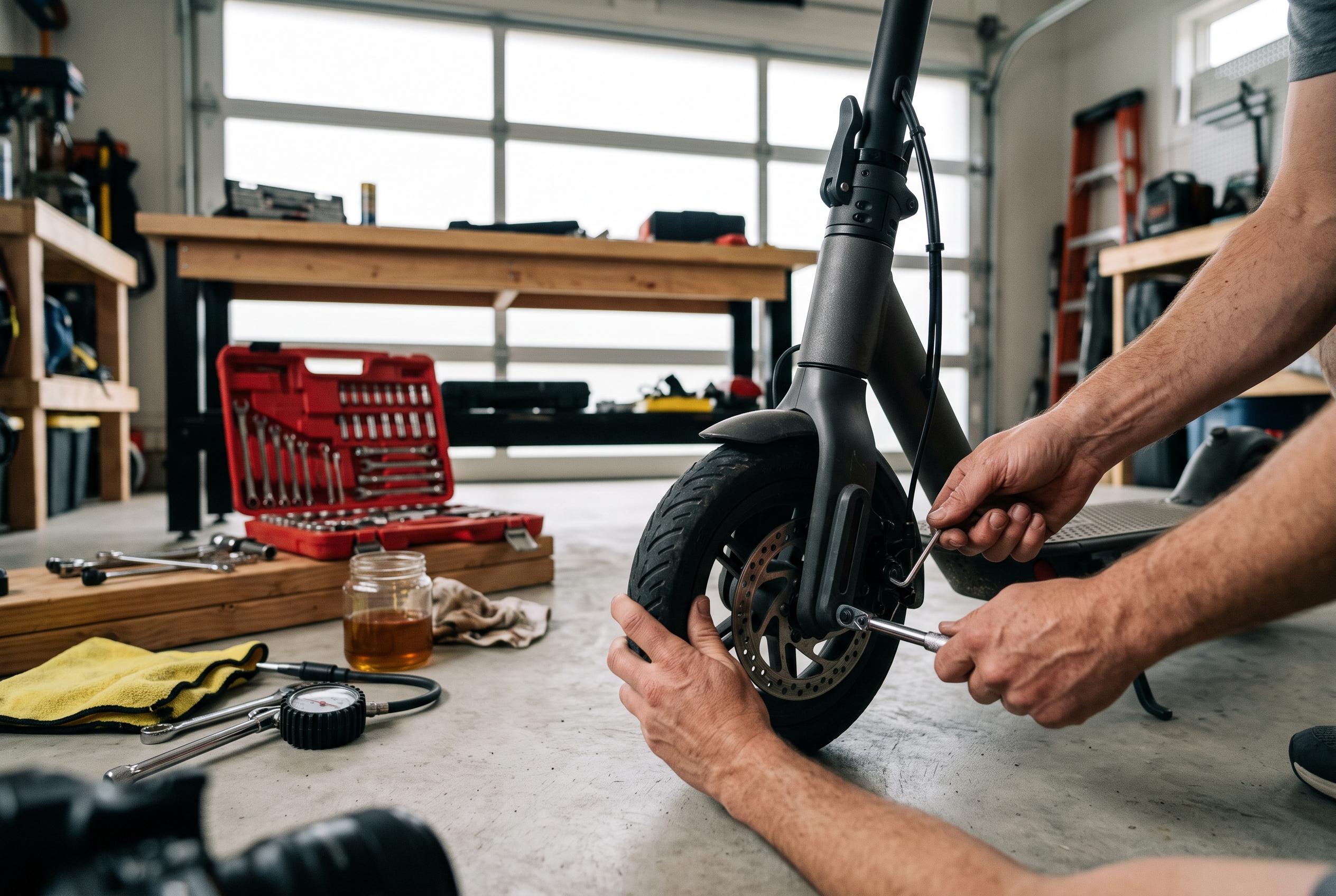

Regular inspections and simple DIY procedures can prevent costly repairs, boost performance, and enhance rider safety amid increasing e-scooter usage.
Keeping an electric scooter in good order is less about specialist repairs than about disciplined routine. The basic idea is simple: vibration, uneven roads and daily use gradually loosen fasteners, wear braking parts and stress the wheels, so small checks done at home can prevent larger faults later. Several maintenance guides published in recent months make the same point: the right approach is regular, preventative care rather than waiting for a fault to become obvious. Scooter Gear Lab and HiBoy both say a modest toolkit is enough for most of the work, while frequent inspections can reduce repair costs and extend the scooter’s service life.
For most riders, the essentials are practical rather than technical. A set of Allen keys, a tyre pump with a pressure gauge, a screwdriver, a spanner or wrench set, a clean cloth and, where appropriate, medium-strength threadlocker will cover much of the routine work, according to Scooter Gear Lab, HiBoy and other home-maintenance guides. The same sources advise checking the scooter on a schedule: a quick look before each ride, then weekly, monthly and quarterly inspections depending on how hard the machine is used. That rhythm matters because a scooter ridden over rough streets, kerbs and wet surfaces will lose adjustment faster than one used on smooth, dry roads.
The highest-priority checks are the ones that affect control. Speedway Riders NYC recommends looking at tyre pressure, brake response and the folding latch before riding, and says more detailed inspections should follow at least every two weeks. That advice matches the broader maintenance guidance from the other guides, which stress that loose fasteners and soft brakes are the problems most likely to turn into accidents. Xiaomi’s official support material for the Electric Scooter 4 Pro also shows that brake adjustment is usually straightforward: the cable tension can be altered through the adjustment nut, provided the scooter is powered off and not charging.
Brakes deserve particular care because the warning signs are easy to miss until stopping distance has already increased. A lever that feels too loose, a brake that needs to be pulled back to the grip, or a metallic scraping sound all suggest that the cable has stretched, the calliper has shifted or the pads are close to the end of their life. Step-by-step maintenance advice from Taketravelinfo says the process should include checking rotor alignment, removing slack from the cable, setting pad clearance and then testing the wheel spin and brake action at low speed. In mechanical systems, that final test is important because a brake that drags slightly can waste energy and overheat the rotor.
Tyres and wheels also need attention, even though they are often neglected. Proper inflation improves grip, reduces the chance of pinch flats and helps preserve battery range by lowering rolling resistance, according to the maintenance guides reviewed here. The same applies to wheel bearings, which can reveal wear through noise or side-to-side play. Once the pressure has been set correctly, it is worth checking for cuts, embedded glass and uneven wear, then confirming that axle nuts and other wheel fasteners remain tight.
Cleaning should be done with restraint. Speedway Riders NYC warns against pressure washers, and that caution is sensible: water driven into the deck, motor area or charging port can damage sensitive components. The safer method is a slightly damp microfibre cloth for the frame and mudguards, a dry brush for recessed areas and isopropyl alcohol only for the brake disc. That last point matters because oily cleaners can contaminate pads and sharply reduce braking performance. As with the rest of the maintenance routine, the goal is not cosmetic perfection but reliable operation. A few minutes spent tightening, inspecting and cleaning can prevent avoidable faults, preserve performance and make everyday riding noticeably safer.
Disclaimer: This content is intended for informational purposes only. Readers are advised to exercise their own judgement, conduct due diligence, or consult a qualified expert before acting on any information provided.