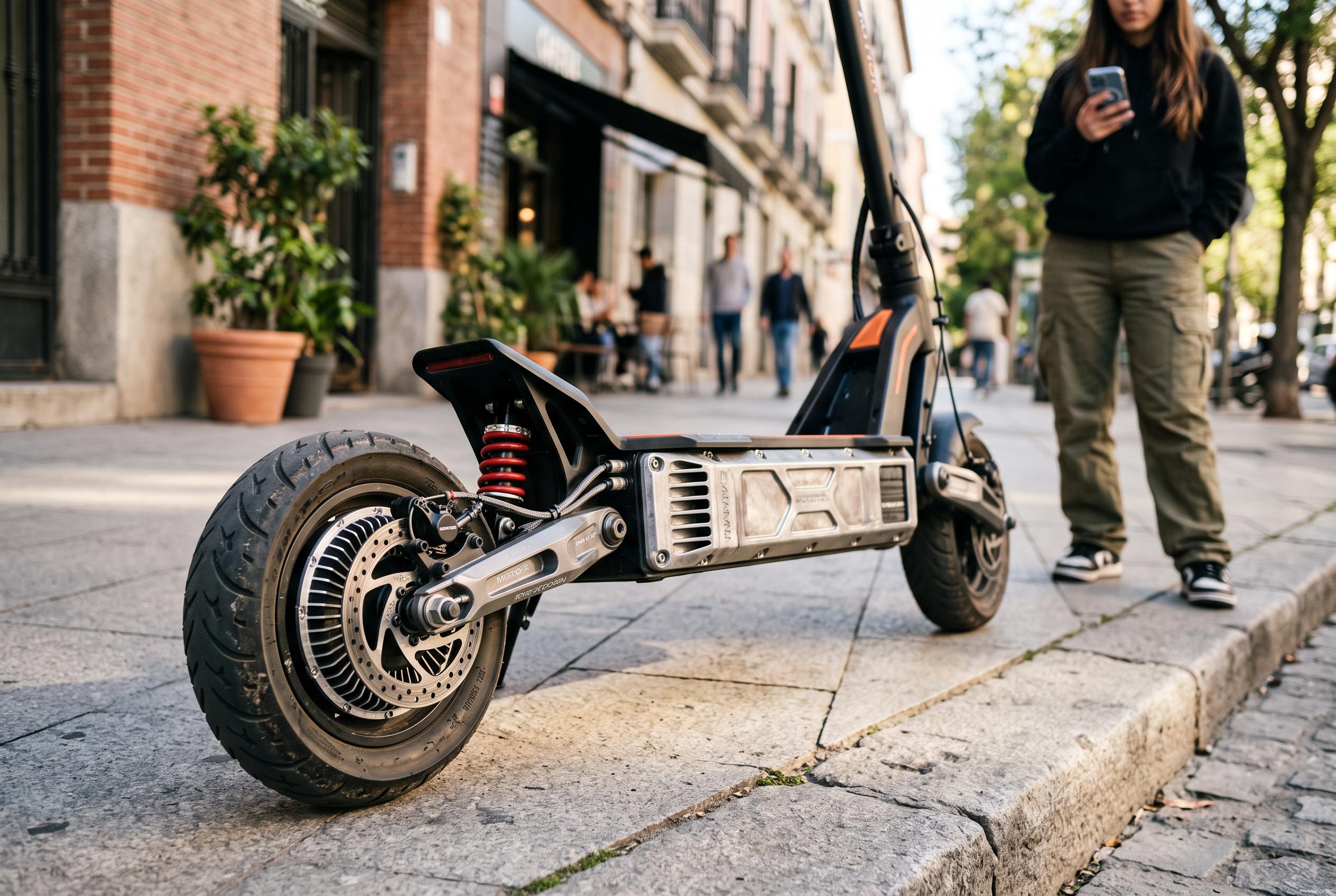

Adjusting software settings and hardware components can enhance electric scooter performance, but riders must balance gains with safety and legal requirements.
Electric scooter speed is shaped by a mix of software limits, mechanical drag and hardware capability. Varlascooter’s guide says the quickest gains often come from simple setup changes, such as selecting the highest riding mode, inflating tyres to the maker’s recommended pressure and checking for brake rub. Related guides from Market.com and Onecna Scooter make the same point: on many commuter models, these low-cost adjustments can recover lost performance before any serious modification is considered.
For riders willing to go further, the main software route is to change the scooter’s factory speed cap. Scooterrank and the device manual both describe the same broad methods: using the on-board display or companion app, flashing custom firmware, or, on some models, disabling a physical limiter wire inside the controller. That said, the practical effect depends heavily on the scooter’s make and firmware version, and newer Xiaomi models in particular are described as more resistant to simple Bluetooth-based changes.
Hardware changes offer larger gains, but also carry the most risk. Varlascooter’s material explains that voltage is a key determinant of motor speed, so a 36V pack can sometimes be replaced with a 48V or 52V system if the controller, display and charger are compatible. The guide also notes that a higher-amperage controller can improve acceleration, while a higher-KV motor can raise rotational speed. Onecna Scooter adds that total wattage alone does not guarantee a faster scooter; without more voltage or a removed speed cap, a stronger motor may mainly improve hill climbing rather than top speed.
The mechanical side matters just as much. Market.com and Varlascooter both point to rolling resistance, tyre choice, bearing condition and excess weight as important but often overlooked factors. Smooth road tyres, correctly adjusted bearings and a lighter load can all reduce drag. Varlascooter also argues that keeping battery charge high helps because voltage sag becomes more pronounced as the pack empties, which can reduce peak speed on electric scooters.
The safety and legal limits are clear. All of the supplied guides warn that higher speed increases braking distance, motor heat and stress on the controller and battery. Varlascooter says many jurisdictions restrict electric scooters to roughly 15 to 20 mph, or 20 to 25 km/h, on public roads and bike lanes. Scooterrank and the device manual likewise stress that firmware changes or wiring alterations may void warranties and could make the scooter illegal for public use. In practice, the best approach is usually to start with maintenance and settings, then weigh any deeper modification against braking capacity, thermal limits and local law.
Disclaimer: This content is intended for informational purposes only. Readers are advised to exercise their own judgement, conduct due diligence, or consult a qualified expert before acting on any information provided.