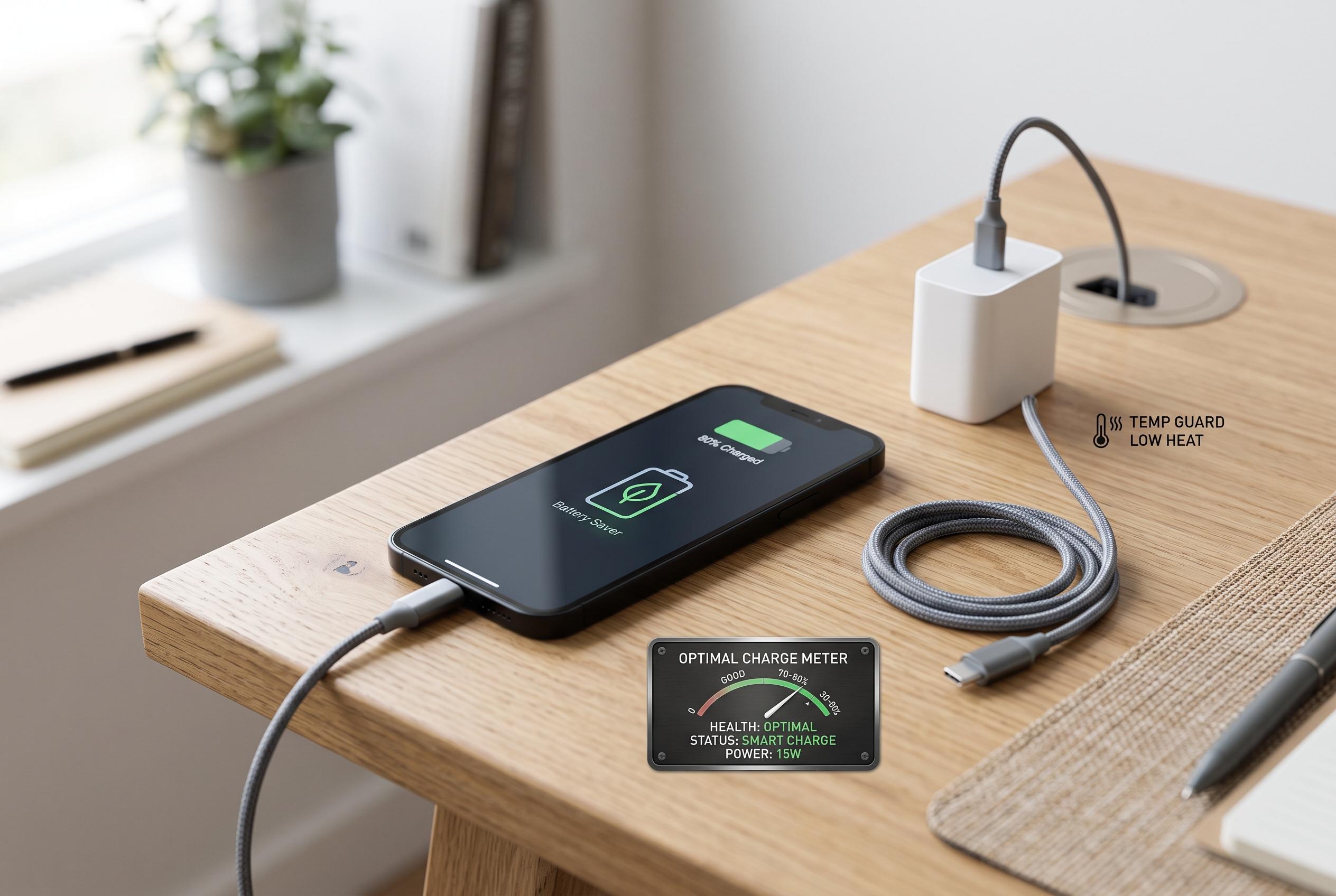

Making simple adjustments to how you charge your phone, such as avoiding heat, maintaining optimal charge levels, and using reliable accessories, can significantly extend your device’s battery lifespan, according to experts.
Everyday charging habits can make a noticeable difference to how quickly a phone battery wears down. The main risks are simple: heat, prolonged time at full charge and repeatedly draining the battery to empty. Consumer Reports and Google both say the best approach is to keep devices cool, charge them as needed rather than waiting for 0%, and avoid unnecessary strain on the battery.
One of the most effective precautions is to reduce heat exposure. Lithium-ion batteries age faster when they are left in direct sun, inside a hot vehicle or under sustained charging stress. That is why experts advise letting a phone cool before continuing to charge it if it becomes unusually warm. Several battery specialists also recommend aiming for a charge range between roughly 20% and 80%, rather than keeping the phone topped up at 100% for long stretches.
Modern phones increasingly include software designed to help. Apple’s Optimised Battery Charging and Android’s Adaptive Charging can learn a user’s routine and hold the battery below full capacity until closer to the time it is usually unplugged. That can ease pressure on the battery over time, while still leaving the handset ready when needed. Android’s support guidance also points users towards the power adapter supplied with the device, or a compatible equivalent, to help ensure safe charging.
The charger itself matters as well. Poor-quality accessories can generate excess heat or deliver power less consistently, which is one reason consumer groups advise using reliable, compatible equipment. Battery specialists also note that it is sensible to avoid habits that add heat while charging, such as using the phone heavily at the same time. Small adjustments will not prevent battery ageing entirely, but they can slow it and help a handset hold its charge for longer.
Disclaimer: This content is intended for informational purposes only. Readers are advised to exercise their own judgement, conduct due diligence, or consult a qualified expert before acting on any information provided.