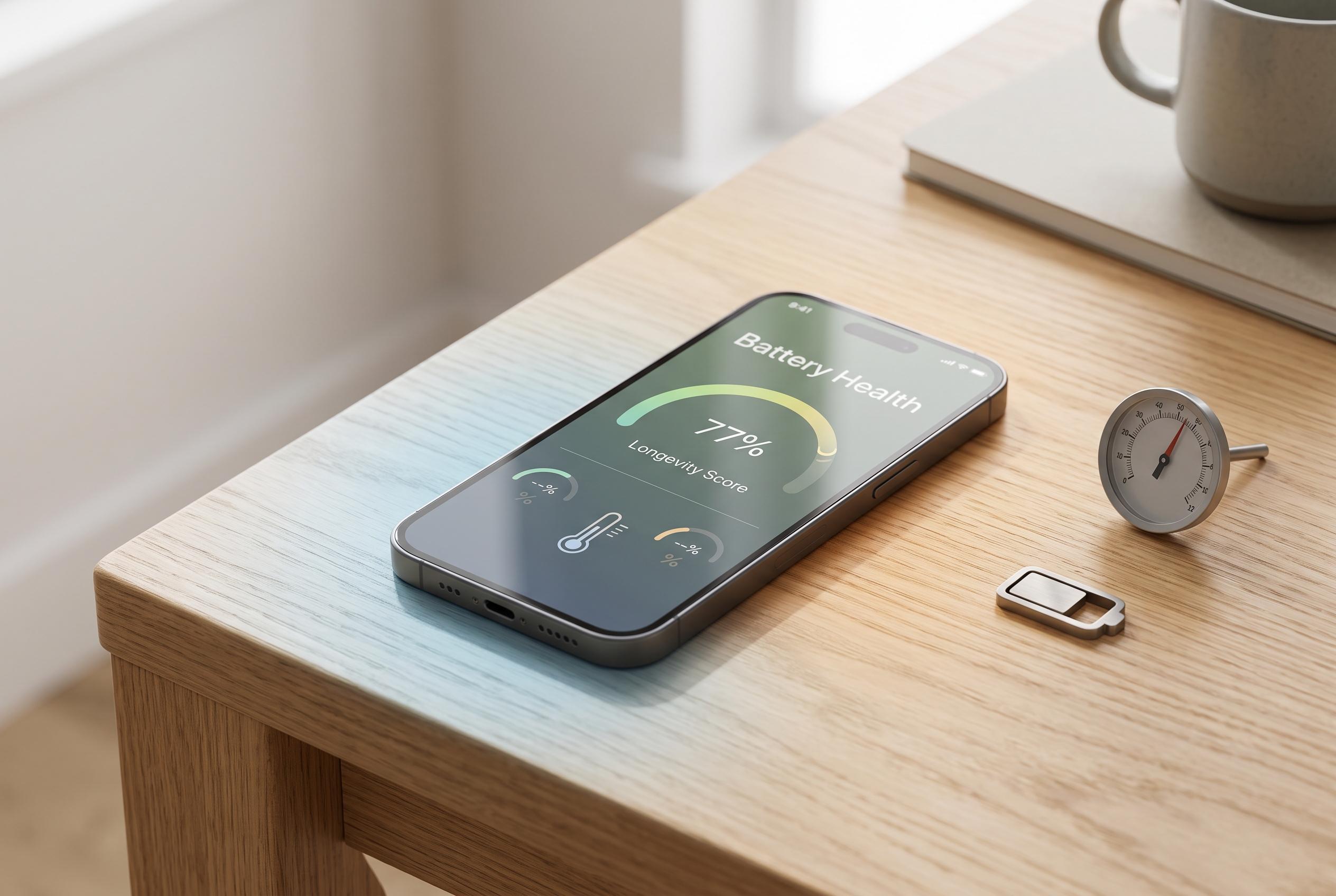

With smartphones lasting longer and costing more, industry advice from Apple, Samsung, and Google highlights new habits to reduce battery stress, focusing on avoiding extremes, managing heat, and trusting system optimisation over app closing.
The question of smartphone battery care matters more now than it did a few years ago. Devices cost more, stay in service longer and are often kept well beyond the period of active software support. Apple, Samsung and Google all give broadly similar advice: there is no need for rigid rules, but there are clear habits that can reduce stress on lithium-ion batteries, especially once a phone is two or three years old. Apple’s support guidance also points users towards battery charts, Low Power Mode and power-related suggestions in settings, while Samsung recommends checking Device Care, software updates and screen brightness as part of routine battery management.
One of the best-known principles is to avoid extremes. Repeatedly draining a phone to empty, or leaving it plugged in at maximum charge for long periods, puts more strain on the battery than keeping it in the middle range. Apple’s support page now reflects that approach by offering optimised charging tools, while Samsung’s battery guidance similarly focuses on reducing time spent at full charge and limiting unnecessary power use. In practical terms, a partial charge is often enough for daily use, and full charging still makes sense before travel, long shifts or events that keep the phone away from a socket for hours.
Heat is another major factor. Apple says battery performance is best kept within moderate temperatures and warns that exposure to high heat can permanently affect capacity. Samsung likewise notes that excessive temperature can harm both performance and battery life, and advises avoiding hot environments and resource-heavy use when a device is already warming up. That makes everyday situations such as leaving a phone in direct sun, using navigation continuously in a parked car, or gaming while charging more relevant than many users realise. The quality of charging accessories also matters: certified chargers and cables are safer choices than cheap, unbranded alternatives.
There is also a persistent myth that closing every app as soon as it appears in the background will save power. On modern smartphones, that is often counterproductive. Operating systems already manage suspended apps efficiently, and forcing them shut can increase work when they are reopened moments later. Apple says manual closing is mainly appropriate when an app stops responding. Samsung’s advice is similar in spirit: reduce unnecessary background activity, but use the built-in optimisation tools rather than turning app management into a constant ritual. The result is a simpler routine: avoid deep discharges where possible, use optimised charging, keep the phone cool and rely on trusted accessories instead of aggressive app closure.
Disclaimer: This content is intended for informational purposes only. Readers are advised to exercise their own judgement, conduct due diligence, or consult a qualified expert before acting on any information provided.