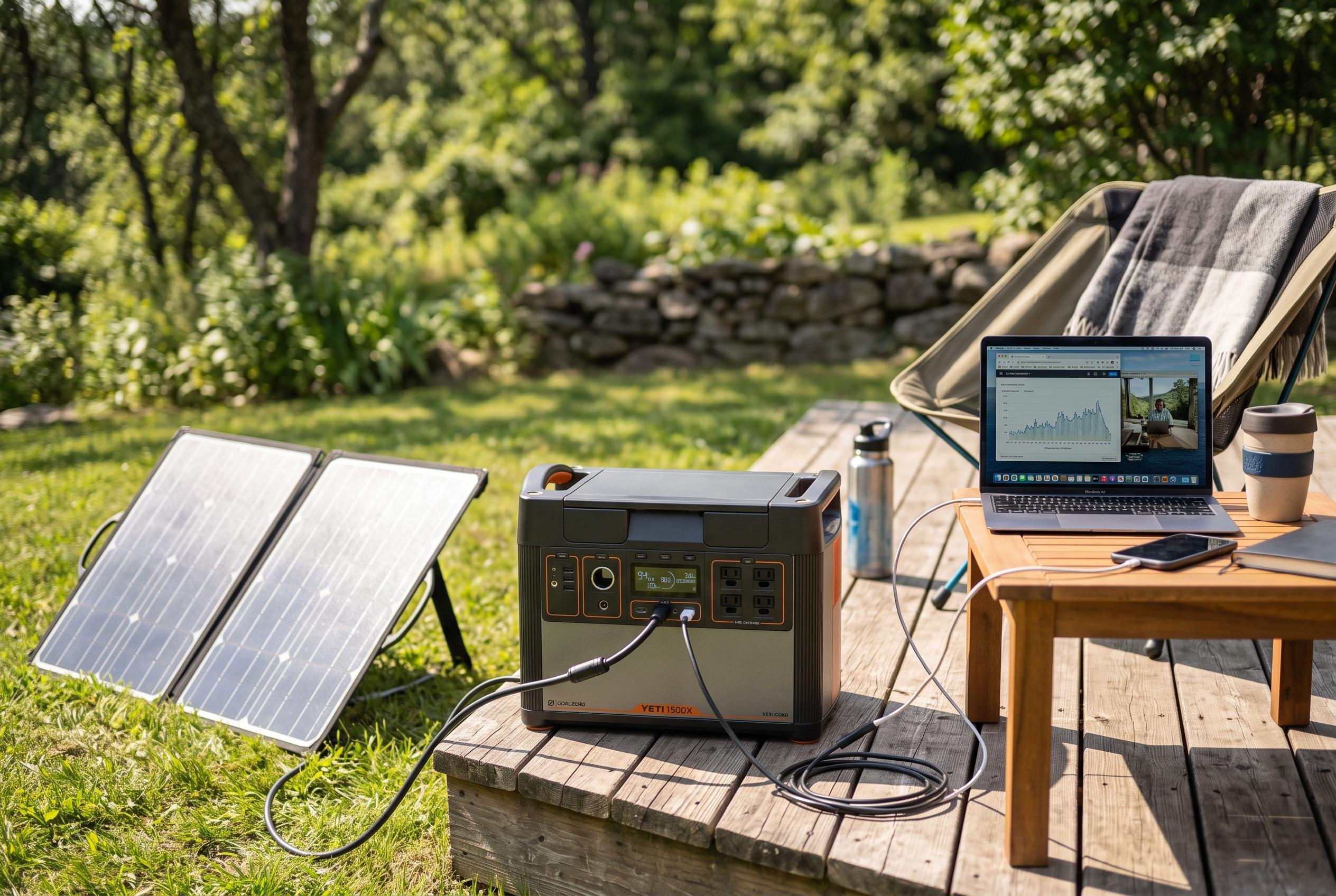

Increasingly versatile, solar generators are moving beyond blackouts to support daily household, outdoor, and remote work needs by providing a quiet, portable power source adaptable to various routines and environments.
A solar generator is increasingly being used as a day-to-day power source rather than a device reserved for blackouts. According to the lead article, it can support routine charging, run smaller appliances and reduce dependence on wall power for ordinary household tasks. Related guides from BestGeneratorSolar and UDPOWER say the key is to size the unit correctly, taking account of battery capacity, output and recharging speed so it matches the way it will actually be used.
At home, that can mean keeping routers, phones, laptops, lights and select kitchen or medical devices running without noise, fumes or permanent installation. Nature’s Generator and EcoFlow both point to the value of using portable systems for remote work, shared family spaces, DIY projects and other situations where mains power is inconvenient or unavailable. The practical advantage is flexibility: the generator can support essential devices during the day while remaining available for limited backup use if the grid fails.
The same logic applies when the unit is taken outdoors. The lead article says solar generators can power lanterns, portable coolers, cameras, speakers and small cooking accessories for camping, travel and off-grid stays. EcoFlow and Nature’s Generator add that they are also useful for mobile offices, market stalls, photography sessions and backyard events. In these settings, the ability to recharge from solar panels during daylight makes the system more self-sustaining and reduces reliance on campsite hookups or charging stops.
Runtime and efficiency depend heavily on how the generator is managed. Anker SOLIX says battery capacity, the wattage of connected devices and inverter losses all affect how long the system lasts, while Battery Essence notes that a 500-watt unit is best treated as a carefully budgeted power source rather than a substitute for whole-home electricity. That is why the lead article stresses regular charging, moderate loads and simple habits such as checking cables, keeping the battery within a sensible temperature range and avoiding unnecessary deep discharge.
Used this way, a solar generator becomes more than emergency kit. It can support daily charging, maintain essential electronics and provide a quieter, more portable alternative to fuel-powered generators. The most effective setup is the one that fits actual routines, whether the need is household convenience, off-grid work or dependable power in uncertain conditions.
Disclaimer: This content is intended for informational purposes only. Readers are advised to exercise their own judgement, conduct due diligence, or consult a qualified expert before acting on any information provided.