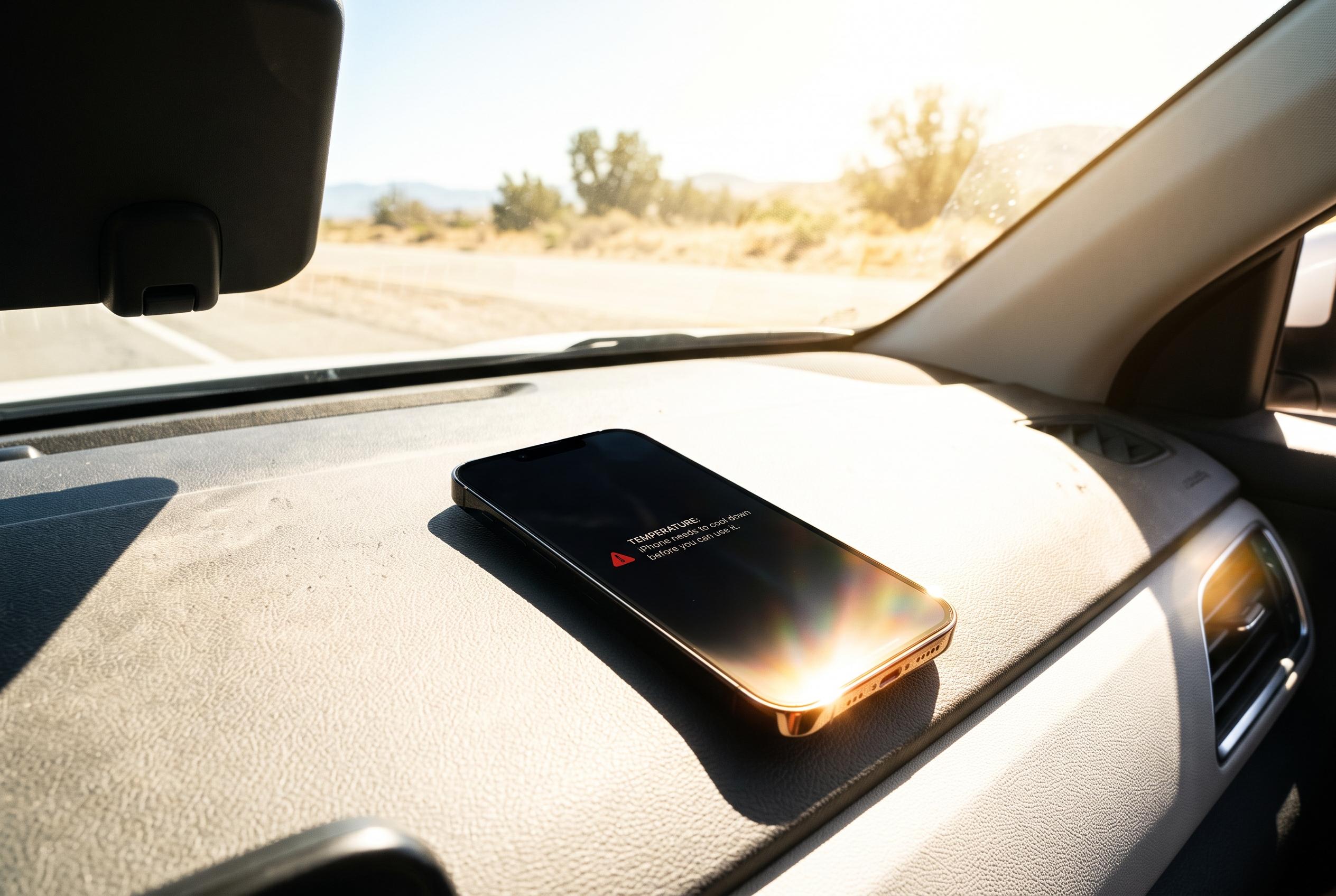

With cabin temperatures soaring in parked cars, experts highlight practical ways to protect mobile devices from heat damage and preserve battery health during summer journeys.
A parked car in summer can become punishingly hot within minutes, and a phone left inside faces a risk that goes beyond a temporary shutdown. According to the lead article, cabin temperatures can rise to about 50C to 80C depending on sunlight and the car’s colour, while many iPhones and Android devices trigger heat warnings and shut down once their internal temperature climbs into the low-to-mid 40sC. At that point, the danger is not just inconvenience: prolonged exposure can permanently reduce battery capacity.
The problem is especially acute in cars because several heat sources pile up at once. GPS navigation keeps the screen on and bright, which is one of the biggest contributors to heat. Charging at the same time adds still more stress, particularly with fast chargers. Add the phone’s radios and processor working hard for maps, calls and data, and the device is fighting environmental heat as well as self-generated heat.
The most effective fixes are simple. Mounting the phone on a ventilation grille rather than the windscreen can keep it in cooler air from the car’s climate system. Lowering screen brightness, using automatic rotation sensibly and switching to night mode where possible can also help. NDTV and other summer heat guides recommend closing demanding apps when they are not needed, turning on low-power mode, and disabling Bluetooth, WiFi or airplane mode when those functions are unnecessary to reduce background load.
Charging habits matter too. In very hot conditions, a slower charger is often kinder to the battery than a high-wattage one, even if it is less convenient. The lead article notes that modern iPhones and many Android phones do throttle charging when they detect excess heat, but that protection is not perfect. Consumer-tech reporting from WRDW and battery specialists also points out that using navigation, streaming audio and Bluetooth together can create enough extra heat to make a hot-car journey much worse for the handset.
The one rule that stands out most clearly is also the easiest to ignore: never leave a phone in a parked car on a hot day, even if it is wrapped or hidden. Shade or a towel may reduce direct sun, but they do not stop the cabin from heating up. As several sources note, lithium batteries can swell, lose capacity or suffer lasting damage after enough exposure, which means the damage can outlast the heatwave. For readers who want to keep a handset healthy through summer driving, the safest approach is simple: keep it cool, keep it out of the sun and avoid asking it to charge and navigate at full intensity for long periods.
Disclaimer: This content is intended for informational purposes only. Readers are advised to exercise their own judgement, conduct due diligence, or consult a qualified expert before acting on any information provided.