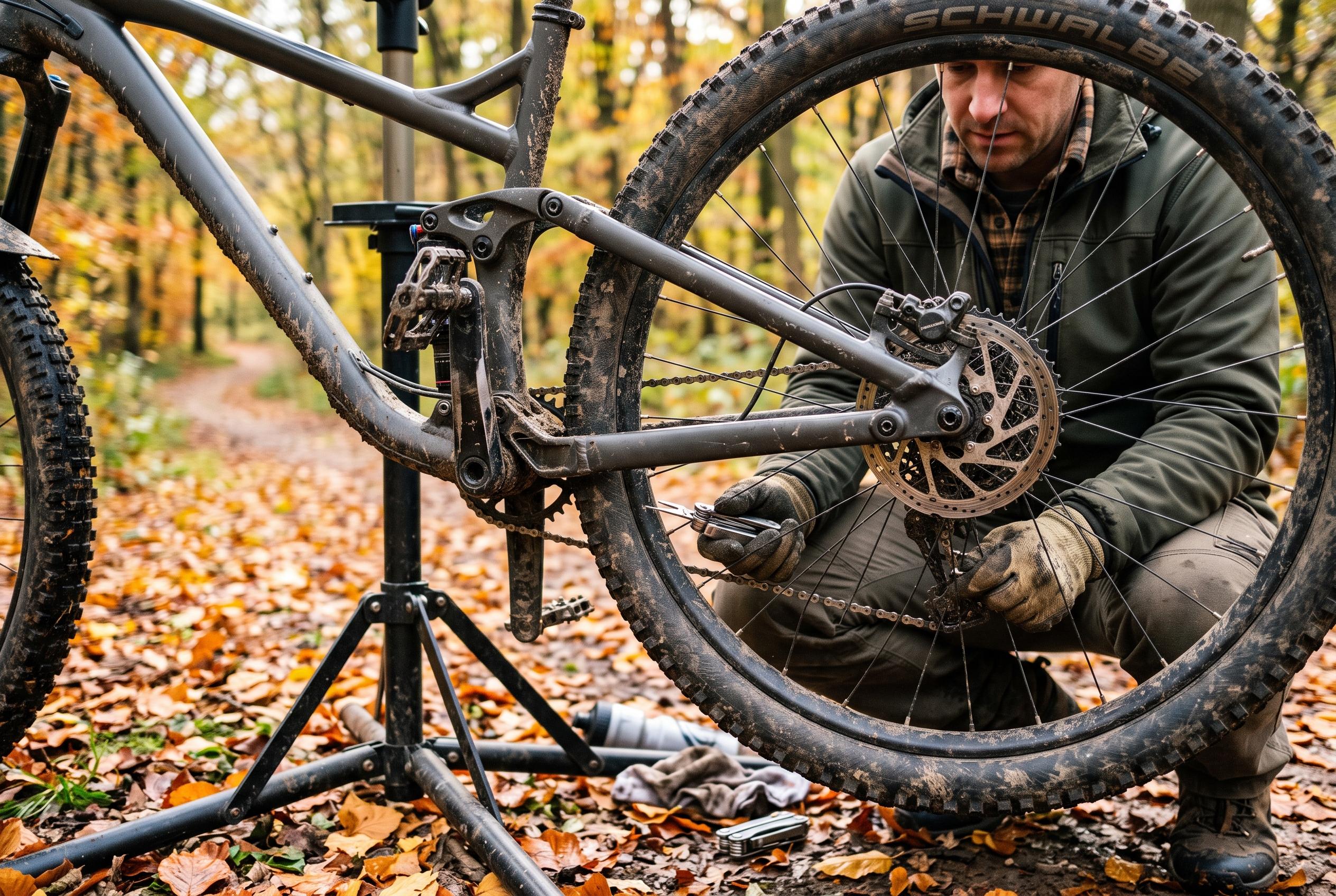

A thorough pre-winter inspection can uncover worn drivetrains, failing brakes, damaged bearings and suspension faults before they become expensive problems next season.
Before a mountain bike is put away for the winter, the most useful task is not cosmetic cleaning but a proper technical inspection. Several specialist guides agree that autumn is the best moment to identify wear, catch small faults early and avoid starting the next season with a long repair list. A thorough wash also makes hidden damage far easier to spot, particularly around the bottom bracket, suspension pivots and other areas that tend to collect grime. According to bike workshop and maintenance guides, low water pressure, soft brushes and bike-specific cleaners are the safest approach, while pressure washers should be kept away from bearings, seals and electrical contacts.
Once the bike is clean and fully dry, the frame and contact points need a close visual check in good light. That means looking carefully at welds, joints, dropouts, shock mounts, the bars, stem, cranks and saddle hardware for cracks, impact marks or any signs of distortion. According to bike maintenance advice from specialist outlets, fixings should not simply be tightened by feel; the correct torque settings matter, and the right combination of grease, assembly paste or thread-lock compound depends on the part in question. If there is any suspicion of a crack or structural defect, a workshop inspection is the sensible next step rather than an improvised repair.
The drivetrain is another area that should be checked before winter storage rather than left until spring. Maintenance guides recommend measuring chain wear with the proper tool and comparing the result with the manufacturer’s replacement limit, rather than relying on eye alone. If a fresh chain skips on a worn cassette under load, the problem may already be deeper than chain wear. Sprockets, chainrings and jockey wheels should therefore be assessed as a system, not as isolated parts. If the bike is being switched from oil to wax, old lubricant and residue need to be removed thoroughly first; wax does not work properly over contaminated metal, and even waxed chains still need drying and occasional care after wet rides.
Brakes deserve equal attention, because storage is an efficient time to deal with wear that may otherwise become obvious only on the first ride of spring. Expert guides say pad thickness can only be judged accurately once the pads are removed, and disc rotors should be checked against the minimum thickness stated by the manufacturer. Hose routing, connectors and calipers should also be inspected for leakage or damage. If the lever feel is inconsistent or stopping power has fallen off, a proper diagnosis is preferable to guesswork. New pads must be bedded in according to the maker’s instructions, and lubricants, wax and sprays should never touch the friction surfaces. If a wheel is out of the bike during the process, the brake lever should not be squeezed without a suitable spacer in place.
The remaining checks focus on bearings, suspension, wheels, tyres and storage conditions. The headset can be tested for play by holding the front brake and rocking the bike gently, while still allowing the bars to turn freely without binding. The bottom bracket, wheels and, on full-suspension bikes, rear pivots should then be checked for roughness or looseness. Suspension stanchions and seal areas should be wiped clean with a soft cloth, and any sign of oil loss or poor function should be noted alongside scheduled service intervals for the fork, shock and dropper post. That service work should not be postponed simply because the bike has been cleaned.
Tyres and storage finish the job. Rims should be checked for damage and true, while tyres need a careful look for cuts, sidewall wear and flattened tread. With tubeless systems, sealant should be examined as well, because it does not last indefinitely and can dry into unusable residue around valves and inside the casing. For the winter break, the bike should be stored fully dry in a sheltered, temperature-stable place. Tyres should not be left to stand flat under the bike’s weight for long periods, so it helps to monitor pressure or unload the wheels periodically. For e-MTBs, battery care matters too: Bosch recommends storing the battery at between 30 and 60 per cent charge in a dry location at room temperature, while other e-bike guides stress keeping contacts clean and dry. Before the first ride of the new season, a short functional check is still essential.
Disclaimer: This content is intended for informational purposes only. Readers are advised to exercise their own judgement, conduct due diligence, or consult a qualified expert before acting on any information provided.